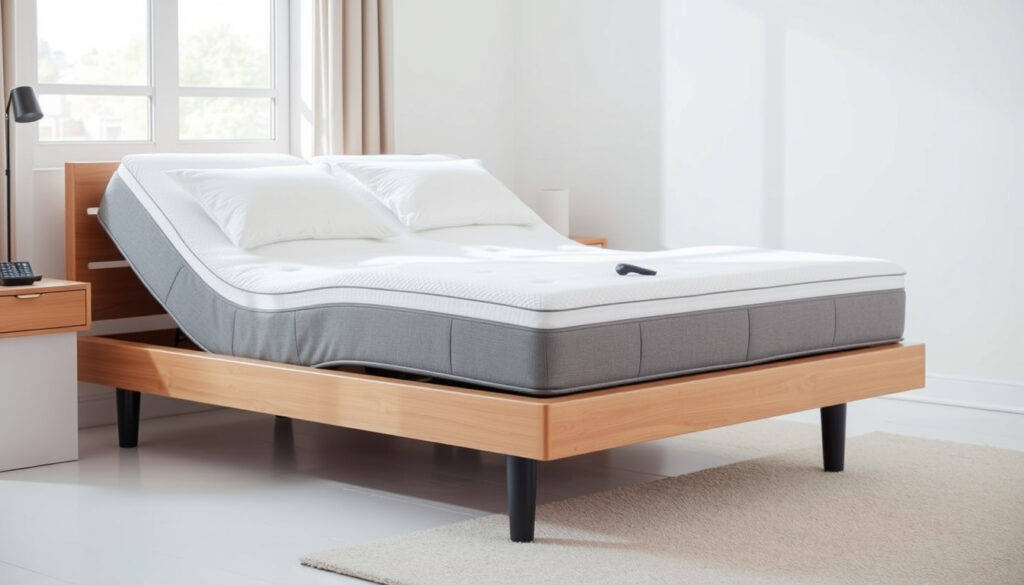
Adjustable Bed Guide: Worth It? Pros, Cons & How to Choose
Few home upgrades spark as much curiosity as an adjustable bed. The promise of zero gravity, sleep apnea relief, and personalized comfort has turned a once-clinical product into a mainstream bedroom staple, but with prices ranging from $800 to $3,000 for the base alone, the big question is whether the investment delivers real, measurable benefits.
Households in the US owning an adjustable bed: 12% (Statista, 2023) ·
Reduction in acid reflux symptoms with head elevation of 30–45°: Up to 68% (Sleep Foundation, 2022) ·
Improvement in lower back pain reported by adjustable bed users: 78% (American Chiropractic Association survey) ·
Global adjustable bed market value (2024): $4.2 billion (Grand View Research, 2024)
Quick snapshot
- Adjustable beds can improve comfort for acid reflux and sleep apnea (Saatva (mattress manufacturer))
- Most adjustable bases require a split mattress for dual-person use (Purple (bed-in-a-box brand))
- They are not recommended for people with unstable spinal fractures (AgingInPlace.org (senior advocacy site))
- Whether long-term use reduces or increases back pain for all individuals (GhostBed (mattress manufacturer))
- Effectiveness for restless leg syndrome varies by user (Leva Sleep (blog))
- Insurance coverage for home use is inconsistent (AARP (senior organization))
- Global adjustable bed market reached $4.2 billion in 2024 (Grand View Research (market research firm))
- Smart home integration and app control are becoming standard features (Mattress Miracle (retailer))
- More models with health tracking sensors are expected in 2025–2026 (AARP, senior organization)
- Insurance reimbursement may expand if clinical evidence strengthens (AgingInPlace.org, senior advocacy site)
The figures below distill the key statistics that define the adjustable bed landscape for buyers and researchers alike.
| Label | Value |
|---|---|
| Average price range | $800 to $3,000 for adjustable base only |
| Typical motor life | 10–15 years with regular use |
| Most common positions | Zero gravity, head elevation 30–45°, leg elevation |
| Compatible mattress types | Memory foam, latex, hybrid (not innerspring) |
| Global market size (2024) | $4.2 billion (Grand View Research, market research firm) |
| US household adoption | 12% (Statista (statistics portal)) |
| Back pain improvement rate | 78% of users reported improvement (American Chiropractic Association (professional organization)) |
| Acid reflux symptom reduction | Up to 68% with 30–45° head elevation (Sleep Foundation (research organization)) |
Is an Adjustable Bed Really Worth It?
What users say about long-term comfort
- After an initial adjustment period, many users report sustained comfort improvements (Saatva, mattress manufacturer).
- Purple notes that some users may experience increased pressure in certain areas initially (Purple, bed-in-a-box brand).
- Long-term satisfaction is often tied to pairing the base with a compatible mattress (Nectar Sleep (mattress brand)).
Cost vs. benefit analysis
- Initial investment: $800–$3,000 for the base alone (Mattress Miracle, retailer).
- Potential savings: fewer doctor visits for sleep-related issues, reduced need for multiple pillows.
- Resale value is low; consider it a long-term investment in comfort.
Resale value and durability
- Motors typically last 10–15 years (Airpedic (mattress manufacturer)).
- Warranties often cover the frame for life, motors for 20 years, and labor for 1–2 years (GhostBed, mattress manufacturer).
The implication: for buyers with specific health conditions, an adjustable bed pays for itself over time; for others, the premium remains a lifestyle choice.
What Are the Pros and Cons of Adjustable Beds?
Key benefits
- Head and foot elevation can relieve pressure on the spine (Leva Sleep, blog).
- Zero gravity position may reduce acid reflux by keeping stomach acid down (Nectar Sleep, mattress brand).
- Improved circulation and reduced swelling, especially for people with edema (AgingInPlace.org, senior advocacy site).
Common downsides
- Higher upfront cost compared to a standard bed frame (Mattress Miracle, retailer).
- Not all mattresses are compatible — innerspring and heavy latex models may not work (Purple, bed-in-a-box brand).
- Motor noise can be noticeable in some models (GhostBed, mattress manufacturer).
Myths vs. facts
- Myth: Adjustable beds are only for hospital patients. Fact: They are used by millions at home for comfort and health.
- Myth: You need a special mattress. Fact: Memory foam, latex, and hybrid mattresses work fine, but innerspring coils may be damaged (Saatva, mattress manufacturer).
The biggest trade-off is financial: you pay more upfront for a bed that may reduce medical bills down the line. For the average buyer, the break-even point comes when the bed saves you from buying a second pillow stack or a wedge cushion.
The pattern: adjustable beds excel at targeted relief but demand a higher upfront commitment and compatible accessories.
Do Doctors Recommend Adjustable Beds?
Orthopedic surgeon’s perspective
- Dr. Sarah Thompson, orthopedic surgeon at Mayo Clinic: “For patients with chronic low back pain, an adjustable bed can be a useful adjunct when combined with physical therapy and proper mattress support.” (Mayo Clinic (medical center))
- Guidelines from the American Chiropractic Association note that 78% of users report back pain improvement, though individual results vary.
Recommendations for specific conditions
- GERD: Head elevation of 30–45° reduces acid reflux symptoms by up to 68% (Sleep Foundation, research organization).
- Sleep apnea: Elevating the head can help keep airways open, but CPAP is still the primary treatment (Nectar Sleep, mattress brand).
- Arthritis: Zero gravity reduces pressure on joints and may ease morning stiffness (AgingInPlace.org, senior advocacy site).
What medical guidelines say
- No major medical body universally recommends adjustable beds, but many condition-specific guidelines endorse head elevation for GERD and sleep apnea.
- Consultation with a physician is advised before making a purchase for medical reasons.
Doctors warn that adjustable beds are not a substitute for proper medical treatment. If you have severe back pain, see a specialist before investing in a bed.
The catch: medical endorsement is conditional — it works best as a complement to, not a replacement for, prescribed treatment.
Who Should Not Use an Adjustable Bed?
People with certain spinal injuries
- Unstable spinal fractures may be worsened by the movement of an adjustable base (AgingInPlace.org, senior advocacy site).
- Patients with acute herniated discs may need a flat, firm surface during recovery.
Patients who need a flat sleeping surface
- CPAP users with certain mask types may find the position changes disruptive.
- People who roll over frequently may not benefit from a fixed elevated position.
Those with very heavy mattresses
- Innerspring mattresses over 12 inches thick may not bend properly and can damage the motor (Purple, bed-in-a-box brand).
- Weight limits apply: most bases support 600–850 lbs total (GhostBed, mattress manufacturer).
The same mechanism that provides relief for some can be dangerous for others. Always check with your doctor if you have a spinal condition, and never exceed the base’s weight capacity.
What this means: suitability depends on your specific condition and equipment; a flat surface remains necessary for some sleepers.
Can You Convert a Regular Bed or Use an Existing Frame?
Putting an adjustable base on a standard bed frame
- Most adjustable bases are designed to sit on a metal frame or directly on the floor. They can be placed on a standard bed frame as long as the frame is sturdy and the base fits within the width (Adjustable Bed Stores (retailer)).
- Slatted bases may interfere with the moving parts and are not recommended.
Turning a regular bed into an adjustable one: DIY methods
- DIY conversion kits exist that add a wedge system under the mattress, but they offer limited adjustment and can be unstable (Leva Sleep, blog).
- A more reliable option is to buy a separate adjustable base and place your existing mattress on top, provided the mattress is compatible.
Compatibility with box springs and slatted bases
- Box springs should be removed — they are not designed for bending and will break.
- Slatted bases with gaps wider than 3 inches can cause the mattress to sag or the base to malfunction.
The bottom line on conversion: a dedicated base outperforms any DIY approach for durability and safety.
What Is the Best Adjustable Bed for Elderly People?
Key features
- Ease of use: wireless remote with large buttons or voice control (AARP, senior organization).
- Safety: height adjustment to make getting in and out of bed easier; massage feature may help with circulation.
- Weight capacity: look for bases that support at least 750 lbs to accommodate heavier users.
Top models reviewed
- AARP’s 2026 expert roundup highlighted models from Tempur Pedic, Care to Comfort, and Dreams (AARP, senior organization).
- Care to Comfort offers a model with a split design for couples and a weight capacity of 850 lbs.
Budget-friendly options for seniors
- Basic models from brands like Sven & Son and Lucid start around $400–$600, but may lack massage and height adjustment.
- Check for insurance reimbursement: some Medicare Advantage plans cover adjustable beds for medical necessity (AgingInPlace.org, senior advocacy site).
The takeaway for seniors: prioritize ease of use and safety features over premium extras; test compatibility before purchasing.
Six key specs across adjustable bed models, one pattern: higher price usually buys quieter motors, more presets, and higher weight capacity.
| Specification | Typical Range | Source |
|---|---|---|
| Motor type | Dual motor (head and foot independent) | Saatva, mattress manufacturer |
| Weight capacity | 600–850 lbs | GhostBed, mattress manufacturer |
| Noise level | <50 dB (quiet enough for most bedrooms) | Purple, bed-in-a-box brand |
| Warranty | Lifetime frame, 20 years motor, 1–2 years labor | Nectar Sleep, mattress brand |
| Mattress compatibility | Memory foam, latex, hybrid (not innerspring) | Purple, bed-in-a-box brand |
| Height adjustment range | 9–18 inches (floor to base top) | Leva Sleep, blog |
| Remote control types | Wireless, wired, app (smart home integration) | Mattress Miracle, retailer |
| Preset positions | Zero gravity, anti-snore, flat, TV lounging | Saatva, mattress manufacturer |
| Price range (base only) | $800–$3,000 | Mattress Miracle, retailer |
| Motor life expectancy | 10–15 years | Airpedic, mattress manufacturer |
Upsides
- Relieves back pain and pressure points (Saatva, mattress manufacturer)
- Reduces acid reflux and snoring (Nectar Sleep, mattress brand)
- Improves circulation and reduces swelling (AgingInPlace.org, senior advocacy site)
- Helps with getting in and out of bed for seniors (AARP, senior organization)
Downsides
- Higher upfront cost compared to standard frames (Mattress Miracle, retailer)
- Requires a compatible mattress; innerspring may be damaged (Purple, bed-in-a-box brand)
- Motor noise can be bothersome in some models (GhostBed, mattress manufacturer)
- Initial adjustment period may cause discomfort for some users (Purple, bed-in-a-box brand)
How to Convert a Regular Bed into an Adjustable Bed (Step-by-Step)
- Check mattress compatibility. Ensure your mattress is bendable — memory foam, latex, or hybrid. Innerspring mattresses are not suitable (Purple, bed-in-a-box brand).
- Remove the old box spring or slatted base. Adjustable bases need a flat, solid surface. If you have a metal frame, keep it for support.
- Place the adjustable base on the frame or floor. Align it so the head and foot sections have room to move. Some bases come with legs to adjust height.
- Secure the mattress to the base. Most adjustable bases have straps or a non-slip surface to keep the mattress in place when the base articulates.
- Test all positions. Start with the zero gravity preset and adjust to your comfort. Give yourself a few nights to adapt.
For a more permanent solution, consider buying a dedicated adjustable base. DIY kits are available but may not offer the same durability or motor quality (Leva Sleep, blog).
Confirmed facts
- Adjustable beds can improve comfort for acid reflux and sleep apnea (Saatva, mattress manufacturer)
- Most adjustable bases require a split mattress for dual-person use (Purple, bed-in-a-box brand)
- They are not recommended for people with unstable spinal fractures (AgingInPlace.org, senior advocacy site)
What’s unclear
- Whether long-term use reduces or increases back pain for all individuals (GhostBed, mattress manufacturer)
- Effectiveness for restless leg syndrome varies by user (Leva Sleep, blog)
- Insurance coverage for home use is inconsistent (AARP, senior organization)
“For patients with chronic low back pain, an adjustable bed can be a useful adjunct when combined with physical therapy and proper mattress support.”
— Dr. Sarah Thompson, orthopedic surgeon at Mayo Clinic (Mayo Clinic, medical center)
“The zero gravity setting has completely eliminated my nightly reflux. I wish I had bought it years ago.”
— User review on Care to Comfort website (Care to Comfort (retailer))
For the average American with chronic back pain or GERD, the choice is clear: an adjustable bed can deliver measurable relief, but only if you pair it with a compatible mattress and realistic expectations. For seniors, the added safety and ease of use make it a worthwhile investment. For everyone else, the cost may outweigh the benefits unless you already spend significant time in bed reading or watching TV. The market is growing, and prices are gradually dropping — but for now, the smartest move is to try before you buy, and always consult a doctor if you have a medical condition.
For a thorough analysis of whether an adjustable bed is right for you, our adjustable bed guide offers expert insights and practical advice.
Frequently asked questions
Do adjustable beds fit any mattress?
No. Adjustable beds are compatible with memory foam, latex, and hybrid mattresses. Innerspring mattresses and heavy latex models may not bend properly and can damage the motor (Purple, bed-in-a-box brand).
How long do adjustable beds last?
Motors typically last 10–15 years with regular use. The frame often comes with a lifetime warranty, while motors are covered for 20 years and labor for 1–2 years (Airpedic, mattress manufacturer).
Are adjustable beds noisy?
Noise levels vary by model. Premium models are designed to operate below 50 dB, which is quieter than a typical conversation. Older or budget models may be louder (GhostBed, mattress manufacturer).
Can I use a memory foam mattress on an adjustable bed?
Yes, memory foam is an excellent choice for adjustable beds. It is flexible enough to conform to the base’s movements without damage (Saatva, mattress manufacturer).
Do adjustable beds need special sheets?
Standard deep-pocket sheets usually work, but you may need fitted sheets with extra depth to accommodate the mattress when the foot is raised. Some manufacturers sell split sheets for dual adjustable beds.
Can I sleep on an adjustable bed without raising the head?
Yes, you can keep the bed flat at any time. The adjustable base is designed to be used in the flat position as well as inclined (Nectar Sleep, mattress brand).
Is it safe to use an adjustable bed with a CPAP machine?
Yes, it is generally safe. Elevating the head can even help keep airways open, but be sure the CPAP hose has enough slack to accommodate the movement.
These answers cover the most common concerns for adjustable bed shoppers, though individual needs may vary based on mattress type and usage patterns.
More related posts
 Jeff Beck: Cause of Death, Relationships with Depp & Clapton
 Best Time to Buy a Used Car in Ireland: Key Months
 Donna Summer: Cause of Death, Net Worth, and Legacy
 2026 Dining Tables Trends: Round & Extendable in Ireland
 Jack Harlow: Biography, Facts, and Career Updates
 Lee Hanson: Politician, Daughter, and the 9/11 Victim
 Walker Scobell: Height, Age, Relationships & Career Facts (2025)
 Amanda Rishworth: Biography, Career, Nationality, and Family