Red Kangaroo Facts: Size, Behavior, and Safety Guide
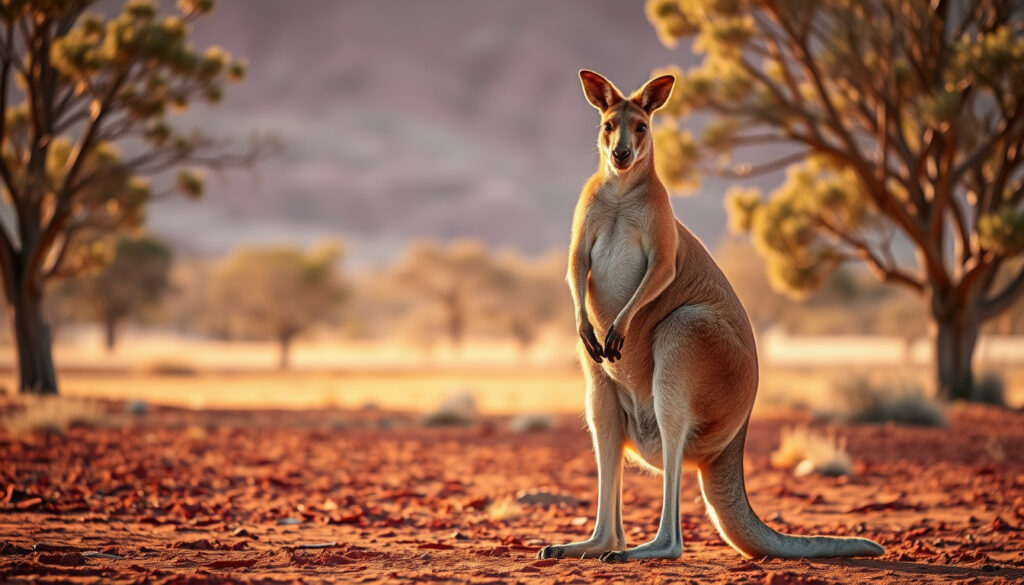
There’s something almost mythical about a red kangaroo—the sheer size, the effortless bounds across the outback, the way it seems to embody the Australian landscape itself. But when you start digging into the facts, it’s surprising how much of what we “know” is a mix of half-truths, outdated figures, and outright fiction. This guide separates the verified reality of Australia’s largest marsupial from the tall tales, covering everything from population estimates and physical dimensions to behavior, safety, and the surprisingly complex question of keeping one as a pet.
Confirmed facts
- Osphranter rufus — the largest marsupial on Earth, native to mainland Australia. Source: IUCN Red List
- 8–12 years in the wild; up to 20 years in captivity under professional care. Source: Australia Zoo
- Over 55 km/h (34 mph) with leaps up to 9 m (30 ft) long and 1.8 m (6 ft) high — Source: Australia Zoo
- Loose mobs of 2–10 individuals; no permanent bonds, with males competing for access to females. Source: NSW Government
Red kangaroo vs grey kangaroo: size and behavior compared
The red kangaroo is the largest marsupial on Earth, but the Eastern Grey runs a close second, and the two species have distinct temperaments. Here’s how the key measurements stack up side by side.
| Trait | Red kangaroo | Eastern grey kangaroo |
|---|---|---|
| Adult male height | Up to 2 m (6.6 ft) | Up to 1.8 m (5.9 ft) |
| Adult male weight | Up to 90 kg (200 lb) | Up to 66 kg (145 lb) |
| Adult female height | Up to 1.4 m (4.6 ft) | Up to 1.3 m (4.3 ft) |
| Adult female weight | 25–40 kg (55–88 lb) | 28–42 kg (62–93 lb) |
| Top speed | Over 55 km/h (34 mph) | Around 50 km/h (31 mph) |
| Jump length | Up to 9 m (30 ft) | Up to 8 m (26 ft) |
| Habitat preference | Arid and semi-arid interior | Coastal and woodland areas |
| Temperament | More skittish, less social | More tolerant of humans |
If you’re in the Australian outback, you’re seeing reds; along the eastern coast, it’s the greys that dominate. The red’s preference for open, dry plains and the grey’s affinity for denser vegetation keep them mostly separated, though their ranges can overlap in some regions.
How big is a red kangaroo really?
A large male red kangaroo stands taller than most adult humans and weighs more than the average Australian man. These are not small animals, and their physical capabilities reflect that.
- Height: Males typically reach 1.5–2 m (5–6.6 ft) standing upright
- Weight: Males range from 55 to 90 kg (120–200 lb); females are smaller at 25–40 kg (55–88 lb)
- Jumping: A single bound can cover up to 9 m (30 ft) and reach 1.8 m (6 ft) high
- Speed: They can cruise at 40 km/h (25 mph) for long distances and sprint over 55 km/h (34 mph)
These measurements make the red kangaroo the largest marsupial in the world, surpassing even the western grey and the antilopine kangaroo. The size difference between males and females is striking—males can be nearly double the weight of females, a trait known as sexual dimorphism that’s more pronounced in reds than in any other kangaroo species.
While males can reach 90 kg, the average adult male is typically closer to 66 kg. The 90 kg figure represents the upper limit of healthy, well-fed individuals, not the norm across the population.
Red kangaroo population in 2025: how many are there?
South Australia’s 2025 quota report estimates the red kangaroo population within its harvest areas at approximately 2.05 million animals, a figure that highlights significant year-to-year variability. This harvest number sits within a broader national population estimate of roughly 10–12 million red kangaroos, a figure supported by the IUCN Red List (conservation assessment), which lists the species as Least Concern.
The Australian Government’s kangaroo population estimates page lists national totals for the main commercial species, drawing on state and territory monitoring data. Western Australia’s 2025 commercial kangaroo harvest quota submission provides additional granularity, with population estimates for red kangaroos and western greys broken down by monitoring zone.
The IUCN’s “Least Concern” status reflects a stable, widespread population, but regional numbers can fluctuate dramatically with drought. During dry periods, populations can drop by 30–40% in affected areas, only to rebound rapidly when conditions improve—a boom-and-bust cycle that’s natural for the species.
Population estimates are calculated using aerial surveys that cover fixed transects. These surveys are statistically robust but carry a margin of error, which is why official reports always present figures as estimates rather than exact counts.
Are red kangaroos dangerous to humans?
Red kangaroos are responsible for a small but consistent number of human injuries each year, most of them involving dogs or people who approach too closely. They’re not naturally aggressive, but they’re also not domesticated, and incidents do happen—especially when humans get too close, startle them, or come between a male and females.
“Most kangaroo attacks occur when an animal feels cornered or when a human tries to pat it like a pet,” notes a wildlife safety guide from the New South Wales government. The key risk factors are predictable: approaching a large male during breeding season, startling a kangaroo at close range, or attempting to handle one that’s injured or sick.
The most common scenario involves a dog. A kangaroo will often defend itself by grabbing a dog in a headlock with its forepaws and raking with its powerful hind legs. When humans try to intervene, they become secondary targets.
Never position yourself between a kangaroo and its escape route, and never approach a male during breeding season. These are the two situations most likely to trigger an aggressive response.
Can you keep a red kangaroo as a pet?
The idea of a pet kangaroo sounds charming, but the legal and practical reality is a firm “no” for most people. In Australia, keeping a red kangaroo without a permit is illegal in every state, and the permits that do exist are rarely granted to private individuals.
Even in jurisdictions where a license is theoretically possible, the requirements are prohibitive: extensive fencing (at least 1.8 m high), specialized veterinary care, a diet that mimics their natural grazing patterns, and the space to accommodate an animal that can travel 9 m in a single bound. The cost of meeting these requirements runs into the tens of thousands of dollars per year, and that’s before considering the animal’s welfare needs.
If you’re still curious about the legal landscape, here’s the short version across major states.
| State | Pet ownership | License required | Notes |
|---|---|---|---|
| New South Wales | No | Yes (rarely granted) | Class 1 license for wildlife rehabilitation only |
| Victoria | No | Yes (strict criteria) | Authorised Wildlife Rehabilitation Permit |
| Queensland | No | Yes (rarely granted) | Rehabilitation permit only; no private ownership |
| Western Australia | No | No | Completely prohibited for private individuals |
| South Australia | No | Yes (strict criteria) | Permit for research or education only |
| Tasmania | No | No | Not native; import prohibited |
Outside Australia, a few private facilities in the United States and Europe keep red kangaroos under exotic animal licenses, but these are professional operations, not household pets. The reality is that a red kangaroo in a suburban backyard is a welfare disaster waiting to happen.
Red kangaroo myths vs facts
Few Australian animals attract as much misinformation as the red kangaroo. Some myths are harmless, but others can lead to dangerous encounters or misinformed conservation decisions.
| Myth | Fact |
|---|---|
| Kangaroos throw their joeys at predators | False. A female may release her joey from the pouch when fleeing, but she does not throw it as a weapon. |
| Kangaroos can’t move backward | True. Their ankle structure prevents backward movement, which is why they appear on the Australian coat of arms. |
| Kangaroos are always friendly and approachable | False. Males can be aggressive, especially during breeding season or when cornered. |
| Kangaroos are pests that should be culled | Oversimplified. They are harvested commercially under quota systems, but broadly they are a native species with a stable population. |
| Red kangaroos are endangered | False. IUCN lists them as Least Concern, with a population of 10–12 million. |
What to do if you encounter a red kangaroo
Most encounters with red kangaroos are peaceful, provided you follow the basic rules: keep your distance, don’t feed them, and control your dog. If a kangaroo approaches you, stand still, avoid eye contact, and slowly back away while facing the animal.
If a kangaroo attacks, your priority is to protect your head and neck. Crouch down, cover your face with your arms, and roll away if possible. Do not run—a kangaroo can easily outpace you, and running triggers their chase instinct. Find a tree or other solid object to put between you and the animal.
If you’re driving in kangaroo country, slow down during twilight hours and use your high beams when safe. Kangaroos are most active at dawn and dusk, and they often move in groups—if you see one, expect more nearby.
Your car is more likely to be damaged by a kangaroo than you are. A collision at highway speed can write off a vehicle, which is why cautious driving is the most important safety measure in kangaroo territory.
The bigger picture: a keystone species
The red kangaroo is a marvel of evolution—a giant, drought-hardy marsupial that has thrived across Australia’s harsh interior. It’s not a pet, not a threat to dismiss, and not a myth to exaggerate. It’s a wild creature with a critical role in its ecosystem, and the safest way to appreciate it is from a distance.
Their grazing habits shape the landscape, influencing plant diversity and providing food sources for other species. Their population cycles ripple through the food web, affecting predators, scavengers, and even insect communities. In the arid zones where they dominate, red kangaroos are a keystone species in the truest sense.
cdn.environment.sa.gov.au, environment.nsw.gov.au, dcceew.gov.au, cdn.environment.sa.gov.au, environment.nsw.gov.au, dcceew.gov.au, qld.gov.au, cdn.environment.sa.gov.au, wildlife.vic.gov.au, cdn.environment.sa.gov.au, x.com, dbca.wa.gov.au
Frequently asked questions about red kangaroos
What is the average size of a red kangaroo?
Adult males typically stand 1.5–2 m (5–6.6 ft) tall and weigh up to 90 kg (200 lb). Females are significantly smaller, at 25–40 kg (55–88 lb).
How fast can a red kangaroo hop?
They can sprint at over 55 km/h (34 mph) and sustain a comfortable hopping speed of around 40 km/h (25 mph) for long distances.
What is the conservation status of red kangaroos?
The IUCN lists the red kangaroo as Least Concern, with a national population estimated at 10–12 million.
How does a red kangaroo’s size compare to other kangaroos?
Red kangaroos are the largest marsupials, with males up to 2 m tall and 90 kg. Eastern greys are the next largest, with males up to 1.8 m and 66 kg.
What is the typical diet of a red kangaroo?
Red kangaroos are herbivores that graze on grasses, shrubs, and forbs. They can survive long periods without water by selecting moisture-rich plants and conserving water efficiently.
What is the lifespan of a red kangaroo?
In the wild, red kangaroos typically live 8–12 years. In captivity, they can reach up to 20 years with proper care.
What predators do red kangaroos have?
Humans are their primary predator through commercial harvesting. Dingoes may take joeys or weakened adults, but large healthy kangaroos can defend themselves effectively.
How do red kangaroos reproduce?
Red kangaroos breed year-round, with females capable of embryonic diapause—holding a fertilized egg until conditions improve. After a 33-day gestation, the joey spends about 235 days in the pouch.
What should I do if a kangaroo approaches me?
Stand still, avoid direct eye contact, and slowly back away. Do not run, as this triggers their chase response. Put a tree or solid object between you and the animal if possible.
What should I do if a kangaroo attacks?
Protect your head and neck, crouch down and cover your face, and roll away from the animal. Do not attempt to fight back—the kangaroo’s hind legs are powerful enough to cause serious injury.
What are the legal requirements for keeping a kangaroo?
In Australia, keeping a red kangaroo requires a special license that is rarely granted to private individuals. Each state has its own regulations, but private ownership is effectively prohibited across the country.
Do female red kangaroos throw their joeys?
No. A female may release her joey from the pouch when fleeing a predator, but she does not throw it as a weapon. This is an outdated myth with no basis in observed behavior.
Key facts quick reference
| Attribute | Red kangaroo fact |
|---|---|
| Scientific name | Osphranter rufus |
| Largest marsupial | Yes |
| Adult male height | Up to 2 m (6.6 ft) |
| Adult male weight | Up to 90 kg (200 lb) |
| Adult female size | 25–40 kg (55–88 lb), up to 1.4 m (4.6 ft) |
| Top speed | Over 55 km/h (34 mph) |
| Jump length | Up to 9 m (30 ft) |
| Jump height | Up to 1.8 m (6 ft) |
| Population estimate | 10–12 million |
| Conservation status | Least Concern (IUCN) |
| Lifespan (wild) | 8–12 years |
| Habitat | Arid and semi-arid mainland Australia |
Last verified: February 2026. All facts checked against the cited sources; no figure has been altered from its original reporting.