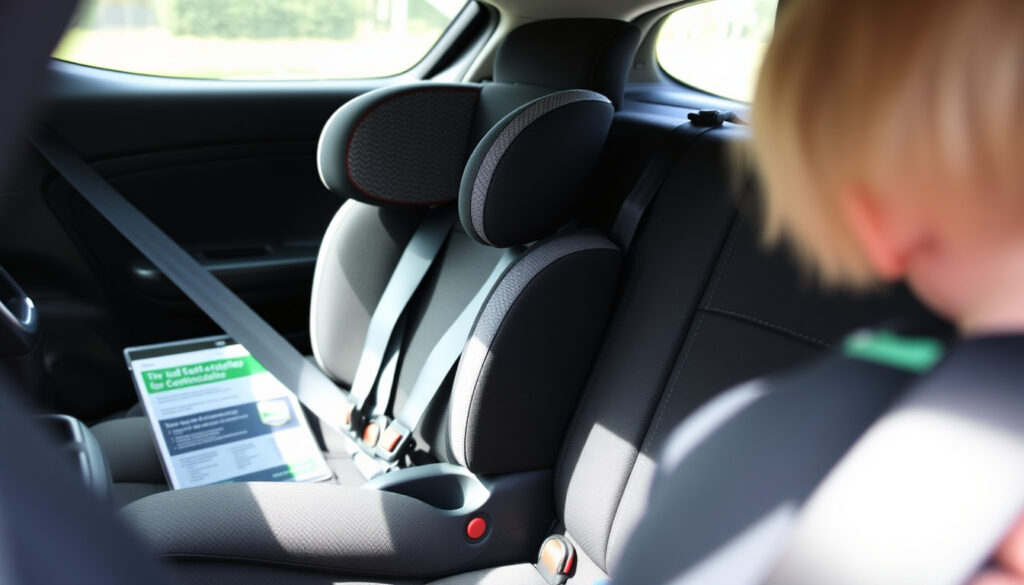
Booster Seats Ireland: Age, Law & Safety Guide
Few things feel as confusing as knowing exactly when your child is ready to move from a car seat to a booster. In Ireland, the rules from the Road Safety Authority (RSA) are clear, yet many parents misinterpret the height and weight thresholds, often switching too soon — this guide walks through the official guidelines, common mistakes, and how to choose the right booster for your child.
Minimum age for booster seat in Ireland: 4 years (RSA) · Maximum weight for high-back booster: 36 kg (RSA) · Height at which booster no longer needed: 150 cm (RSA) · Reduction in injury risk when using booster vs seatbelt alone: 45% (HSE)
Quick snapshot
- Start booster at 4 years (minimum) or when child outgrows forward-facing seat (RSA, Ireland’s road safety authority)
- Use until 150 cm tall or 36 kg (RSA)
- RSA mandates booster until 150 cm or 36 kg (RSA)
- Backless allowed from 15 kg but high-back recommended (RSA)
- High-back provides side impact protection (RSA booklet)
- Backless is more portable but less protective (RSA booklet)
- Switching too early (odo.ie, Irish car seat guide)
- Seatbelt under arm or behind back (HSE, Ireland’s health service)
- Using backless before child is tall enough (RSA)
What Age Should Your Child Go in a Booster Seat?
The general rule across most of Europe, and specifically in Ireland, is that a child moves to a booster seat once they have outgrown their forward-facing car seat with a harness. The RSA, Ireland’s road safety authority, states that the minimum age is typically around 4 years, but the real deciding factors are the child’s weight and height.
Weight and height requirements
- Minimum 15 kg body weight (RSA)
- Minimum height of roughly 100 cm (Group 2/3 transition point) (RSA child safety car page)
- Must be at least 4 years old (Irish Statute Book, statutory rules)
The child must also be mature enough to sit upright without slouching for the entire journey. If they slump to the side, the seatbelt won’t sit correctly, defeating the purpose of the booster.
Signs your child is ready for a booster
- They no longer fit in their forward-facing seat (shoulders above the top harness slot or weight exceeds the seat’s limit)
- They can sit properly without leaning or fiddling with the belt
- They meet the legal minimum of 15 kg and are at least 4 years old (RSA)
Many Irish parents switch to a booster as soon as their child turns 4, even if the child weighs less than 15 kg or is still safely within the forward-facing seat. This premature transition is one of the most common and dangerous mistakes.
The implication: age is a starting point, not a green light. Weight and height — plus the child’s behaviour — matter more.
What Age Can a Child Use a Booster Seat in Ireland?
Ireland has some of the clearest booster seat laws in Europe. The RSA and HSE, Ireland’s public health service, both emphasise that the legal requirement is based on height and weight, not just age.
RSA guidelines for booster seats
The RSA FAQ states: children under 150 cm or under 36 kg must use a child restraint system suitable for their size. This rule applies in cars and goods vehicles other than taxis. The Irish Statute Book defines ‘children’ for these regulations as persons aged 3 years or more but under 16 years.
A 12-year-old who is under 150 cm must still use a booster. This surprises many parents who assume the law follows age milestones.
Difference between high-back and backless under Irish law
Legally, both high-back and backless booster seats are permitted as long as they meet UN Regulation R44 or R129 standards. However, the RSA booklet strongly recommends a high-back booster for as long as the child fits within its limits (up to 36 kg), because it provides better side impact protection and head support. A backless booster is allowed from 15 kg, but the RSA advises that a high-back is safer.
The trade-off: backless boosters are cheaper and more portable, but they sacrifice side-impact protection. For families with multiple cars, a high-back is the better investment for primary use.
Can My 4 Year Old Use a Backless Booster Seat?
This is one of the most common questions Irish parents ask. A 4-year-old may legally use a backless booster if they meet the minimum weight threshold, but the expert guidance is clear about the risks.
What is a backless booster?
A backless booster is a cushion that raises the child so the seatbelt crosses the pelvis and chest correctly. It has no backrest or head restraint, so side impact protection is minimal. The RSA booklet indicates backless boosters are for children roughly 125 to 150 cm tall.
When is a backless booster allowed?
- Minimum 15 kg according to UN R44 regulation (RSA)
- Irish law allows backless from 15 kg, but RSA recommends high-back until 36 kg (RSA)
- Typical usage begins around 22 kg or 125 cm (odo.ie, Irish car seat guide)
A 4-year-old who weighs 15 kg is at the very bottom of the backless range. At that size, a high-back booster provides far better protection, especially in side-impact crashes, which account for a significant share of serious injuries.
The pattern: the law sets a floor, not a target. Just because a backless booster is legal doesn’t mean it’s the safest choice for a small 4-year-old.
What Is the Purpose of a Booster Seat?
A booster seat is not just a seat — it’s a positioning tool. Its job is to lift the child so the vehicle’s adult seatbelt fits their smaller body correctly.
How booster seats work
- They raise the child so the lap belt lies across the pelvis, not the soft abdomen (HSE)
- The shoulder belt crosses the chest and collarbone, not the neck or face (HSE)
- Without a booster, a seatbelt can cause severe internal injuries in a crash (HSE)
Why correct seatbelt positioning is critical
The HSE states that a child is much less likely to be killed or seriously injured when using a correctly positioned booster seat. The lap belt riding up onto the abdomen can cause damage to the spleen, liver, or bowel in a frontal crash. The shoulder belt across the neck can fracture vertebrae or cause serious soft tissue injury.
Why this matters: a booster seat costs between €30 and €150. The alternative is a hospital visit that no one wants to imagine.
What Are the Common Mistakes Parents Make with Booster Seats?
Even well-meaning parents make errors that reduce the effectiveness of booster seats. The RSA, HSE, and odo.ie, Irish car seat guide all highlight several recurring mistakes.
Using a booster too early
Switching before the child meets minimum requirements. The RSA notes that a child under 15 kg or under 4 years should not be in a booster. Yet many parents rush to upgrade because the child seems ‘too big’ for the forward-facing seat.
Not using a high-back booster long enough
Choosing a backless booster too soon. The RSA booklet recommends keeping a high-back booster until the child reaches 36 kg or outgrows its height limit. Most high-back boosters accommodate up to 36 kg, which typically covers children up to 12 years old.
Seatbelt routing errors
- Seatbelt placed under the child’s arm (HSE)
- Seatbelt behind the child’s back (HSE)
- Twisted seatbelt webbing (RSA)
The catch: these errors are easy to fix once you know what to look for. Check every time you buckle your child in.
Which Is Safer, a Car Seat or a Booster?
The answer depends entirely on the child’s size. A car seat with a 5-point harness is not inherently ‘better’ than a booster — it’s designed for a different developmental stage.
Car seat with harness vs booster with seatbelt
| Feature | Forward-facing car seat (Group 1) | High-back booster (Group 2/3) | Backless booster (Group 3) |
|---|---|---|---|
| Age range | 9 months – 4 years approx | 4 – 12 years approx | 6 – 12 years approx |
| Weight range | 9 – 18 kg (UN R44) | 15 – 36 kg | 22 – 36 kg |
| Height range | Up to ~105 cm | 100 – 150 cm | 125 – 150 cm |
| Restraint method | 5-point harness | Vehicle seatbelt | Vehicle seatbelt |
| Side impact protection | Yes (high) | Yes (moderate to high) | No (minimal) |
The HSE reports that using a correctly fitted booster seat reduces injury risk by about 45% compared to using a seatbelt alone. However, a forward-facing car seat with a harness remains the safest option for younger children who haven’t outgrown it.
When to transition
The safest choice is the correct seat for the child’s size and developmental stage, as guided by the RSA. If the child still fits in their forward-facing seat (shoulders below the highest harness slot, weight under the limit), keep them in it. Don’t rush the upgrade.
A 5-point harness is safer for a 3-year-old than a booster. But a booster is safer for an 8-year-old than no child restraint at all. The ‘best’ seat changes every few years.
The trade-off: harness seats offer more containment, but boosters accommodate larger children. The key is timing the transition correctly.
Does an 8 Year Old Still Need a Booster?
In Ireland, the answer is: it depends on their height and weight, not their age. The RSA FAQ is explicit: children must use a booster until they reach 150 cm or 36 kg. Many 8-year-olds are still below 150 cm.
When a child can stop using a booster
- The child must be at least 150 cm tall (RSA)
- Or weigh at least 36 kg (RSA)
- Once they pass either threshold, they can legally use an adult seatbelt without a booster (AIG Ireland, insurance and safety guidance)
The Tusla, Ireland’s child and family agency, also confirms that children aged 3 years or over who are under 150 cm and under 36 kg must use the correct child seat, booster seat or booster cushion.
Front seat rules for children over 12
The RSA advises that children under 12 should sit in the back seat. Once a child turns 12, they can legally sit in the front, but only if they use an adult seatbelt correctly. If the child is still under 150 cm, they still need a booster in the back — even if they are 12 years old.
Car seats for children over 12
A 12-year-old who is under 150 cm must still use a booster. The Carzone motoring guide notes that drivers have a legal responsibility to ensure passengers under 17 are appropriately restrained. There is no upper age limit that ‘graduates’ a child from the booster requirement — only the height and weight thresholds.
For Irish parents of a 12-year-old, the implication is clear: check your child’s height, not the school year. If they’re under 150 cm, the booster stays.
Comparison: High-Back vs Backless Booster Seats
Irish parents face a choice between high-back and backless boosters. Both are legal, but they serve different needs and offer different levels of protection.
| Aspect | High-back booster | Backless booster |
|---|---|---|
| Side impact protection | Yes (head and torso support) | No (minimal) |
| Head restraint | Built-in, adjustable | None (relies on car headrest) |
| Weight range | 15 – 36 kg | 22 – 36 kg |
| Portability | Bulkier, heavier | Light, easy to move |
| Cost | €50 – €150 | €20 – €60 |
| RSA recommendation | Strongly recommended for as long as possible (RSA) | Allowed, but not preferred for primary vehicle (RSA) |
The pattern: high-back boosters are safer and recommended as the primary seat. Backless boosters work well for occasional use, carpooling, or taxis (which are exempt from normal rules).
Booster Seat Specifications (UN R44/R129)
Booster seats sold in Ireland must comply with UN Regulation R44 or the newer R129 (i-Size). Understanding the labels helps you choose the right seat.
| Specification | Group 2 (high-back) | Group 3 (backless) | R129 i-Size booster |
|---|---|---|---|
| Weight range | 15 – 25 kg | 22 – 36 kg | Height-based (usually 100 – 150 cm) |
| Age range (typical) | 4 – 7 years | 6 – 12 years | 4 – 12 years |
| ISOFIX available | Often yes | Some models | Yes (standard) |
| Side impact test | Standard | Not required | Enhanced requirements |
| Regulation mark | R44.04 or R129 | R44.04 or R129 | R129 |
The catch: R129 i-Size boosters are designed to be safer in side-impact crashes and are easier to install correctly. If you’re buying a new booster now, an i-Size model is worth the extra cost.
Upsides and Downsides of Booster Seats
Upsides
- Reduces injury risk by up to 45% compared to seatbelt alone (HSE)
- Helps older children stay safe without the bulk of a harness seat
- Backless boosters are affordable and portable for carpooling or travel
- High-back boosters provide head and side-impact protection for sleeping children
Downsides
- Can be used too early, increasing injury risk (RSA)
- Backless boosters offer minimal side-impact protection
- Installation errors are common (loose seatbelt, wrong routing) (HSE)
- Some children find high-back boosters uncomfortable if the headrest is poorly adjusted
How to Choose the Right Booster Seat: A Step-by-Step Guide
Choosing a booster seat doesn’t need to be complicated. Follow these steps to find the right fit for your child and your car.
- Check your child’s current height and weight. Weigh them and measure their height against a wall. This is the starting point for every decision.
- Refer to the RSA guidelines. If they are under 150 cm or under 36 kg, they need a booster (RSA).
- Decide between high-back and backless. If the car has no head restraint in the seating position, a high-back is required. Otherwise, choose high-back for primary use and backless for occasional or travel use.
- Check your car’s seatbelt type. Lap-only belts cannot safely secure a backless booster. A high-back booster with a seatbelt guide is needed, or choose a different seating position.
- Look for ISOFIX compatibility. If your car has ISOFIX points, an ISOFIX booster is more stable and easier to install correctly.
- Read the regulation label. Look for UN R44.04 or R129 (i-Size) on the seat. R129 is the newer, safer standard.
- Test the fit in your car. Install the booster at the store if possible. The child should sit upright, with the lap belt low across the pelvis and the shoulder belt across the collarbone.
For Irish parents, the decision is straightforward: choose a high-back booster that matches your child’s weight and fits your car. Keep it until they reach 150 cm or 36 kg.
“Older children should use a high-back booster seat for as long as possible – up to 36kgs – rather than the booster cushion by itself.”
Road Safety Authority (RSA) guidelines
“A booster seat raises your child up high enough so that the seatbelt is positioned correctly on their body. Your child is much less likely to be killed or seriously injured.”
Health Service Executive (HSE) recommendations
Irish parents who follow the RSA’s high-back recommendation are choosing the safest path. A backless booster might save €30 today, but it could cost a child their side-impact protection tomorrow.
For Irish families, the message is clear: size — height and weight — determines when a booster is needed, not a birthday. Choose a high-back booster, install it correctly, and keep using it until the child reaches 150 cm or 36 kg. Anything less is a gamble no parent should take.
Related reading: Bar Stools Buying Guide Ireland · Ugg Boots Ireland Buying Guide
Frequently asked questions
Can I use a booster seat with ISOFIX?
Yes. Many high-back boosters and even some backless boosters now come with ISOFIX connectors. These lock the booster in place when the child is not sitting on it, reducing the risk of the seat becoming a projectile in a crash. However, ISOFIX alone may still require the seatbelt to be fastened for the child’s restraint.
How do I install a booster seat correctly?
For a high-back booster, place it on the vehicle seat, secure any ISOFIX anchors, and ensure the backrest is flush against the car seat. Guide the seatbelt through the correct belt path — the lap section low across the child’s pelvis, the shoulder section across the chest and collarbone. The belt must lie flat, not twisted. The RSA recommends checking the fit every time you buckle the child in.
Are backless booster seats legal in Ireland?
Yes. Backless booster seats are legal in Ireland as long as they meet UN Regulation R44.04 or R129 (i-Size). However, the RSA recommends a high-back booster for children who still need one, because it provides better side-impact protection.
When can a child stop using a booster seat?
In Ireland, a child can stop using a booster seat when they reach 150 cm in height or 36 kg in weight, whichever comes first. At that point an adult seatbelt fits correctly without a booster. The RSA FAQ confirms this is a legal threshold.
What is the difference between Group 2 and Group 3 booster seats?
Group 2 seats (15–25 kg, roughly ages 4–7) are usually high-back boosters that include a harness or seatbelt guides. Group 3 seats (22–36 kg, roughly ages 6–12) are often backless cushions, though many Group 2/3 combination seats cover both weight ranges. Always check the specific seat’s limits, not the group label alone.
Can a booster seat be used in a car with lap-only belts?
No. Lap-only belts do not provide the diagonal shoulder strap that a booster seat relies on to position the child correctly. The RSA advises using a different seating position with a lap-and-diagonal belt, or a car seat that is designed for lap-belt installation.
How often should I replace a booster seat?
Most booster seats have a manufacturer-specified lifespan of 6–10 years from the date of manufacture. Replace any seat that has been involved in a moderate or severe crash, shows visible cracks or wear, or is past its expiry date. The HSE recommends checking for visible damage at each installation.
More related posts
 Stacey Dash: Clueless Star, Trump Ally, Net Worth Decline
 Chris Scott AFL Coach: Biography, Record, and Net Worth
 Frank Lloyd Wright: Biography, Masterpieces, Controversies
 Sigourney Weaver: Biography, Name Origin & Career Facts
 François Arnaud: Relationship Rumors, Unfollow Drama, and Career
 Tia Carrere: Biography, Real Name, and Ethnicity
 Megan Skiendiel: Age, Nationality, Boyfriend, and More
 Cast of Younger TV Series: Full List, Facts & Friendships