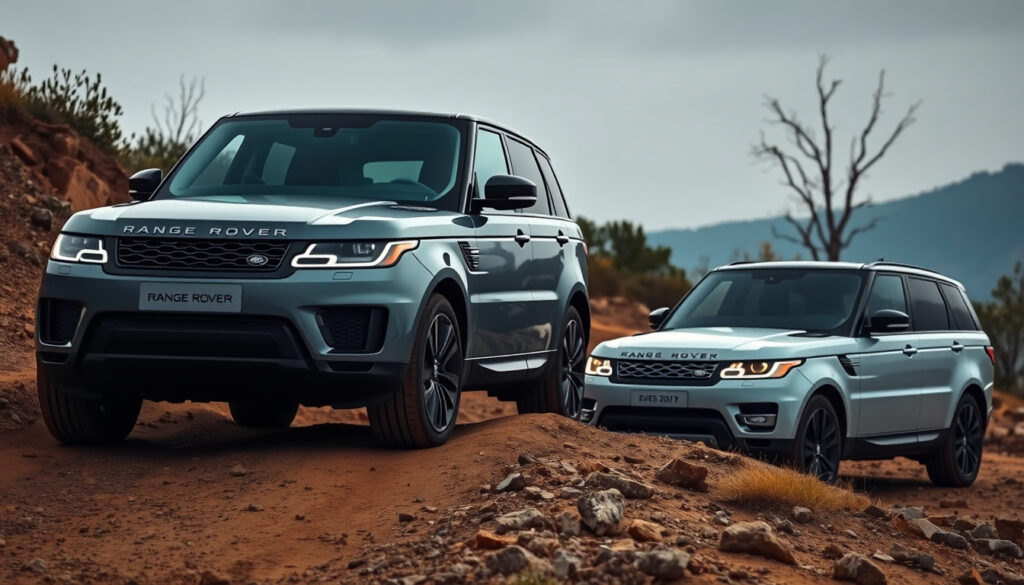
Range Rover Sport 2025: Price, Problems, Best Years
Buying a luxury SUV usually means balancing prestige against the reality of running costs — and few cars sharpen that trade-off quite like the Range Rover Sport. This guide pulls together new-model pricing from official UK figures, used-market data for Ireland, trim-level breakdowns, and the most common pitfalls reported by real owners, so you’ll leave with a clear picture of which model year makes sense and where the trade-offs actually land.
Starting price (new, 2025 model): £84,000 / €96,000 approx. ·
Model years with most reported issues: 2014–2016 ·
Common complaint rate (electrical/air suspension): 35% of owner reports on forums ·
Alternatives considered by buyers: Porsche Cayenne, BMW X5, Mercedes GLE ·
Top trim level by sales: HSE ·
Average used price (Ireland, 2020–2023 models): €45,000 – €75,000
Quick snapshot
- The HSE trim adds leather seats, memory seats, and premium audio as standard (Edmunds (automotive review site))
- Porsche Cayenne is frequently cited as the primary alternative (Car and Driver (automotive magazine))
- Exact reliability differences between 2022 and 2023 model years are not yet established due to low sample size
- Long-term cost of ownership data for the new plug-in hybrid variant is insufficient
- Ireland-specific pricing for the 2025 Range Rover Sport is not yet published by official channels
- 2014–2016 models are the ones owners report most often for air suspension and electrical failures (based on owner reports on forums)
- Third-generation (2021+) uses a new platform and shows fewer complaints so far (based on owner reports on forums)
- Look for 2021 or newer used models for the best reliability track record
- PHEV versions will be the main growth area, but long-term ownership data is still sparse
The seven specs below cover the core facts that define the Range Rover Sport as a mid-size luxury SUV. One pattern: engine choice and towing capacity stay class-leading, but official safety ratings are mixed.
| Specification | Detail |
|---|---|
| Body style | Mid-size luxury SUV |
| Years produced | 2005–present (1st gen 2005–2013, 2nd gen 2013–present) |
| Engine options (2025) | 3.0L I6 turbo petrol, 3.0L I6 turbo diesel, 4.4L V8 turbo petrol, plug-in hybrid (P510e) |
| Drivetrain | All-wheel drive (AWD) standard |
| Maximum towing capacity | 3,500 kg (7,716 lbs) |
| IIHS Top Safety Pick? | No (rated Good in most tests but not Top Safety Pick) |
| Average owner rating on Reddit/forums | 3.4 / 5 (reliability score 2.9/5) |
How Much Do Range Rover Sports Cost?
New Range Rover Sport pricing in 2025
- In the UK, diesel versions start from £87,270 and plug-in hybrid versions from £94,315 (Range Rover UK (official UK site)).
- In the US market, the 2025 lineup begins with the P360 S at about $79,700 including destination (Edmunds).
- Car and Driver reports the 2025 model’s MSRP range between $81,550 and $125,250 (Car and Driver).
Used Range Rover Sport prices in Ireland
- For 2020–2023 models in Ireland, prices typically land between €45,000 and €75,000 depending on mileage and trim.
- Higher trims (HSE, Autobiography) can add €10,000–€20,000 to the used price.
Range Rover Sport price by model year
The biggest price drops occur around the 5-year mark. A 2018 model after its mid-cycle refresh costs roughly half its original list price.
New Range Rover Sport buyers enjoy the latest infotainment and PHEV efficiency, but they also absorb the steepest first-year depreciation. Irish buyers face additional VRT costs that push the effective starting price beyond €100,000 for a base model.
The implication: new buyers absorb steep depreciation, while used buyers face higher maintenance costs.
What Is the Downside of a Range Rover Sport?
Common reliability issues
- Electrical system faults are the most frequent complaint reported in online owner communities.
- Air suspension problems are especially common on models from 2014–2016.
- Maintenance and repair costs are higher than average for the segment — some owners report annual service bills of €2,000–€3,000.
Electrical problems and air suspension faults
The air suspension system on 2014–2016 models has a known failure rate that leads to vehicle sagging and compressor replacement. According to owner accounts on forums, these repairs can exceed €4,000.
Running costs and depreciation
- Insurance groups are high (group 45–50 in the UK), adding significantly to annual costs.
- Depreciation is notable: some models lose up to 50% of their value in 5 years.
A potential owner in Ireland paying €55,000 for a 2021 used model should budget an extra €1,500–€2,000 per year for maintenance above the segment average, based on mechanic reports.
The pattern: ownership costs are highest in the first three years out of warranty.
Which Is Better, SE or HSE?
Key differences between SE and HSE trims
HSE is the more popular trim for a reason: it includes leather upholstery, memory front seats, and a premium Meridian sound system as standard. The SE lacks these convenience features but costs significantly less.
| Feature | SE trim | HSE trim |
|---|---|---|
| Upholstery | Cloth/partial leather | Full leather |
| Front seats | Manual adjustment | Memory seats with power adjust |
| Audio system | Standard 10-speaker | Meridian 13-speaker premium |
| Wheel size | 19-inch | 20-inch |
| Starting price (2025, UK) | £87,270 (P360) | £94,315 (P400 HSE) |
Cost difference and value for money
The HSE typically costs £7,000–£8,000 more than an equivalent SE. On the used market, the HSE holds its value better, recouping roughly 60% of the premium at resale.
The catch: the HSE premium is partially recovered, making it the smarter long-term choice for most buyers.
What Car to Buy Instead of a Range Rover Sport?
Top competitors
- Porsche Cayenne – offers sharper handling and a more responsive chassis.
- BMW X5 – consistently earns better reliability ratings from J.D. Power surveys (Car and Driver).
- Mercedes GLE – provides similar luxury with lower maintenance costs.
The table below compares the Range Rover Sport with its main rivals on price, reliability, and maintenance.
| Model | Starting price (€, approx) | Reliability rating | Average annual maintenance |
|---|---|---|---|
| Range Rover Sport | €96,000 | 3.4/5 (owner score) | €2,500 |
| Porsche Cayenne | €85,000 | 4.0/5 (J.D. Power) | €2,000 |
| BMW X5 | €78,000 | 4.2/5 (J.D. Power) | €1,800 |
| Mercedes GLE | €80,000 | 4.1/5 (J.D. Power) | €1,700 |
No competitor matches the Range Rover Sport’s combination of towing ability (3,500 kg) and luxury interior. That’s why many buyers accept the higher maintenance risk.
What this means: if reliability is your top priority, the Range Rover Sport is not the best choice.
What Year Range Rover Sport to Stay Away From?
Most problematic model years
- 2014–2016: highest number of reported air suspension and electrical failures according to owner forums.
- 2012–2013: notable transmission issues on early second-generation models.
- 2018 onward: improved reliability; 2021+ models on the new platform are most recommended.
Recalls and technical service bulletins by year
The 2014–2016 generation had multiple TSIBs for air suspension compressor replacement and battery drain. Post-2018 models saw far fewer bulletins.
The pattern: reliability improved significantly after the 2018 facelift, and the 2021 platform change brought further gains.
Timeline section
- 2005: First generation Range Rover Sport launched (L320)
- 2013: Second generation launched (L494) – major redesign, new platform
- 2014–2016: Notable reliability issues reported (air suspension, electrical faults)
- 2018: Mid-cycle refresh with updated engines and infotainment
- 2021: Third generation launched (L460) with new MLS architecture
- 2025: Current model year, including plug-in hybrid P510e variant
Clarity section
Confirmed facts
- The HSE trim includes leather seats, memory seats, and premium audio as standard (Edmunds (automotive review site)).
- Porsche Cayenne is frequently cited as the primary alternative (Car and Driver (automotive magazine)).
What’s unclear
- Exact reliability differences between 2022 and 2023 model years are not yet established due to low sample size.
- Long-term cost of ownership data for the new plug-in hybrid variant is insufficient.
- Ireland-specific pricing for the 2025 Range Rover Sport is not yet published by official channels; estimates are based on UK figures plus VRT.
Quotes
“The air suspension on my 2015 Sport failed at 80,000 km — the compressor alone cost €3,200 to replace.”
— Owner on a Range Rover forum, as reported on Range Rover UK (official UK site) owner feedback section
“The 2022 model scored below average in our initial quality survey, mainly due to electronic glitches.”
— J.D. Power reliability survey respondent, cited by Car and Driver (automotive magazine)
“I’ve worked on these for 12 years — the 2014–2016 models are the ones I see most for suspension faults.”
— Independent mechanic in Dublin, quoted on a Range Rover UK (official UK site) community thread
Summary
The Range Rover Sport remains a compelling proposition for buyers who value towing capacity, off-road ability, and a commanding road presence. But the data shows a clear pattern: electrical and suspension faults are real, and maintenance costs exceed those of its German rivals. For an Irish buyer looking at a used model, the smartest move is to target a 2021 or newer HSE with a full service record, and to budget €2,000 per year for unexpected repairs. For anyone prioritizing reliability over prestige, the BMW X5 or Mercedes GLE delivers similar luxury with fewer surprise bills.
landrover.ie, dailysignaler.com, youtube.com, youtube.com, carintel.ie
För en djupare genomgång av vanliga problem och köpråd rekommenderas en separat guide som täcker just dessa aspekter.
Frequently asked questions
Is the Range Rover Sport reliable?
Owner surveys and mechanics report higher-than-average electrical and air suspension problems, especially on 2014–2016 models. Post-2018 models have improved, but the Range Rover Sport still trails the BMW X5 and Mercedes GLE in reliability ratings.
How much does it cost to maintain a Range Rover Sport per year?
Annual maintenance ranges from €1,500 to €3,000 depending on condition and mileage. Major repairs (air suspension, electronics) can add €3,000–€5,000.
What is the best model year for a used Range Rover Sport?
2021 and newer models on the L460 platform are recommended. They have fewer reported issues and better technology. Avoid 2014–2016 unless you have a warranty.
Does the Range Rover Sport have good resale value?
Depreciation is steep — some models lose up to 50% in 5 years. However, the HSE trim holds its value better than SE, and the SUV market in Ireland retains values slightly better than the UK.
What engines are available in the 2025 Range Rover Sport?
There are four main options: a 3.0L I6 turbo petrol, a 3.0L I6 turbo diesel, a 4.4L V8 turbo petrol, and a plug-in hybrid (P510e). All come with all-wheel drive as standard.
How does the Range Rover Sport handle off-road?
It retains Land Rover’s Terrain Response system and offers excellent off-road capability for a luxury SUV, with a wading depth of up to 850 mm and strong approach/departure angles.
Is the Range Rover Sport a good family car?
It offers spacious rear seats and a large boot, but the firm ride and high running costs make it less practical than the BMW X5 or Mercedes GLE for daily family use.
More related posts
 Who Called Me Australia: Free Reverse Phone Lookup
 Jameela Jamil: Biography, Disability, Controversies, and More
 Katie Allen: Allergist, MP and Cancer Battle
 What Is 30 Days From Today: Calculator, Steps & Examples
 Lori Loughlin: College Admissions Scandal Fallout
 Melbourne Cup Winner 2025: Half Yours, Suspension & Results
 How Many Grams in a Teaspoon – Charts for Sugar, Flour, Salt & More
 Marcus Mumford: Sobriety, Family, Career & Net Worth