Martin Luther: Biography, Reformation, 95 Theses, and Legacy
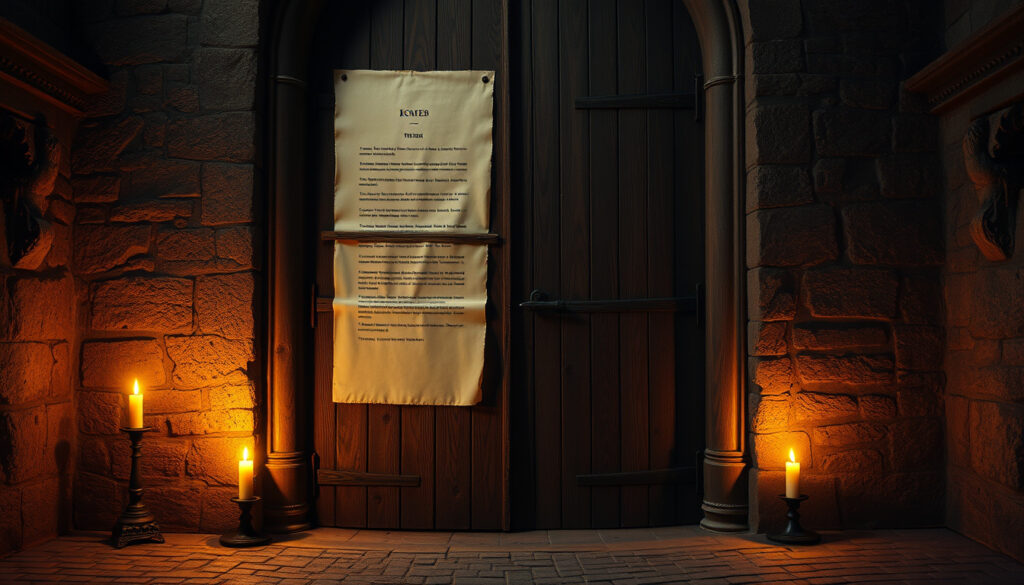
Few figures in history changed the course of faith as dramatically as Martin Luther. A German monk and theologian, his 95 Theses—traditionally nailed to a church door on October 31, 1517 (Encyclopaedia Britannica, reference publisher)—ignited a firestorm that split Western Christianity.
Born: 10 November 1483 · Died: 18 February 1546 · Key Event: 95 Theses (1517) · Role: German theologian and reformer · Denomination Founded: Lutheranism
Quick snapshot
- Born in Eisleben on 10 November 1483 (BBC History, UK public broadcaster)
- Posted 95 Theses on 31 October 1517 (Encyclopaedia Britannica, reference publisher)
- Excommunicated 3 January 1521 (Encyclopaedia Britannica, reference publisher)
- Married Katharina von Bora in 1525 (Biography.com, biographical publisher)
- Whether Luther actually nailed the 95 Theses to the church door (tradition, not definitively documented) (Encyclopaedia Britannica, reference publisher)
- Exact wording of his dying words – multiple versions exist (BBC History, UK public broadcaster)
- Whether he actually said “Here I stand” at the Diet of Worms – the phrase may have been added later (Encyclopaedia Britannica, reference publisher)
- 1483: Born in Eisleben (BBC History, UK public broadcaster)
- 1505: Entered Augustinian monastery (BBC History, UK public broadcaster)
- 1517: Posted 95 Theses (Encyclopaedia Britannica, reference publisher)
- 1521: Excommunication and Diet of Worms (Encyclopaedia Britannica, reference publisher)
- 1534: Published full German Bible (BBC History, UK public broadcaster)
- 1546: Died in Eisleben (BBC History, UK public broadcaster)
- Lutheran–Catholic ecumenical dialogues continue today (Encyclopaedia Britannica, reference publisher)
- Pope Francis has acknowledged Luther’s positive intent (Encyclopaedia Britannica, reference publisher)
A summary of key biographical details follows.
| Attribute | Value |
|---|---|
| Full Name | Martin Luther |
| Born | 10 November 1483, Eisleben, Holy Roman Empire |
| Died | 18 February 1546, Eisleben, Holy Roman Empire |
| Occupation | Theologian, professor, monk, reformer |
| Known For | Initiating the Protestant Reformation |
| Spouse | Katharina von Bora |
| Denomination | Lutheranism |
What is Martin Luther most famous for?
The 95 Theses (1517)
- Luther posted the 95 Theses on October 31, 1517, challenging the sale of indulgences (Encyclopaedia Britannica, reference publisher).
- The Theses were written in Latin and intended for academic debate (World History Encyclopedia, historical education site).
- After being translated into German and spread by the printing press, they became the spark of the Reformation (BBC History, UK public broadcaster).
Diet of Worms (1521)
- Summoned before Emperor Charles V, Luther refused to recant his writings, reportedly saying, “Here I stand; I can do no other” (Encyclopaedia Britannica, reference publisher).
- The Edict of Worms declared him a heretic and banned his works (Encyclopaedia Britannica, reference publisher).
Translation of the Bible into German
- Luther’s translation of the New Testament (1522) and the complete Bible (1534) made Scripture accessible to ordinary Germans (BBC History, UK public broadcaster).
- His language work helped standardize the German language (Encyclopaedia Britannica, reference publisher).
The implication: Luther’s actions forced a rupture that reshaped the religious map of Europe.
How did Martin Luther change Christianity?
Justification by faith alone (sola fide)
- Luther argued that salvation comes through faith in Christ alone, not through good works or indulgences (History Extra, history magazine).
- This principle became the central pillar of Lutheran theology (Encyclopaedia Britannica, reference publisher).
Priesthood of all believers
- Luther taught that all baptized Christians share equal spiritual status—no special priestly class is needed to mediate between God and people (BBC History, UK public broadcaster).
Authority of Scripture alone (sola scriptura)
- Only the Bible, not church tradition or papal decrees, was the ultimate authority for faith and practice (History Extra, history magazine).
Luther’s call for a direct relationship with God inadvertently empowered secular rulers to control church affairs in their territories—placing princes, not priests, at the head of regional churches.
The implication: Luther’s reforms created not one new church but a patchwork of Protestant denominations, each claiming Scripture as its foundation.
What were Luther’s three main ideas?
Sola Scriptura (Scripture alone)
- The Bible is the sole source of religious authority—neither councils nor popes can add to it (History Extra, history magazine).
Sola Fide (faith alone)
- Salvation is received through faith in Christ, not earned by human effort (Encyclopaedia Britannica, reference publisher).
Sola Gratia (grace alone)
- Grace is a free gift of God, not something that can be purchased or merited (Encyclopaedia Britannica, reference publisher).
By elevating Scripture alone, Luther removed the pope as a unifying authority, but he also opened the door for endless interpretation—each community could now read and decide doctrine differently.
The catch: This decentralized authority fragmented Protestantism into countless denominations.
Why was Martin Luther excommunicated?
The Leipzig Debate (1519)
- In a disputation with theologian Johann Eck, Luther denied papal supremacy and the infallibility of church councils (Encyclopaedia Britannica, reference publisher).
Papal bull Exsurge Domine (1520)
- Pope Leo X issued a bull threatening Luther with excommunication unless he recanted 41 alleged errors (Encyclopaedia Britannica, reference publisher).
- Luther publicly burned the bull, a direct act of defiance (BBC History, UK public broadcaster).
Diet of Worms (1521)
- Luther was excommunicated on January 3, 1521, and then summoned before the imperial diet (Encyclopaedia Britannica, reference publisher).
- Despite the threat of death, he refused to recant. The Edict of Worms placed him under imperial ban (Encyclopaedia Britannica, reference publisher).
Luther avoided execution only because Elector Frederick III protected him. Without secular allies, a lone theologian could not have survived—a reminder that the Reformation was as much a political as a theological revolution.
The pattern: Luther’s defiance was shielded by political power, highlighting the inseparable link between religious reform and state support.
What was Martin Luther’s biggest problem with the church?
Sale of indulgences
- Luther condemned the practice of selling certificates to reduce time in purgatory, famously tied to fundraising for St. Peter’s Basilica (Biography.com, biographical publisher).
- He argued that only God’s grace—not money—could forgive sins (Encyclopaedia Britannica, reference publisher).
Papal authority and corruption
- Luther viewed the pope as the Antichrist for claiming to forgive sins and control salvation (Encyclopaedia Britannica, reference publisher).
- He believed the church had strayed from biblical poverty and humility (BBC History, UK public broadcaster).
Doctrinal deviations
- Beyond indulgences, Luther rejected the Catholic doctrines of transubstantiation (while retaining real presence) and the sacrificial nature of the Mass (Encyclopaedia Britannica, reference publisher).
The implication: Luther’s challenge forced Christians to choose between institutional authority and personal conviction, a divide that persists today.
Timeline
- 1483 – Born in Eisleben (BBC History, UK public broadcaster)
- 1505 – Entered the Augustinian monastery after a thunderstorm (BBC History, UK public broadcaster)
- 1517 – Posted the 95 Theses on October 31 (Encyclopaedia Britannica, reference publisher)
- 1519 – Leipzig Debate with Johann Eck (Encyclopaedia Britannica, reference publisher)
- 1520 – Bull Exsurge Domine threatens excommunication (Encyclopaedia Britannica, reference publisher)
- 1521 – Excommunicated and Diet of Worms (Encyclopaedia Britannica, reference publisher)
- 1524–1525 – Peasants’ War; Luther condemned the rebellion (Encyclopaedia Britannica, reference publisher)
- 1534 – Published complete German Bible (BBC History, UK public broadcaster)
- 1546 – Died on February 18 in Eisleben (BBC History, UK public broadcaster)
Confirmed facts
- Birth and death dates (10 Nov 1483, 18 Feb 1546) (BBC History, UK public broadcaster)
- Excommunication date (3 Jan 1521) (Encyclopaedia Britannica, reference publisher)
- Marriage to Katharina von Bora in 1525 (Biography.com, biographical publisher)
- Posting of 95 Theses on 31 Oct 1517 (tradition) (Encyclopaedia Britannica, reference publisher)
What’s unclear
- Whether he actually nailed the Theses to the door (Encyclopaedia Britannica, reference publisher)
- Exact wording of his dying words (multiple accounts) (BBC History, UK public broadcaster)
- Whether he actually said “Here I stand” at the Diet of Worms (Encyclopaedia Britannica, reference publisher)
Quotes
“Unless I am convinced by the testimony of the Scriptures or by clear reason … I am bound by the Scriptures I have quoted and my conscience is captive to the Word of God. I cannot and will not retract, since it is neither safe nor right to go against conscience.”
— Martin Luther, at the Diet of Worms, 1521 (Encyclopaedia Britannica, reference publisher)
“The Theses became a manifesto that turned a protest about a German indulgence scandal into a major crisis in Western Christianity.”
— Encyclopaedia Britannica, reference publisher (Encyclopaedia Britannica)
These words capture the central paradox of Luther’s thought: radical freedom anchored in total submission to God.
Summary
Martin Luther’s theological crisis did not only reshape doctrine—it redrew the map of Europe. For the Catholic Church, the loss of half a continent was a wound that still bleeds in ecumenical talks today. For Protestants, Luther’s insistence on conscience over authority remains a double-edged sword: it empowers individual belief but also fuels endless fragmentation. For anyone living in the West, the Reformation’s legacy is the question Luther forced on Christendom—does truth lie in institutions or in the individual’s encounter with Scripture?
Frequently asked questions
What language did Martin Luther use for his Bible translation?
He translated the Bible into German, drawing on the dialect of the Saxon court to create a common literary language (Encyclopaedia Britannica, reference publisher).
How many children did Martin Luther have?
Luther and Katharina von Bora had six children: Hans, Elisabeth, Magdalena, Martin, Paul, and Margarethe (Biography.com, biographical publisher).
Did Martin Luther believe in predestination?
Yes, Luther held a form of predestination—he believed salvation was entirely dependent on God’s electing grace, not human will (Encyclopaedia Britannica, reference publisher).
What was Martin Luther’s view on baptism?
Luther affirmed infant baptism as a means of grace, rejecting the Anabaptist view that only believers should be baptized (Encyclopaedia Britannica, reference publisher).
How did Martin Luther’s wife Katharina von Bora influence his work?
Katharina managed the family household, hosted students, and contributed to Luther’s home-based community of scholars. She was instrumental in his later work (Biography.com, biographical publisher).
Why did Martin Luther write the Small Catechism?
He wrote the Small Catechism (1529) to instruct ordinary people in the basics of Christian faith—a response to the poor religious knowledge he observed during visitations (Encyclopaedia Britannica, reference publisher).
What is the Lutheran view of the Eucharist compared to Catholicism?
Lutherans believe in the real presence of Christ “in, with, and under” the bread and wine (sacramental union), rejecting transubstantiation but affirming a physical presence (Encyclopaedia Britannica, reference publisher).
Did Martin Luther ever retract his writings?
He refused to retract at the Diet of Worms and never formally recanted. However, later in life he softened some positions (e.g., on the papacy’s role) while maintaining his core doctrines (BBC History, UK public broadcaster).
britannica.com, worldhistory.org, cslewisinstitute.org, nls.uk, thecollector.com, gotquestions.org, britannica.com
More related posts
 Pottery Barn vs Alternatives: Is It Worth the Price
 Murray Cook: Red Wiggle’s Life, Career, and Net Worth
 Mekia Cox: The Rookie, Michael Jackson Dance & Family
 Tatiana Schlossberg’s Acute Myeloid Leukemia Battle
 Is Nick Kroll a Nepo Baby? His Career & Amy Poehler
 Big W Warringah Mall – Store Guide and Opening Hours
 Vince McMahon 2026: Net Worth, WWE Ownership & TKO Role
 Value Parking Melbourne Airport: Rates, Tips & Deals