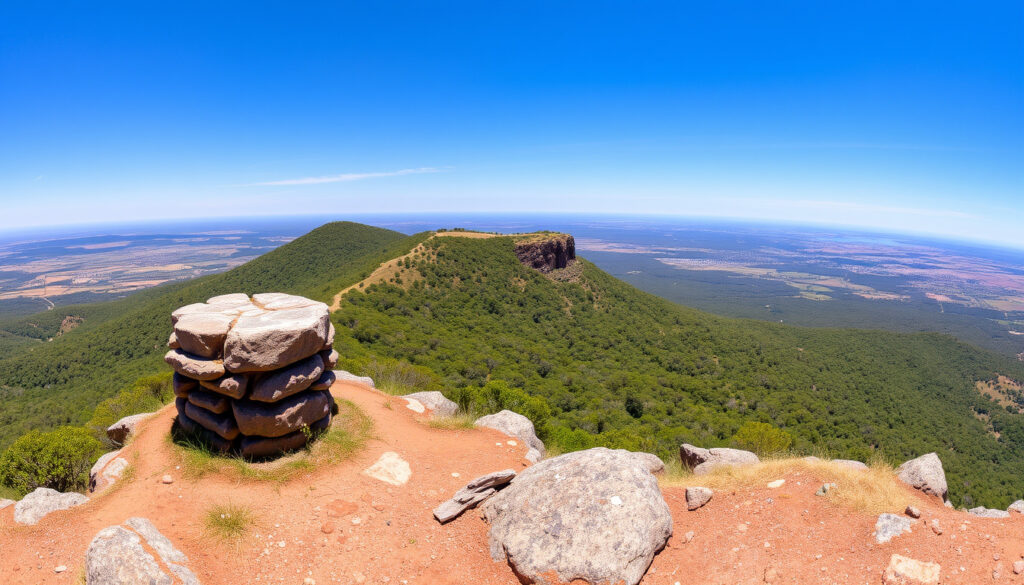
Mount Lofty Summit Guide: Height, History & Views
There’s a reason Adelaide locals refer to Mount Lofty with a mix of pride and practicality — it’s the city’s backyard peak, its coldest patch on a winter morning, and the place where the view makes you forget the 15-kilometre climb from the CBD. This guide pulls together the numbers, the history, and the logistics so you can decide whether you’re driving, hiking, or just heading up for the sunset dinner.
According to ABC News, the summit recorded a biting 1.6 °C during a cold September morning in 2024.
ABC News
Elevation: 727 m (2,385 ft) ·
Location: Adelaide Hills, South Australia ·
First European ascent: 1831 by George Bass ·
Ownership: Cleland Conservation Park (South Australian Government) ·
Managed by: National Parks and Wildlife Service South Australia ·
Notable feature: Mount Lofty Summit lookout, panoramic views of Adelaide
Quick snapshot
- Mount Lofty is the highest point in the Adelaide metropolitan area at 727 m (PeakVisor, a mountain database)
- The summit is managed by South Australia’s parks authority with vehicle access gates open 6:00am–11:00pm October–March and 6:00am–9:00pm April–September (Parks SA, the state’s official land manager)
- Whether Mount Lofty is the absolute coldest place in South Australia: the official record is Yongala at −8.0 °C, but Mount Lofty repeatedly tops Bureau of Meteorology daily coldest lists (Bureau of Meteorology, Australia’s national weather authority)
- 1831: George Bass ascends Mount Lofty (Wikipedia)
- 1834: Colonel William Light names the peak (State Library of South Australia via Wikipedia) (Wikipedia)
- 1977: Mount Lofty Botanic Gardens established (Parks SA)
- 22 July 2021: Mount Lofty records South Australia’s coldest daytime temperature at 5.2 °C (Bureau of Meteorology)
- Mount Lofty Summit is located at 266 Mount Lofty Summit Road, Crafers (Visit Adelaide Hills, tourist guide)
Who owns Mount Lofty?
History of ownership and tenure
Mount Lofty sits within Cleland Conservation Park, a protected area gazetted under South Australian legislation. The land is owned by the state government and managed by the National Parks and Wildlife Service South Australia, which operates the summit visitor centre, gift shop, and car park. Colonel William Light named the peak in 1834 after the nearby high ground of the Mount Lofty Ranges, according to the State Library of South Australia’s historical records (via Wikipedia).
The State Library of South Australia confirms that Colonel William Light named the peak in 1834.
State Library of South Australia
Current management by National Parks and Wildlife Service
The National Parks and Wildlife Service runs the accredited visitor information centre at the summit, open daily from 9:00 am to 5:00 pm (Stirling Adelaide Hills, a local tourism site). The same agency manages the vehicle access gates, which open from 6:00 am to 11:00 pm between October and March, and from 6:00 am to 9:00 pm from April to September (Parks SA, the state’s official land manager).
Public ownership means the summit stays accessible without entry fees — but it also means budget constraints for maintenance. The summit restaurant and gift shop generate revenue, yet Parks SA has not published a breakdown of operating costs. Visitors should expect occasional facility closures during fire danger periods or severe weather.
The implication: Public ownership keeps costs low for visitors but means maintenance depends on budget allocation.
What is the tallest hill in Adelaide?
Elevation and ranking of Mount Lofty
Mount Lofty stands at 727 metres (2,385 feet) above sea level, making it the highest point in the Adelaide metropolitan area (PeakVisor, a mountain database). For context, that’s roughly the height of a 240-storey building stacked on end. The summit is about 15 kilometres east of the Adelaide CBD (Wikipedia, encyclopaedic reference).
Comparison to other peaks in the Mount Lofty Ranges
The Mount Lofty Ranges extend from Cape Jervis in the south to just north of Peterborough. The highest peak in the entire range is Mount Bryan at 936 metres, but Mount Lofty holds the title for the Adelaide metropolitan area. Here’s how the local peaks compare:
Four peaks, one pattern: Mount Lofty dominates the urban skyline but is dwarfed by regional summits further north.
| Peak | Elevation (m) | Distance from Adelaide CBD | Context |
|---|---|---|---|
| Mount Lofty | 727 | 15 km east | Highest point in metro Adelaide |
| Mount Bryan | 936 | 200 km north | Highest in the Mount Lofty Ranges |
| Mount Magnificent | 389 | 50 km south | Prominent southern peak |
The implication: If you’re looking for the tallest climb within a day trip from Adelaide, Mount Lofty is the clear winner. For sheer elevation in the whole range, you’d need to drive north for three hours to Mount Bryan.
Access to the summit is straightforward — you can drive via Mount Lofty Summit Road, take a public bus (routes 823 or 830F from Adelaide), or hike one of several trails including the popular Waterfall Gully to Mount Lofty track (Parks SA). Parking is available at the summit with no entry fee for the lookout area.
What is the coldest place in South Australia?
Winter temperatures at Mount Lofty Summit
Mount Lofty regularly appears near the top of South Australia’s coldest-day lists. On 22 July 2021, the summit recorded 5.2 °C as the state’s coldest daytime temperature (Bureau of Meteorology, Australia’s national weather authority).
According to the Bureau of Meteorology, Mount Lofty recorded South Australia’s coldest daytime temperature at 5.2 °C on 22 July 2021.
Bureau of Meteorology
More recently, in autumn 2026, Mount Lofty was the coldest day location on 25 May at 9.3 °C (Bureau of Meteorology, seasonal summary). During winter, daytime temperatures at the summit may not exceed 3–4 °C on the coldest days (A Rock And A Hard Place, a local tourism site). The Bureau of Meteorology’s July 2026 monthly report listed Mount Lofty as South Australia’s coolest days on average at 10.5 °C, with a coldest day of 7.0 °C on the 5th (Bureau of Meteorology, monthly summary).
Record low temperatures in South Australia
The absolute coldest temperature ever recorded in South Australia is −8.0 °C at Yongala, a town in the mid-north, not Mount Lofty. However, the summit’s elevation and exposure to cold fronts mean it frequently appears in Bureau of Meteorology reports as the state’s chilliest daytime location — a distinction that matters more for visitors planning a hike than for climate records (Bureau of Meteorology, annual summary).
Mount Lofty offers the coldest air in the Adelaide region for most of winter — great for a crisp sunrise photo, less great if you arrive without a jacket. For the absolute record low in the state, you’d need to be in Yongala on a −8.0 °C morning. The summit restaurant and café serve hot drinks and meals between 9 am and 5 pm (Parks SA).
Is Adelaide hotter than Melbourne?
Average summer temperatures
Yes — Adelaide typically experiences hotter summers than Melbourne. The average January high for Adelaide is 29 °C, while Melbourne averages 26 °C (Bureau of Meteorology, Australia’s national weather authority). Adelaide’s Mediterranean climate brings dry, hot summers, whereas Melbourne’s oceanic climate produces more moderate heat with occasional cool changes.
Heatwave frequency
Adelaide records more heatwave days per summer than Melbourne. The city’s inland location and lack of sea breezes on many days drive temperatures into the high 30s and low 40s more frequently. The Bureau of Meteorology’s climate data shows Adelaide’s average number of days above 35 °C is roughly double Melbourne’s (Bureau of Meteorology, climate averages).
Climate classification (Mediterranean vs oceanic)
Adelaide is classified as Mediterranean (Köppen Csa) with hot, dry summers and mild, wet winters. Melbourne sits in the oceanic zone (Köppen Cfb) with milder summers and more evenly distributed rainfall. The difference matters for anyone comparing cities to live in or visit: Adelaide delivers more reliable beach weather; Melbourne offers less extreme heat but more humidity (Bureau of Meteorology, climate classification data).
The pattern: If you prefer consistent summer heat with less risk of a cool change ruining a long weekend, Adelaide wins. If you want summers that rarely tip into dangerous heatwave territory, Melbourne is the safer bet.
Which is colder, Adelaide or Perth?
Winter temperatures and rainfall
Perth has milder winters than Adelaide. The average July low in Perth is 9 °C, compared to Adelaide’s 8 °C (Bureau of Meteorology, climate averages). That one-degree difference translates to fewer frost mornings in Perth and slightly warmer overall winter days. However, Perth receives more winter rainfall — about 140 mm in July compared to Adelaide’s 70 mm — making its winters wetter but not colder.
Minimum temperatures comparison
Adelaide’s minimum temperatures in winter drop lower than Perth’s on average. The record low for Adelaide is −0.4 °C (July 1982), while Perth’s is 0.6 °C (July 1997). Mount Lofty’s lowest recorded minimum is 1.6 °C on 9 November 1992 (Yahoo Weather/The West, weather history aggregator) — a reminder that even the summit doesn’t routinely dip below freezing, despite the chilly perception.
What this means: For someone choosing between Adelaide and Perth based on winter comfort, Perth has a slight edge with warmer minimums and less severe cold snaps. But Adelaide wins for drier winter days — less rain to cancel outdoor plans.
Related reading: Mount Wellington (Kunanyi) Visitor Guide: Drive, Bus & Hikes
ahc.sa.gov.au, weather.thewest.yahoo.com.au, arockandahardplace.com.au, sacommunity.org, en.wikipedia.org, bom.gov.au
Frequently asked questions
How high is Mount Lofty?
Mount Lofty stands at 727 metres (2,385 feet) above sea level, making it the highest point in the Adelaide metropolitan area.
Is Mount Lofty a volcano?
No — Mount Lofty is a fault-block mountain, not a volcano. It was formed by tectonic uplift along the Para Fault system, part of the Mount Lofty Ranges.
Can I drive to the summit of Mount Lofty?
Yes — Mount Lofty Summit Road provides direct vehicle access to the summit car park. Gates are open 6:00 am–11:00 pm from October to March and 6:00 am–9:00 pm from April to September.
Are dogs allowed at Mount Lofty Botanic Gardens?
Dogs are not permitted inside the Mount Lofty Botanic Gardens. However, they are allowed on-leash in parts of Cleland Conservation Park.
Is there an entry fee for Mount Lofty?
There is no entry fee to access the Mount Lofty Summit lookout, visitor centre, or the surrounding Cleland Conservation Park. The Botanic Gardens also have free entry.
What is the best time of day to visit Mount Lofty for sunset?
Late afternoon, about 30 minutes before sunset, offers the best golden-hour light. The summit car park can fill up, so arriving early is recommended. The Summit Restaurant and Café serves meals until 5:00 pm.
How long does it take to hike Mount Lofty from Waterfall Gully?
The Waterfall Gully to Mount Lofty Summit trail is about 8 km round trip and typically takes 2 to 2.5 hours each way for a moderate fitness level. The trail is well-marked.
More related posts
 Hamiso Tabuai-Fidow: Biography, Accident, and Personal Life
 QLD Public Holidays 2021: Complete List and Dates.
 Renee Rapp: age, height, ADHD diagnosis, and coming out story
 Mt Fuji Climbing Guide: Volcanic History, Routes, Safety
 Australian Stock Markets – ASX Guide, Indices and Hours
 Simon Cowell 2025: Health, Son Eric, Net Worth & Latest Updates
 Green Square Library: Hours, Booking & Services in Sydney
 Anna Malygon: Age, Net Worth, Castle, and Why She’s Rich