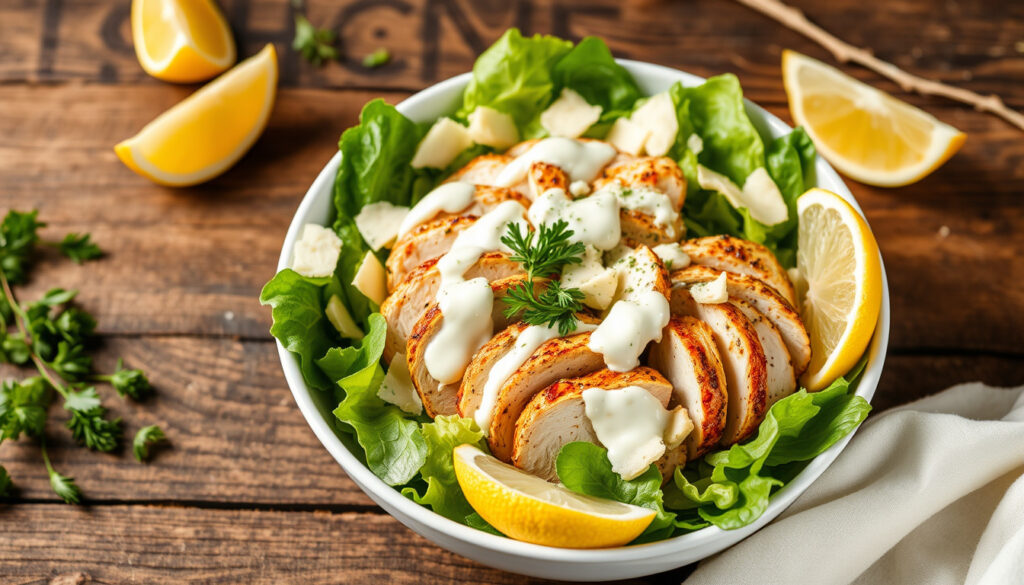
Chicken Caesar Salad – Recipe, Nutrition and Keto Guide
Chicken Caesar salad remains one of the most popular restaurant orders and home-prepared meals across North America. This classic dish combines crisp romaine lettuce, grilled chicken, parmesan cheese, and the distinctive tangy dressing that has made Caesar salad a household name for nearly a century.
Whether you’re looking for a quick weeknight dinner, a high-protein meal for fitness goals, or a lighter version that doesn’t sacrifice flavor, the chicken Caesar salad delivers. The recipe adapts readily to different dietary needs, from keto-friendly variations to low-calorie preparations that come in at roughly 270 calories per serving.
How Do You Make Chicken Caesar Salad?
Creating a restaurant-quality chicken Caesar salad at home requires just a handful of ingredients and about 25 minutes total. The key lies in properly seasoning the chicken and balancing the dressing’s bold flavors against the cool crunch of fresh lettuce.
15 mins
10 mins
4
~450/serving
What is in Chicken Caesar Salad?
The essential components include grilled chicken breast, fresh romaine lettuce, parmesan cheese, and Caesar dressing. Traditional recipes also call for croutons, though these can be omitted for lower-carb versions. The dressing itself typically contains olive oil or mayonnaise, lemon juice, Worcestershire sauce, anchovy paste, Dijon mustard, and garlic.
For a Low-Calorie Chicken Caesar Salad version, many home cooks substitute reduced-fat mayonnaise for traditional full-fat options while keeping the other bold ingredients intact.
How to Make Chicken Caesar Salad Dressing
The dressing forms the backbone of the dish’s flavor profile. For a keto-friendly version, whisk together olive oil, anchovy paste, minced garlic, fresh lemon juice, and Dijon mustard until emulsified. This combination provides rich umami depth with negligible carbohydrates.
Store-bought alternatives like Primal Kitchen and Ken’s Light offer convenient options that hold up nutritionally when homemade isn’t practical. Those avoiding anchovies can substitute a simple garlic-lemon vinaigrette made with olive oil and parmesan cheese, maintaining the salad’s signature taste while lightening the recipe.
Homemade Caesar dressing keeps refrigerated for up to one week. The flavors actually improve after a day or two as the garlic and anchovy meld with the oil and acid.
- Use high heat (400°F/200°C) and cook chicken breasts 3-5 minutes per side for juicy results
- Let chicken rest 5 minutes before slicing to retain juices
- Massage romaine lettuce with a pinch of salt to soften cell walls for better texture
- Add dressing just before serving to prevent soggy lettuce
- Toss ingredients gently rather than combining aggressively
- Toast croutons separately if using to maintain their crunch
| Nutrient | Amount per Serving | % Daily Value |
|---|---|---|
| Calories | 450-600 | 22-30% |
| Protein | 33-57g | 66-114% |
| Total Fat | 10-50g | 13-64% |
| Carbohydrates | 4-40g | 1-13% |
| Saturated Fat | 4-8g | 20-40% |
| Sodium | 600-1200mg | 26-52% |
| Fiber | 2-4g | 7-14% |
| Sugar | 2-6g | 4-12% |
Is Chicken Caesar Salad Healthy?
The answer depends largely on which version you prepare and how generously you apply the dressing. A standard restaurant Caesar salad with creamy dressing and breaded chicken can exceed 1,000 calories, making it comparable to a full meal in energy density.
How Many Calories in Chicken Caesar Salad?
Caloric content varies dramatically based on preparation method and ingredient choices. The low-calorie version provides approximately 271 calories with 33 grams of protein, making it suitable for weight management goals. The keto-focused variation using chicken thighs delivers around 648 calories and 57 grams of protein per serving, offering superior satiety for those following low-carbohydrate eating patterns.
Traditional preparations typically land between 800-1,000 calories due to full-fat dressing, croutons, and larger portion sizes. The fat content alone can reach 76 grams in standard versions, accounting for the majority of caloric density.
Is Chicken Caesar Salad Keto Friendly?
Yes, with modifications. A Keto Grilled Chicken Caesar Salad omits croutons entirely and uses olive oil-based dressing instead of mayonnaise-based versions. This reduces net carbohydrates to approximately 4.5 grams while maintaining high protein intake. The combination of healthy fats from olive oil and protein from chicken supports ketone metabolism when done correctly.
Caesar dressing is the primary source of hidden calories and sodium. A typical restaurant serving contains 300-400 calories from dressing alone. Request dressing on the side or use half the amount to control intake significantly.
Substituting Greek yogurt for half the mayonnaise in homemade dressing adds probiotic benefits while reducing fat content. Adding extra romaine boosts fiber without significant calories, improving satiety and digestive health.
Chicken Caesar Salad Variations and Substitutions
One of the dish’s strengths is its adaptability. Home cooks have developed numerous variations to suit different dietary preferences, allergy restrictions, and flavor preferences while maintaining the Caesar salad’s essential character.
Can You Make Chicken Caesar Salad Without Anchovies?
Absolutely. While traditional Caesar dressing uses anchovy paste for its distinctive umami flavor, several alternatives achieve similar depth without seafood. A garlic-lemon vinaigrette made with olive oil, freshly squeezed lemon juice, minced garlic, and grated parmesan provides bright, tangy flavor that complements the other ingredients well.
Worcestershire sauce, commonly called for in Caesar recipes, itself contains anchovies. Those with fish allergies or vegetarian requirements should verify that any store-bought dressing or sauce used does not contain hidden anchovy-derived ingredients.
What is the Best Dressing for Chicken Caesar Salad?
The ideal dressing depends on your dietary goals. For traditional flavor with reasonable calories, a blender-made dressing with olive oil, anchovy, garlic, lemon, and Dijon offers the most authentic taste. Those prioritizing protein might prefer a Greek yogurt base, which adds roughly 10 grams of protein per quarter-cup serving while creating a creamier texture.
Pre-made options from brands like Primal Kitchen use avocado oil and contain no refined sugars or industrial seed oils, making them preferable to traditional supermarket varieties for health-conscious eaters.
The Evolution of Chicken Caesar Salad
Understanding the timeline behind this dish reveals how it became the menu staple it is today.
- 1924: Caesar Cardini, an Italian-American restaurateur in Tijuana, Mexico, reportedly created the original Caesar salad for Hollywood celebrities seeking something special during prohibition.
- 1940s-1950s: The recipe spread to fine dining establishments across the United States, with restaurants adding chicken as a protein boost.
- 1980s: Grilled chicken became a standard addition, transforming the side dish into a complete meal and popular lunch option.
- 2000s: Health consciousness drove demand for lighter dressings, lower-calorie versions, and portion-controlled preparations.
- 2010s-Present: Keto, Paleo, and gluten-free adaptations proliferated, making the dish accessible across numerous dietary frameworks.
Understanding What We Know for Certain
When researching chicken Caesar salad, conflicting information often emerges regarding specific ingredients, preparation techniques, and nutritional values. Some claims warrant scrutiny.
| Established Facts | Variables and Uncertainties |
|---|---|
| Traditional Caesar dressing contains anchovy | Exact original recipe debated; multiple versions exist |
| Chicken is an optional but common addition | Grilling method varies by recipe source |
| Romaine lettuce provides crunch and nutrition | Specific calorie counts depend heavily on dressing amount |
| Calorie range spans 270-1000+ per serving | Protein content varies with chicken portion size |
| Dressing can be made keto-friendly with modifications | Store-bought brand quality varies significantly |
Published sources do not provide comprehensive information on air fryer preparation methods, detailed historical documentation of Caesar salad’s origins, chef quotes directly discussing the dish, USDA nutrition database entries, or extensive allergen substitution tables. Additional primary sources would be needed to address these gaps thoroughly.
Why Chicken Caesar Salad Remains Popular
Several factors explain the dish’s enduring appeal across nearly a century of culinary trends. The combination of textures—crisp lettuce, tender chicken, and crunchy croutons—creates sensory satisfaction that many alternatives lack. The bold, acidic dressing stimulates appetite without overwhelming the palate.
From a practical standpoint, chicken Caesar salad requires no special equipment, uses widely available ingredients, and comes together in under 30 minutes. This accessibility makes it a reliable choice for home cooks of varying skill levels while still feeling appropriate for company and special occasions.
The dish also occupies a middle ground between indulgence and nutrition. By selecting appropriate preparation methods, diners can enjoy a satisfying meal that aligns with various health goals—whether that means building lean muscle through high-protein options or managing caloric intake with lighter preparations.
Where to Find More Information
For those seeking authoritative nutritional data, the USDA FoodData Central provides comprehensive nutrient databases covering individual ingredients. The FDA Food Safety guidelines offer storage and preparation recommendations for poultry products.
Historical context regarding the original Caesar salad invention and its evolution is documented in culinary archives and encyclopedic sources, though specific details vary by account.
Summary
Chicken Caesar salad works as a versatile, adaptable meal that fits numerous dietary approaches. The basic formula—lettuce, chicken, parmesan, dressing—accepts modifications freely while maintaining its core identity. Whether counting calories for weight management, optimizing macronutrients for fitness goals, or simply enjoying a satisfying dinner, the chicken Caesar salad offers a reliable foundation worth mastering in any home kitchen.
How many calories in chicken Caesar salad?
Calorie content ranges from approximately 271 calories for low-calorie versions up to 1,000+ calories for traditional restaurant preparations. The wide range depends primarily on dressing type and amount, whether croutons are included, and portion size.
Is chicken Caesar salad good for weight loss?
Lower-calorie versions with light dressing and grilled chicken can support weight loss efforts. Focus on portion control and avoid creamy, high-fat dressings. Adding extra vegetables increases volume without significant calories, improving satiety.
Can you eat chicken Caesar salad on keto?
Yes, with modifications. Omit croutons and use olive oil-based dressing instead of mayonnaise-based varieties. This reduces net carbohydrates to approximately 4.5 grams while maintaining adequate protein and fat intake.
What can I substitute for anchovies in Caesar dressing?
A garlic-lemon vinaigrette with olive oil and parmesan serves as an effective substitute. The lemon provides brightness while parmesan adds umami depth without fish products. Some cooks also use capers for briny flavor enhancement.
How long does chicken Caesar salad last in the refrigerator?
Separately stored components keep differently. Lettuce remains fresh 3-5 days when wrapped in paper towels. Cooked chicken lasts 3-4 days. Prepared salad with dressing should be consumed within 1-2 days as the lettuce wilts and dressing separates.
Is Caesar salad dressing healthy?
Traditional Caesar dressing contains significant fat and sodium. Store-bought versions vary widely in quality. Olive oil-based homemade versions offer heart-healthy monounsaturated fats, while mayonnaise-based varieties tend toward higher saturated fat content.
Can I make chicken Caesar salad ahead of time?
Prepare components separately and combine just before serving. Grill chicken and refrigerate. Chop lettuce and store in a container with paper towels. Keep dressing in a jar. This approach preserves texture while allowing quick assembly when ready to eat.
What type of lettuce is best for Caesar salad?
Romaine lettuce provides the ideal combination of crunch and mild flavor that stands up to bold dressing. The inner pale hearts offer tenderness while darker outer leaves contribute nutritional density and texture contrast.
More related posts
 Shaun Micallef: Children, Religion, Current Projects
 Live AFL Score – Real-Time Updates, Ladder & Matches
 El Capitan: Facts, Deaths, Free Solo, and Climbing History
 El Chapo: Where he is now, net worth, and Escobar comparison
 Pokémon Packs Guide 2026: What’s Available, Worth, and Rare Cards
 Ajla Tomljanovic: Career, Injuries, Relationships, and Net Worth
 Luc Besson: The Fifth Element and His Film Career