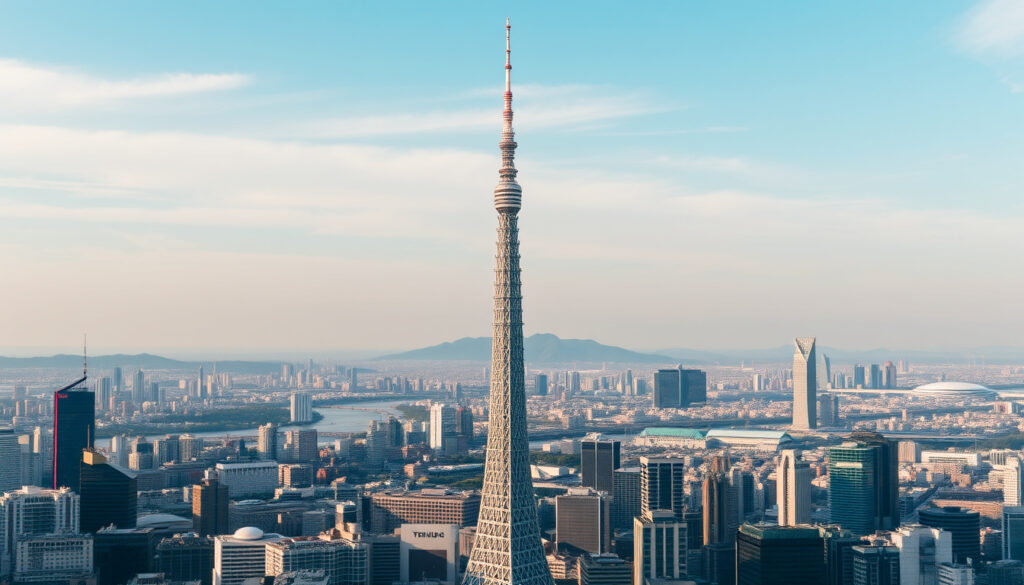
Tokyo Skytree Visitor Guide: Ticket Prices, Tips & Views
There’s a reason Tokyo Skytree keeps making visitor itineraries: at 634 meters, it’s the tallest tower in Japan. The useful questions—what it costs, how long to block out, and whether Tokyo Tower is the smarter pick—require a little more digging.
Height: 634 meters (2,080 ft) · Observation decks: Tembo Deck at 350 m, Tembo Galleria at 450 m · Opened: 22 May 2012 · Floors: 29 above ground, 2 basement
Quick snapshot
- Weekday adult Tembo Deck entry starts at ¥2,100, with the 350+450 combo at ¥3,100 (Tobu Railway ticketing).
- Tembo Deck sits at Floor 350 and Tembo Galleria at Floor 450 (official e-ticket platform).
- Mount Fuji visibility depends on season and cloud cover (JNTO Fuji views guide).
- Crowd levels are not published in real time, so waiting times remain estimates (official ticket list).
- The tower opened in 2012, making it the new option against Tokyo Tower’s 1958 debut (Tokyo Tower official fees page).
- Its height of 634 m was planned around broadcasting, not just observation (Tobu Railway).
- Date-specific e-tickets are now the booking norm (official ticket list).
- Check the same ticket list before you go for current packages and partner bundles (official ticket page).
The tower’s vital statistics line up around one operational choice: the main visitor experience starts at Floor 350 and extends to Floor 450.
| Metric | Value |
|---|---|
| Height | 634 m (2,080 ft) — official e-ticket platform |
| Floors | 29 above ground, 2 basement — official ticket page |
| Observation Deck (Tembo Deck) | 350 m (1,148 ft) — official e-ticket platform |
| High-speed Elevator | Up to 600 m/min — official ticket page |
| Construction Cost | Approx. 4 billion USD — official ticket page |
| Location | Sumida, Tokyo — Tobu Railway |
What’s so special about the Tokyo Skytree?
Tokyo Skytree is the kind of building that reshapes a skyline and then reshapes the way people talk about the city. It is a television broadcasting tower with two separate paid observation levels, and it anchors a large commercial district in Sumida.
What is the height of Tokyo Skytree?
- At 634 m (2,080 ft), it is the tallest tower in Japan (official e-ticket platform).
- For comparison, Tokyo Tower stands 333 m (Tokyo Tower official fees page).
The practical effect of that height is altitude: you clear more of Tokyo’s haze on a clear day, and you get a broader horizon than the older tower can offer.
What is the design significance?
- Skytree is a television broadcasting tower, not just a sightseeing structure (official ticket list).
- Its two observation levels are named Tembo Deck and Tembo Galleria and are positioned on Floors 350 and 450 (official e-ticket platform).
- The tower anchors Tokyo Skytree Town, a commercial complex in Sumida (Tobu Railway).
The design matters for visitors because the tower’s function pushes the viewing decks high enough to change what you can see.
What attractions are at the base?
- Tokyo Skytree Town includes the tower plus shopping, dining, and partner attractions such as teamLab Planets and the Konica Minolta Planetarium TENKU (official ticket list).
- The official ticket list also bundles transport options like the SKY HOP BUS with tower admission (official ticket list).
The implication: Skytree operates as both a broadcast asset and a visitor destination, and that dual role is why it has two separate paid viewing levels.
Is it worth it to go up the Tokyo Skytree?
How much are tickets?
- Weekday adult Tembo Deck ticket: ¥2,100 via Tobu Railway; weekend and holiday pricing is higher (Tobu Railway ticketing).
- Weekday adult combo covering Floor 350 + Floor 450: ¥3,100 via Tobu Railway (Tobu Railway ticketing).
- Official ticket page lists adult Tembo Deck from ¥3,000 and adult combo from ¥3,800 (official ticket page).
- The official e-ticket platform showed a sample date price of ¥2,600 for Tembo Deck alone, proving date-specific pricing (official e-ticket platform).
The spread between ¥2,100 and ¥3,800 means the price you see in a blog post may not be the price you pay.
How much time needed?
- A standard visit, including both decks, takes 1–2 hours.
- Waiting lines in peak season can add about an hour.
- Buying a timed e-ticket in advance shortens the queue (official e-ticket platform).
If you add a meal in Skytree Town, plan for another hour, but the tower loop itself is compact.
What are the pros and cons of visiting?
Upsides
- 360-degree view over Tokyo from 350 m and 450 m (official e-ticket platform).
- Highest public observation level in the tower at Tembo Galleria.
- Part of a large complex with food and shopping.
Downsides
- More expensive than Tokyo Tower: main deck ¥2,100+ vs ¥1,500 (Tobu Railway / Tokyo Tower official fees page).
- Queues can eat into your time in peak season.
- Free city viewpoints offer similar skyline views without the price tag.
At weekday prices, the full Skytree experience costs ¥3,100, while Tokyo Tower’s Main Deck runs ¥1,500. You’re paying roughly double for a higher vantage point and a modern tower complex.
Which one is better, Tokyo Tower or Skytree?
What are the main differences in height and age?
- Skytree: 634 meters, opened 2012 (official e-ticket platform).
- Tokyo Tower: 333 meters, opened 1958 (Tokyo Tower official fees page).
- Both serve as broadcast towers and observation decks (official ticket list / Tokyo Tower official fees page).
Height and age explain most of the different vibe: the new tower feels like a 21st-century transport hub, the old one like a mid-century landmark.
Which has better views?
- Skytree’s Tembo Galleria at Floor 450 is the highest of the two towers’ public levels (official e-ticket platform).
- Tokyo Tower’s Top Deck Tour is a separate guided add-on, with web adult pricing from ¥3,300 (Tokyo Tower Top Deck Tour ticket page).
- From Skytree, Mount Fuji is visible in clear winter conditions (JNTO Fuji views guide).
On paper, Skytree has the better view because it is simply higher; on a clear winter day, that height can put Fuji on the horizon.
Which is cheaper?
- Tokyo Tower Main Deck: ¥1,500 for adults (Tokyo Tower official fees page).
- Tokyo Tower one-day pass: ¥2,700 for adults (Tokyo Tower one-day pass page).
- Skytree weekday adult combo: ¥3,100; official counter pricing from ¥3,800 (Tobu Railway / official ticket page).
Three differences drive the whole choice, and one pattern runs through them: Skytree charges a premium for height and scale, while Tokyo Tower positions itself as a cheaper, nostalgic alternative.
| Measure | Tokyo Skytree | Tokyo Tower |
|---|---|---|
| Height | 634 m (official e-ticket) | 333 m (Tokyo Tower fees) |
| Opened | 2012 (official e-ticket) | 1958 (Tokyo Tower fees) |
| Main deck entry (adult) | ¥2,100+ weekday (Tobu Railway) | ¥1,500 (Tokyo Tower fees) |
| Highest overlook | Tembo Galleria, Floor 450 (official e-ticket) | Top Deck Tour, paid add-on (Top Deck page) |
| Base complex | Tokyo Skytree Town (Tobu Railway) | Minato district setting (Tokyo Tower fees) |
The pattern: Skytree wins on scale, Tokyo Tower wins on cost and character. Choose by budget and by how much the extra height actually means to you.
Can I see Fuji from Tokyo Skytree?
What is the best month to see Mount Fuji?
- Winter, generally December through February, is the most likely window for clear visibility (JNTO Fuji views guide).
- Low humidity and blue skies improve your odds (JNTO Fuji views guide).
The mountain is roughly 100 km away, so clear air matters more than the tower’s height.
What weather conditions are ideal?
- Early morning or late afternoon are the recommended times for up-close Fuji views (JNTO Fuji views guide).
- Low cloud, haze, or rain will hide the mountain even on otherwise pleasant days.
Check a forecast before booking your view slot.
Which direction to look?
- Look southwest from the Tembo Galleria side.
- In winter conditions, the mountain appears low on the horizon, roughly 100 km away.
If Mount Fuji is the reason you’re going up, check the forecast before you pay. Winter mornings give you the best chance, but no ticket can guarantee a mountain that’s hiding behind cloud.
Why this matters: a Fuji sighting from Skytree is a bonus, not a guarantee; plan the visit around the city view and treat Fuji as the payoff on a clear winter day.
How much time do I need at Tokyo Skytree?
What is the typical visit duration?
- Most visitors need 1–2 hours for the full loop including both decks.
- Add up to an hour for queues on busy weekends and holidays.
- If you buy a timed e-ticket, you skip part of that wait (official e-ticket platform).
The tower itself is quick; the lines and the surrounding complex are what stretch a visit.
Are there waiting times?
- Peak-season waits are common, especially at weekends and holidays.
- The official ticket list sells date-specific and time-specific products, which suggests crowd management is built into the system (official ticket list).
A pre-booked ticket doesn’t remove the security check, but it cuts the purchase line.
How to get to Tokyo Skytree?
- The Tobu Skytree Line runs directly to Tokyo Skytree Station (Tobu Railway).
- Tokyo Skytree Town connects to nearby rail and metro stations.
Tower access is easiest from the station inside the complex.
Is Tokyo Skytree free entry?
- No. Adult Tembo Deck admission starts at ¥2,100 on weekday partner pricing (Tobu Railway).
- Official counter pricing for adults starts at ¥3,000 (official ticket page).
- Children 5 and under are free (Tobu Railway).
Free entry exists only for children under six; everyone else pays.
A quick step-by-step plan
- Choose your deck: Floor 350 only or the 350+450 combo (official e-ticket platform).
- Compare weekday partner pricing (¥2,100/¥3,100) with the official counter list (¥3,000/¥3,800) (Tobu Railway / official ticket page).
- Book a date-specific e-ticket online if your plan is fixed (official e-ticket platform).
- If Mount Fuji matters, pick a clear winter morning and go early (JNTO Fuji views guide).
- Use the Tokyo Skytree Station exit and follow signs into Tokyo Skytree Town (Tobu Railway).
The trade-off: Skytree costs more and takes about the same time as a Tokyo Tower visit, so the deciding factor is usually whether you want the highest deck or just an evening skyline.
What we know vs what’s still unclear
Confirmed facts
- Adult admission applies from age 15; ages 6–14 pay child rates (official e-ticket platform).
- Children 5 and under are free (Tobu Railway).
- Tembo Deck and Tembo Galleria sit at Floors 350 and 450 (official e-ticket platform).
- Tokyo Tower’s Main Deck is ¥1,500 for adults (Tokyo Tower official fees page).
What’s unclear
- Whether Fuji appears depends on the day’s cloud cover; JNTO recommends early morning or late afternoon but can’t guarantee visibility (JNTO Fuji views guide).
- Real-time crowd levels are not published, so waiting times are estimates (official ticket list).
- The value of the Tembo Galleria upgrade depends on how much time you spend at the upper level; no official data splits visitor time between decks.
- Date-specific pricing means the exact ticket cost changes with demand, so published prices are a snapshot, not a fixed rate (official e-ticket platform).
What this means: the hard facts about price and height are stable; the soft facts about visibility and crowds are conditional, so plan with slack.
What the sources say
The Tembo Deck is at Floor 350 and the Tembo Galleria is at Floor 450.
— Tokyo Skytree official e-ticket platform (official e-ticket platform)
Japan National Tourism Organization’s guidance: early morning or late afternoon give the best chance for up-close Fuji views.
— JNTO, Fuji views guide
Together, those two facts explain the whole planning problem: you need to know the floors before you buy, and you need the right time of day before you hope for Fuji.
The takeaway
Tokyo Skytree is the most dramatic view in Tokyo, but it is not the only view, and it is not cheap. The tower rewards travelers who book ahead, pick a clear winter morning, and decide on the ¥3,100 combo only because the extra floor matters to them. For a traveler on a tight schedule or a tight budget, the choice is clear: take the Tokyo Tower main deck at ¥1,500, save the difference, and save Skytree for a day when Fuji is actually visible.
Related reading: Mt Fuji climbing guide · Red Kangaroo facts
ticket.tokyotower.co.jp, en.tokyotower.co.jp, fuji-san.info, tokyoskytree.jp, tokyotourism.org
Frequently asked questions
What are the operating hours of Tokyo Skytree?
Check the official ticket page for today’s hours, since they can shift by season.
Is there a restaurant at Tokyo Skytree?
Tokyo Skytree Town at the base houses dining and shopping options, and the official ticket list also connects to partner attractions in the complex.
How many floors does Tokyo Skytree have?
The tower has 29 above-ground floors and 2 basement levels, with the main observation decks on Floors 350 and 450.
Can I buy tickets in advance?
Yes. The official e-ticket platform sells date-specific Tembo Deck and combo tickets, so you can lock in your visit time before you arrive.
Are there discounts for students or children?
Children aged 6–14 pay child rates, and children 5 and under are free. The official e-ticket platform notes that junior high school students aged 15 can still be charged the child rate, while high school students pay adult rates.
What is the best time of day to visit Tokyo Skytree?
JNTO says early morning or late afternoon are the best windows for up-close Mount Fuji views, and those windows also help if Fuji is part of the plan.
How do I get to Tokyo Skytree by public transport?
Take the Tobu Skytree Line directly to Tokyo Skytree Station, which connects into Tokyo Skytree Town.
Related reading
If the view from the tower makes you want to get closer to the mountain, see our Mt Fuji climbing guide for what it takes to plan a trip to the real thing.
More related posts
 America Ferrera: Ethnicity, Superstore Exit, Career Highlights
 Nintendo Direct 2026: June 9 Date and Switch 2 Reveals
 Luke Beveridge: Heritage, Salary, Family, and Recent Controversies
 Zara Phillips: Children, Career, Net Worth and Title
 Xi Jinping: Leadership, Term Limits, and Power Structure
 Claudia Cardinale: The Iconic Career of a 1960s Star
 Jeff Beck: Cause of Death, Relationships with Depp & Clapton
 Ezra Mam Car Accident, Drug Test, Salary & Biography