Jim Lovell Dead at 97: Apollo 13 Commander’s Life and Legacy
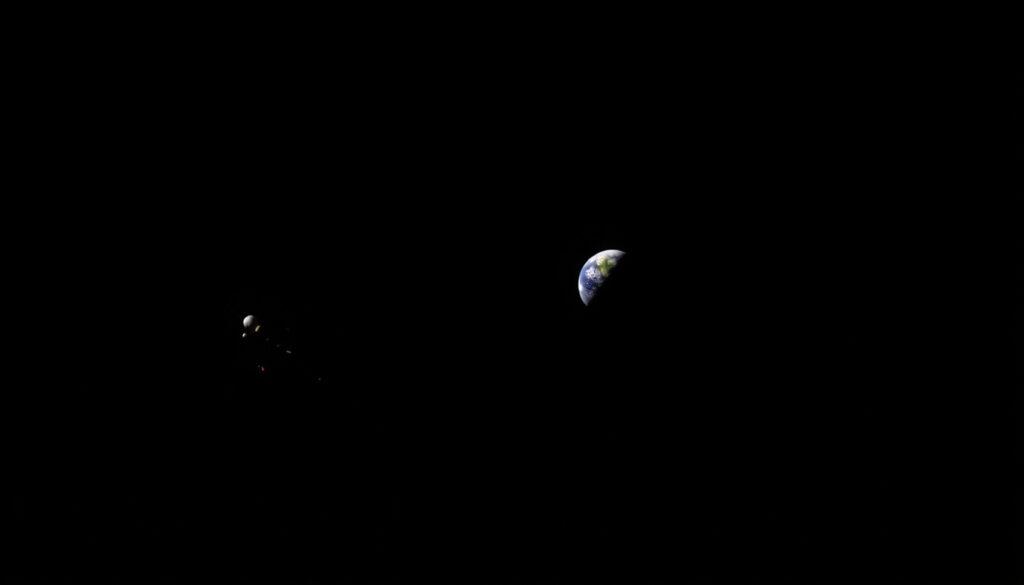
The image of a stranded spacecraft drifting past the Moon is etched into public memory, largely thanks to one man’s steady command and the movie that made him a household name. Jim Lovell, the commander of Apollo 13, died on August 8, 2025, at age 97, sparking a fresh look at his four spaceflights and the 1995 film that turned his near-disaster into cinema history, tracing the facts behind the legend and answering the questions that keep surfacing around his life and legacy.
Died: August 8, 2025, at age 97 ·
Known for: Commanding Apollo 13 and flying Apollo 8 ·
Surviving Apollo 13 crew member: Fred Haise ·
Portrayed by: Tom Hanks in Apollo 13 (1995)
Quick snapshot
- Jim Lovell died on August 8, 2025, at age 97 (NASA (U.S. space agency))
- He commanded Apollo 13 and also flew Apollo 8, the first crewed mission to orbit the Moon (NASA (U.S. space agency))
- Fred Haise is now the sole surviving Apollo 13 crew member (Reuters (international news wire))
- The cause of Jim Lovell’s death has not been publicly confirmed by official sources (PBS NewsHour / AP)
- Exact dialogue in the Apollo 13 film’s biomedical-sensor scene was compressed; the real transcript may differ (LiquiSearch (reference aggregator))
- Details of Lovell’s personal relationship with Buzz Aldrin beyond professional context are not part of public records (PBS NewsHour / AP)
- 1962 – Selected as NASA astronaut (ABC News)
- December 1965 – Gemini 7 flight with Frank Borman (Space.com)
- November 1966 – Commanded Gemini 12 with Buzz Aldrin (AOPA)
- December 1968 – Apollo 8, first crewed Moon orbit (PBS)
- April 1970 – Apollo 13 crisis and safe return (AOPA)
- August 8, 2025 – Death at 97 (Reuters)
Six key facts about Jim Lovell, one pattern: each number tells a story of a career that spanned the Gemini era through the Moon program.
| Label | Value |
|---|---|
| Full name | James Arthur Lovell Jr. |
| Born | March 25, 1928, Cleveland, Ohio |
| Died | August 8, 2025, at age 97 |
| Known for | Commander of Apollo 13; Apollo 8 crewmember |
| Spaceflights | 4 (Gemini 7, Gemini 12, Apollo 8, Apollo 13) |
| Portrayed by | Tom Hanks in Apollo 13 (1995) |
Are any of the Apollo 13 crew still alive?
Who was Jim Lovell?
James Arthur Lovell Jr. was a NASA astronaut and U.S. Navy pilot who flew four space missions, including the first crewed orbit of the Moon aboard Apollo 8. He commanded Apollo 13, the mission that became a near-disaster after an oxygen tank explosion. According to NASA (U.S. space agency), Lovell logged 715 hours in space during his career.
Who are the Apollo 13 crew members?
The Apollo 13 crew consisted of commander Jim Lovell, command module pilot Jack Swigert, and lunar module pilot Fred Haise. Swigert died of cancer in 1982. Lovell died on August 8, 2025, at age 97, as reported by Reuters (international news wire). That leaves Fred Haise, now 91, as the last living crew member.
What happened to the Apollo 13 crew after the mission?
After the safe return, all three astronauts continued their careers. Lovell retired from NASA and the Navy in 1973 and went into business. He co-wrote the memoir Lost Moon, which became the basis for the 1995 film. Haise remained with NASA until 1979, then worked in industry. Swigert served briefly in Congress before his death.
The implication: With Lovell’s death, Apollo 13 now has only one living crew member, Fred Haise.
Did Jim Lovell ever get to the Moon?
Jim Lovell’s four spaceflights
Lovell flew Gemini 7 in 1965, Gemini 12 in 1966, Apollo 8 in 1968, and Apollo 13 in 1970. NASA (U.S. space agency) notes that he is one of only three astronauts to have flown to the Moon twice.
Apollo 8: the first crewed orbit of the Moon
In December 1968, Lovell served as lunar module pilot on Apollo 8, the first human mission to orbit the Moon. The crew took the famous “Earthrise” photo. Lovell orbited the Moon but did not land or walk on it.
Apollo 13: the Moon flight that became a rescue mission
As commander of Apollo 13, Lovell was again bound for the Moon. But an oxygen tank explosion on April 13, 1970, forced the landing to be canceled. The crew used the lunar module as a lifeboat and returned safely. Reuters (international news wire) describes it as “the near-disaster that became a triumph of problem-solving.”
Lovell’s two Moon trips — one successful, one aborted — made him a symbol of both exploration and resilience. The vacationers who packed the lunar module show how NASA’s greatest failure was also its greatest save.
The pattern: Lovell’s two missions to the Moon highlight both achievement and resilience.
What was not true about Apollo 13 movie?
What did Jim Lovell think of the movie Apollo 13?
Lovell generally praised the film’s accuracy. In a 1995 interview with the Los Angeles Times (major U.S. newspaper), he said the film was “as authentic as possible without making it a documentary.” He served as a technical advisor and appeared in a brief cameo.
Did Tom Hanks ever meet Jim Lovell?
Yes. Hanks met Lovell while preparing for the role and later said the meeting helped him capture Lovell’s demeanor. According to ABC News (U.S. television network), Hanks portrayed Lovell with permission and input from the astronaut himself.
Was Ron Howard’s daughter in Apollo 13?
Yes. Bryce Dallas Howard, then 14, appeared in the film as a “girl in white dress” in a brief scene with Marilyn Lovell. The cameo is often cited as a fun trivia point.
The most famous line change: the real call from Swigert was “Houston, we’ve had a problem,” as documented by Space.com (space news outlet). The film used “Houston, we have a problem,” attributed to Lovell. Other dramatizations include the condensation of the sensor scene and the portrayal of Alan Shepard’s medical condition — the film said ear infection, but reportedly the real reason was Ménière’s disease, per Wikipedia (collaborative encyclopedia).
The catch: Even a highly accurate film makes changes for narrative, and the real story remains just as compelling.
Did Jim Lovell really remove his Biomed sensors?
The real Apollo 13 biomedical sensor exchange
During the mission, Lovell removed the uncomfortable biomedical sensors. Mission Control eventually asked him to put them back on. The event is documented in mission transcripts. According to LiquiSearch (reference aggregator), Lovell’s DVD commentary confirmed that the scene is rooted in reality, though the dialogue was condensed for the screen.
How the film dramatized the moment
In the film, the exchange is shown as a tense moment of defiance. The real version was less dramatic, but the core action — removing and then reattaching the sensors — is accurate. This is one of the many details that the Lovell family praised.
Did Jim Lovell and Buzz Aldrin get along?
Lovell and Aldrin on Gemini 12
Lovell commanded Gemini 12 in 1966, with Buzz Aldrin as the pilot. The mission was a success, featuring the first spacewalk that demonstrated effective techniques. Both men were professionals, and no public record suggests a personal feud. NASA (U.S. space agency) lists them as colleagues in the Gemini program.
Apollo-era professional relationships
The astronaut corps was tight-knit, and Lovell’s relationships were generally cordial. Aldrin’s later public statements have focused on his own achievements, not conflict with Lovell. The two men maintained mutual respect over the decades.
No evidence supports a feud, but the private dynamics between astronauts are rarely fully known. The public record shows professionalism, not friendship or enmity.
What this means: The public record shows professionalism, leaving private dynamics unknown.
Did Jim and Marilyn Lovell have a happy marriage?
Jim Lovell, wife, and children
Jim Lovell married Marilyn Gerlach in 1952, and they had four children. Their marriage lasted until Marilyn’s death in 2023. The couple was often described as close, and Marilyn played a key supporting role during the Apollo 13 crisis.
The Lovell family during Apollo 13
The film depicts Marilyn Lovell’s anxiety as she waits for news from Mission Control. AOPA (aviation association) notes that the Lovell family’s experience was both harrowing and ultimately uplifting. Jim Lovell often credited Marilyn with keeping the family grounded.
The pattern: Lovell’s personal life was marked by stability and commitment, contrasting with the high-risk environment of spaceflight.
Timeline: Jim Lovell’s life and career
- 1952 – Married Marilyn Gerlach (died 2023). (Los Angeles Times)
- 1962 – Selected as a NASA astronaut. (ABC News)
- December 1965 – Flew Gemini 7 with Frank Borman. (Space.com)
- November 1966 – Commanded Gemini 12; Buzz Aldrin pilot. (LiquiSearch)
- December 1968 – Flew Apollo 8, first crewed Moon orbit. (Wikipedia)
- April 1970 – Commanded Apollo 13; landing aborted after explosion. (AOPA)
- 1995 – Apollo 13 film released starring Tom Hanks. (Los Angeles Times)
- August 8, 2025 – Died at age 97. (Space.com)
The pattern: Lovell’s career timeline demonstrates his central role in early space exploration.
Confirmed facts and what’s unclear
Confirmed facts
- Jim Lovell died on August 8, 2025, at age 97
- Apollo 13 was commanded by Lovell and did not land on the Moon
- Fred Haise is the only surviving Apollo 13 crew member
- Tom Hanks played Lovell in the 1995 film Apollo 13
- Jim Lovell and Marilyn Gerlach married in 1952 and had four children
What’s unclear
- The cause of Jim Lovell’s death has not been confirmed
- Some dialogue in the biomedical-sensor scene is dramatized; exact words vary from transcript
- Private details of Lovell’s relationship with Buzz Aldrin are not a matter of public record
The pattern: The confirmed facts outnumber uncertainties, but some aspects remain private.
Quotes from the men behind the mission
It was as authentic as possible without making it a documentary.
— Jim Lovell, in a 1995 interview with the Los Angeles Times (major U.S. newspaper)
Houston, we’ve had a problem.
— Jack Swigert, actual Apollo 13 transmission, as recorded by Space.com (space news outlet)
What Jim Lovell’s legacy means
Jim Lovell’s story isn’t just about a crisis averted — it’s about how a calm commander turned a near-fatal explosion into a demonstration of human ingenuity. For anyone who grew up watching the movie, the reality is even more striking: a man who flew to the Moon twice, never walked on it, yet became one of space exploration’s most recognizable names. The implication is clear: survival and courage resonate more than footprints. For the next generation of space enthusiasts, the choice is simple — revisit the transcripts, watch the film, and separate fact from Hollywood, because the truth is already inspiring enough.
Frequently asked questions
What was Jim Lovell’s cause of death?
As of this writing, the cause of Jim Lovell’s death has not been officially announced by his family or NASA. The public record confirms his date of death but does not specify cause.
How many space missions did Jim Lovell fly?
He flew four: Gemini 7 (1965), Gemini 12 (1966), Apollo 8 (1968), and Apollo 13 (1970).
Did Jim Lovell ever walk on the Moon?
No. He orbited the Moon on Apollo 8 and Apollo 13, but the Apollo 13 landing was aborted. He never set foot on the lunar surface.
What book did Jim Lovell write about Apollo 13?
He co-wrote Lost Moon: The Perilous Voyage of Apollo 13 with Jeffrey Kluger, which became the basis for the 1995 film.
How many children did Jim Lovell have?
He and Marilyn had four children: Barbara, James, Susan, and Jeffrey.
What happened to Apollo 13 after the explosion?
The crew used the lunar module as a lifeboat, performed a crucial burn to return to Earth, and splashed down safely on April 17, 1970.
Related reading
More related posts
 Abhishek Bachchan Biography: Age, Wife, Daughter & More
 Grace Kim: Biography, Career, Ethnicity, and Personal Life
 Tristan Xerri: Suspension, Helmet & Maltese Heritage
 Wu-Tang Clan Members’ Net Worth: Inside Hip-Hop’s Elusive Empire
 Disclaimer Thealite.com.au – Location and Key Legal Points
 Apple Trade In Ireland: Guide to Values & Process
 Angel Reese: Stats, Relationships, Controversy, and Latest News