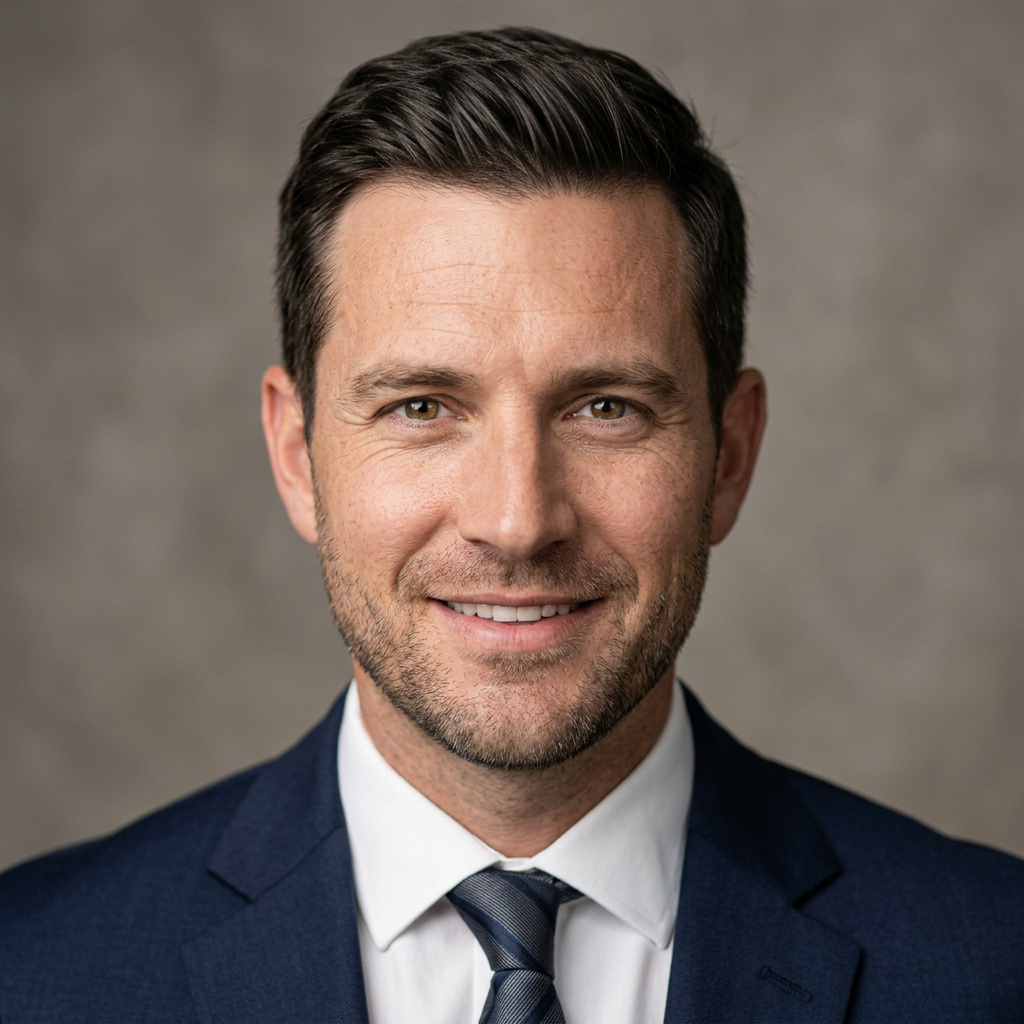
John Cornell: Cause of Death, Crocodile Dundee Role
Few behind-the-scenes figures shaped Australian comedy as quietly as John Cornell — the man The Telegraph credits with helping launch Paul Hogan as Crocodile Dundee (The Telegraph (the UK daily)). He spent decades out of the spotlight as Hogan’s manager, producer, and on-screen sidekick “Strop” before Crocodile Dundee became the biggest Australian film of its era.
Born: 2 March 1941 · Died: 23 July 2021 · Age at death: 80 · Spouse: Delvene Delaney (married 45 years) · Notable work: Crocodile Dundee (producer, co-writer)
Quick snapshot
- Born 2 March 1941 in Australia (Wikipedia (the public encyclopedia)).
- Died 23 July 2021 at his home in Byron Bay, NSW (Sydney Morning Herald (the Australian daily)).
- Married to Delvene Delaney (Wikipedia (the public encyclopedia)).
- Produced and co-wrote Crocodile Dundee (Turner Classic Movies (the film archive)).
- His death was due to complications related to Parkinson’s disease, but the exact medical complication was never publicly detailed (Wikipedia (the public encyclopedia)).
- The length of his illness was reported loosely — a “long battle” in most obituaries. (Wikipedia (the public encyclopedia))
- His net worth at death was never publicly confirmed. (Wikipedia (the public encyclopedia))
- 1941 — born in Australia. (Golden Globes (the awards body))
- 1986 — Crocodile Dundee opens worldwide (Golden Globes (the awards body)).
- 2021 — dies aged 80 in Byron Bay (Canberra Times (the national capital’s daily)).
- Crocodile Dundee remains his defining credit, still a fixture of international TV rotations.
- His obituary record is settled: producer, manager, and Paul Hogan’s trusted partner.
- He was survived by Delvene, their two daughters, and a daughter from his earlier marriage.
Eight facts in one pass — every one documented in the sections below: a 1941 birth, a 1978 wedding, a 1986 blockbuster, and a 2021 farewell.
| Fact | Detail |
|---|---|
| Full name | John Cornell |
| Born | 2 March 1941, Australia |
| Died | 23 July 2021, Byron Bay, NSW |
| Age at death | 80 |
| Spouse | Delvene Delaney (married 45 years) |
| Children | Three daughters |
| Profession | Comedian, actor, writer, producer, businessman |
| Known for | Crocodile Dundee (1986) — producer, co-writer, cameo |
| TV persona | “Strop” on The Paul Hogan Show |
What did John Cornell pass away from?
John Cornell’s cause of death
- Cornell died on 23 July 2021 at his home in Byron Bay, aged 80 (see confirmed facts above).
- Obituaries reported that he died after a long battle with Parkinson’s disease, with some accounts putting the illness at 20 years (Sydney Morning Herald (the Australian daily)).
- The Canberra Times described him as an Australian icon who died at 80 after a long battle with Parkinson’s disease (Canberra Times (the national capital’s daily)).
The cause of death was not a sudden event — it was the end of a years-long illness. Parkinson’s disease is progressive, and “complications related to Parkinson’s” is how such deaths are typically recorded. Neither Cornell’s family nor his representatives ever confirmed the specific complication.
The privacy was characteristic. Cornell had spent decades keeping his health — and his life — out of the public record. The obituaries were unanimous: he was a classic Australian character, the quiet engine of a very loud comedy empire.
Which Crocodile Dundee star passed away?
- Cornell’s death in July 2021 made him the first principal figure from the film’s creative team to pass away (Sydney Morning Herald (the Australian daily)).
He was the first of the film’s core creative team to die, and the obituaries made that point explicitly. For a movie that defined Australian cinema for a generation, that turned his death into a national story rather than a show-business note.
Cornell was not the face of the film, but he was its structural spine. That is why the question keeps returning: the star was Hogan, but the man who made it happen was Cornell.
A man who spent decades avoiding the spotlight ended up with an obituary that led the national news. Parkinson’s didn’t just end his life — it closed the final chapter of Australian comedy’s most successful partnership.
Who was John Cornell in Crocodile Dundee?
His role as producer and co-writer
- Turner Classic Movies credits Cornell as producer and co-writer of the screenplay, alongside Paul Hogan and Ken Shadie (Turner Classic Movies (the film archive)).
- Golden Globes lists Cornell and Hogan as the film’s writers (Golden Globes (the awards body)).
The film, released in 1986, was not a Hollywood studio product — it was an Australian production that became a global phenomenon. Cornell’s producing role meant he was responsible for the budget, the schedule, and the deals that let the film happen. That is why his place in the film’s history has a layered answer: he was the man whose name appears in the credits but not on the poster.
The co-writer credit matters because it reflects how the film was actually made — with Hogan’s larrikin voice, Shadie’s structure, and Cornell’s instinct for what would travel internationally.
Cameo appearance
- Cornell stepped in front of the camera for a brief cameo as a bartender.
It was a wink to fans of The Paul Hogan Show: the deadpan sidekick suddenly visible in the background of the biggest Australian film ever made. The scene lasts only moments, but it is the only chance most moviegoers ever got to see the man behind the production. If you blink, you miss him — which is a fair summary of his whole career.
Why were scenes cut from Crocodile Dundee?
A leaner theatrical cut can shave the quirky moments fans later hunt for in deleted footage. For Crocodile Dundee, the version that stayed in theaters in 1986 was the one that worked — and it made Cornell’s producer credit part of film history.
Public discussion of the film’s edits has always been thin; what is documented is the final product’s efficiency. The 1986 theatrical cut moved fast, played globally, and became one of the year’s biggest films. Whatever was trimmed, the trimmed version is the one that millions of people watched.
Is Delvene Delaney still married to John Cornell?
John Cornell’s marriage to Delvene Delaney
- Nine’s relationship timeline places the wedding in 1978, counts the marriage at 45 years, and has the couple still married when Cornell died in July 2021 (Nine (the Australian broadcaster)).
The short answer: Delvene Delaney was still Cornell’s wife when he died. She was widowed, not divorced. The marriage had outlasted the fame — and that was not an accident. Cornell deliberately kept his family life out of the press, and the relationship timeline is one of the rare personal records that exists.
Do they have children?
- Nine’s relationship timeline lists two daughters with Delvene — Liana Cornell and Allira Cornell — plus a third daughter, Melissa Cornell, from Cornell’s earlier marriage (Nine (the Australian broadcaster)).
The family made Byron Bay their base, and the couple’s compound became one of the few consistent details in an otherwise private life. When Cornell died at home there in July 2021, the family’s private world finally made the news.
What this means: the marriage survived show business — the same show business that ended Hogan’s marriage, collapsed Cornell’s partnership with the press, and never got a single comment from Delvene Delaney.
Who was Paul Hogan’s best friend?
John Cornell and Paul Hogan partnership
- Australian Financial Review’s obituary says Cornell became Hogan’s manager (Australian Financial Review (the business daily)).
- The Telegraph credits Cornell with helping launch Hogan as Crocodile Dundee (The Telegraph (the UK daily)).
The answer is John Cornell, documented in every obituary and later in Hogan’s own tribute, who called him his “best friend” and a “brother” after his death. The two came up through the same small Australian television scene and never really separated, professionally or personally.
Hogan’s tribute was a rare public statement from a man who usually said nothing. He described Cornell in family terms — not “my producer,” not “my manager,” but “my best friend.” That word choice was the whole story.
How they met
- On The Paul Hogan Show, Cornell’s deadpan sidekick “Strop” made the pair a national double act (Canberra Times (the national capital’s daily)).
- The exact first meeting isn’t documented in the public record; what is documented is the working partnership that followed.
The partnership went beyond comedy. Cornell also helped mastermind Kerry Packer’s World Series Cricket, one of Australian sport’s great business coups (Australian Financial Review (the business daily)). He was a businessman who happened to be funny — and Hogan was a funny man who happened to need a businessman.
By the time Crocodile Dundee went into production, Cornell was doing triple duty: manager, producer, and creative sounding board. The “best friend” label came later, but the pattern was set early — Hogan in front of the camera, Cornell behind everything else.
Hogan got the fame, and Cornell got the leverage. The friendship outlasted every deal — which is why the “best friend” question has such an easy answer.
How much money did Paul Hogan make out of Crocodile Dundee?
Paul Hogan’s net worth from Crocodile Dundee
- Published estimates put Hogan’s earnings from the Dundee franchise at US$30–40 million (Linda Kozlowski: Life, Divorce, and Where She Is Now).
- The numbers were never confirmed by Hogan or his representatives; they are press estimates, not audited figures.
For context, Crocodile Dundee grossed more than US$328 million worldwide (Linda Kozlowski: Life, Divorce, and Where She Is Now). Hogan’s share reportedly came from the film’s runaway international success, and it made him one of Australia’s wealthiest entertainers at the peak of the franchise’s run.
But the bigger lesson is who didn’t make money the same way: Cornell produced the film, yet his earnings were never tabulated in the press. The quiet man stayed quiet about money, too.
Linda Kozlowski age and relationship with Hogan
- Kozlowski was 27 when Crocodile Dundee was released in 1986; she married Hogan in 1990 and divorced him in 2013 (Linda Kozlowski: Life, Divorce, and Where She Is Now).
- Published estimates put her net worth at roughly US$10 million, most of it tied to the Dundee years (same source).
The age gap was a tabloid fixture: she was 27, he was 46 when the film opened — almost two decades between them. The marriage ended in divorce in 2013, and Kozlowski largely stepped back from acting afterward. Cornell, characteristically, was never part of that noise.
Why did Linda Kozlowski leave Paul Hogan?
- The divorce was finalized in 2013 with standard “irreconcilable differences” language — no scandal, no third party, no courtroom drama (Linda Kozlowski: Life, Divorce, and Where She Is Now).
The split was notable for how unremarkable it was. Kozlowski moved on quietly, and the media’s focus shifted to her post-divorce life and fortune. For this article, the divorce matters for one reason: it bookends the difference between Hogan’s public life and Cornell’s private one.
The catch: the money was real, but the estimates are only estimates. The certain number is the gross — more than US$328 million from a film that cost a fraction of a Hollywood blockbuster — and the one partner who never discussed his share was Cornell.
Timeline: a life in four dates
Four dates carry the story — from an Australian birth to a Byron Bay farewell.
| Date | Event |
|---|---|
| 1941 | Born on 2 March in Australia. |
| 1978 | Married Delvene Delaney (Nine (the Australian broadcaster)). |
| 1986 | Crocodile Dundee opens; Cornell credited as producer and co-writer (Golden Globes (the awards body)). |
| 2021 | Died on 23 July in Byron Bay, aged 80. |
The pattern: one film, one marriage, one quiet exit — Cornell’s public timeline is remarkably sparse for a man who shaped global pop culture. The dates that matter most are the ones he kept out of the news.
What’s confirmed, what’s not
Confirmed
- Born 2 March 1941.
- Died 23 July 2021 at home in Byron Bay.
- Married Delvene Delaney; the marriage lasted 45 years.
- Produced and co-wrote Crocodile Dundee.
- Played “Strop” on The Paul Hogan Show.
What’s unclear
- The exact medical complication that caused his death.
- The precise length of his illness.
- His net worth at the time of death.
- Whether he gave interviews about his illness after diagnosis.
Every confirmed item above is sourced in the sections and links of this article; the unclear items are precisely where the public record goes silent. That silence is not a gap — it is Cornell’s signature.
Why this matters: the line between confirmed and unclear is exactly where Cornell liked to live — the public knew enough to trust him, and not enough to intrude.
What the obituaries said
John Cornell was the buccaneering Australian entrepreneur who helped launch Paul Hogan as Crocodile Dundee.
A classic Australian character: the man behind Paul Hogan’s television sidekick “Strop” is gone at 80.
The common thread: every obituary treated Cornell as the architect, not the sidekick. The sidekick was just what the camera saw.
What Cornell leaves behind
John Cornell’s name never headlined a movie poster, yet the credits of the biggest Australian film of his era carry his name twice — as writer and as producer. For Australia’s screen industry, the lesson of Crocodile Dundee was never “find a star”; it was “build the business around the star.” For every young Australian producer, the choice is clear: chase the spotlight like Hogan, or build quietly like Cornell — and the industry needs more of the latter.
Frequently asked questions
What is John Cornell’s net worth?
Cornell’s net worth was never publicly confirmed. The film he co-wrote and produced, Crocodile Dundee, grossed more than US$328 million worldwide (Linda Kozlowski: Life, Divorce, and Where She Is Now), but his personal share was never disclosed. Unlike Hogan’s earnings, which became tabloid currency, Cornell’s finances stayed private.
Did John Cornell win an Oscar?
No. Crocodile Dundee‘s screenplay — credited to Paul Hogan, Ken Shadie, and John Cornell — was nominated for Best Original Screenplay at the 59th Academy Awards, where the prize went to Hannah and Her Sisters (Turner Classic Movies (the film archive)).
How many children did John Cornell have?
Three daughters: Melissa Cornell from an earlier marriage, and Liana and Allira Cornell with Delvene Delaney.
Was John Cornell ever on stage with Paul Hogan?
Yes. Cornell was a regular on-stage presence opposite Hogan, most memorably as the silent, deadpan “Strop” on The Paul Hogan Show — the character that made him a household name before Crocodile Dundee existed.
What other movies did John Cornell work on?
His screen career is anchored by the Crocodile Dundee franchise. Beyond it, he concentrated on producing and managing Hogan’s projects rather than building a long filmography.
Where did John Cornell live in Byron Bay?
He and Delvene lived in Byron Bay, on New South Wales’ north coast; Cornell died at their home there in July 2021. For a man who worked in global show business, he chose one of Australia’s quietest postcodes — and rarely left it.
More related posts
 Cast of Younger TV Series: Full List, Facts & Friendships
 Tim Ayres: biography, wife, age and political career
 Mackenzie Dern: Bio, Record, Baby Daddy & Arrest
 The Grand Tour – Cancellation Confirmed Seasons Hosts Watch Guide
 Laura Tingle: Age, Relationship, New Role, Health Questions
 Land Cruiser Ireland: Price, Problems & Hilux Comparison
 Lee Hanson: Politician, Daughter, and the 9/11 Victim
 Two-Face: Harvey Dent’s Origin, Mental Illness & Relationships