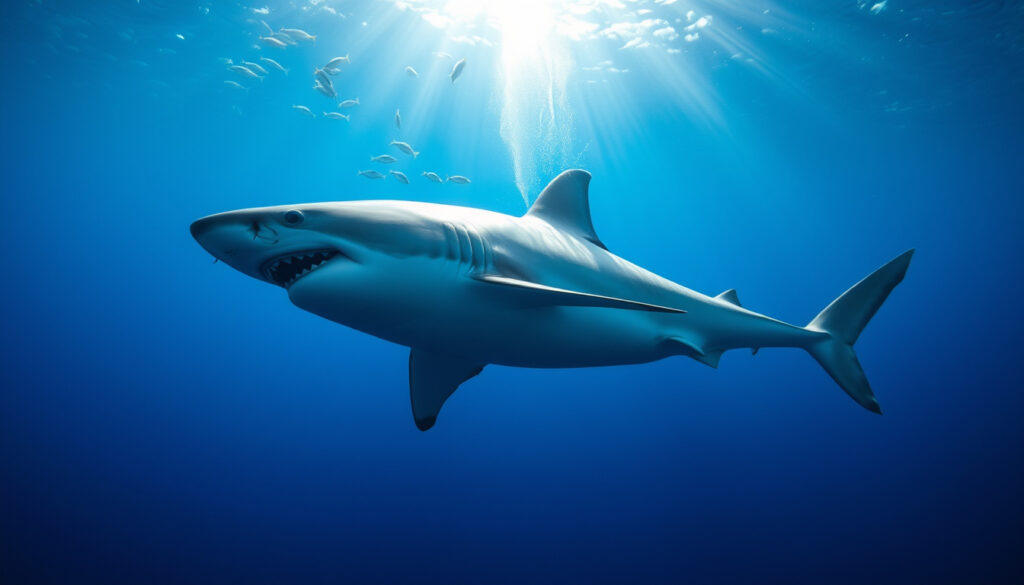
Great White Shark: Facts, Size, Attacks, and Predators
Few animals inspire as much fear as the great white shark, but real data reveals it is a complex apex predator that rarely targets humans and faces its own predator. From South Africa to the Mediterranean, this vulnerable species roams the oceans and deserves respect, not panic.
Average length (male): 11 to 13 feet ·
Average length (female): 15 to 16 feet ·
Maximum confirmed length: 20 feet ·
Known natural predator: Orca (killer whale) ·
Geographic range: Temperate and subtropical seas worldwide ·
Top 3 deadliest sharks (unprovoked attacks): Great white, tiger, bull
Quick snapshot
- Average male: 11–13 ft (Smithsonian Ocean)
- Average female: 15–16 ft (Smithsonian Ocean) (Smithsonian Ocean)
- Max recorded: 20 ft (NOAA Fisheries)
- Temperate and subtropical seas worldwide (NOAA Fisheries) (Britannica)
- Confirmed in Mediterranean (Britannica)
- Sightings in Irish waters (Government of Canada)
- Most unprovoked fatal attacks of any shark (Florida Museum of Natural History)
- Often mistaken identity (Florida Museum of Natural History) (Florida Museum of Natural History)
- Total global attacks per year: <100 (Florida Museum of Natural History) (Florida Museum of Natural History)
- Only known predator: Orca (Government of Canada)
- Orcas hunt great whites for liver (Government of Canada)
- No other animal regularly preys on adults (Government of Canada)
Six key facts, one pattern: the great white shark is both better understood and more vulnerable than most people realize.
| Attribute | Value |
|---|---|
| Scientific name | Carcharodon carcharias (Australian Museum) |
| Maximum length | 20 feet (6.1 m) (NOAA Fisheries) |
| Maximum weight | Approximately 5,000 pounds (2,268 kg) (NOAA Fisheries) |
| Diet range | Seals, sea lions, dolphins, fish, seabirds (NOAA Fisheries) |
| Conservation status | Vulnerable (IUCN) (Government of Canada) |
| Lifespan estimate | Up to 70 years or more (NOAA Fisheries) |
Are great white sharks aggressive to humans?
The great white is responsible for the highest number of unprovoked fatal attacks on humans of any shark species (Florida Museum of Natural History), yet the total remains low — fewer than 100 incidents globally each year. The real risk is vanishingly small for most ocean swimmers.
How many unprovoked attacks occur each year?
- Global yearly average of unprovoked white shark attacks is less than 100 (Florida Museum of Natural History)
- Fatalities are a fraction of that number (Florida Museum of Natural History)
The implication: despite their fearsome reputation, great whites rarely target humans. Most incidents are believed to be cases of mistaken identity or curiosity, not predation (Florida Museum of Natural History).
What triggers a great white shark to approach a human?
- Low visibility water can cause the shark to mistake a swimmer for a seal (Florida Museum of Natural History)
- Splashing and erratic movements can attract curiosity (NOAA Fisheries)
The pattern: most great white interactions with people are investigative, not predatory. Understanding this helps shift the narrative from irrational fear to evidence-based caution.
What is the only documented predator of the great white shark?
“At least two orcas killed white sharks at hotspots in South Africa.”
Do orcas hunt great white sharks in the wild?
- Yes – orcas have been observed killing great white sharks for their nutrient-rich livers (Government of Canada)
- This predation has led to temporary absences of great whites at known aggregation sites (Government of Canada)
Why this matters: the orca is the only animal that regularly preys on adult great white sharks. No other predator poses a consistent threat to this apex species.
Why are orcas considered the apex predator in this interaction?
- Orcas are larger, faster, and more socially coordinated than great whites (Britannica)
- They use cooperative hunting tactics to immobilize and kill sharks (Government of Canada)
The trade-off: even five great whites would struggle to overpower a single healthy orca, as the orca’s size and intelligence give it a decisive edge.
Who would win, one orca or five great white sharks?
Two animals, one question that fascinates marine enthusiasts. The answer lies in comparing their physical capabilities and documented interactions.
Six dimensions, one pattern: the orca holds consistent advantages that scale with group size.
| Attribute | Orca (killer whale) | Great white shark |
|---|---|---|
| Maximum length | 26 feet (Britannica) | 20 feet (NOAA Fisheries) |
| Maximum weight | 12,000+ pounds (Britannica) | ~5,000 pounds (NOAA Fisheries) |
| Top speed | 34 mph (Britannica) | 25 mph (Florida Museum of Natural History) |
| Bite force | ~19,000 PSI (estimated) | ~4,000 PSI (Florida Museum of Natural History) |
| Social hunting | Yes – coordinated pods (Britannica) | Typically solitary |
| Documented shark kills | Yes (Government of Canada) | None |
The implication: a single orca outmatches a great white in size, speed, and bite force. While five sharks might mob an orca, no recorded evidence suggests they have ever succeeded. The orca’s social intelligence tips the odds heavily in its favor.
What are the top three deadliest sharks?
How are ‘deadliest’ sharks measured?
- The International Shark Attack File (ISAF) ranks species by unprovoked attack counts (Florida Museum of Natural History)
- Great white leads in fatal unprovoked attacks (Florida Museum of Natural History)
Why are tiger and bull sharks also on the list?
- Tiger shark: second in unprovoked fatal attacks (Florida Museum of Natural History)
- Bull shark: third, and uniquely enters freshwater, bringing it closer to humans (Florida Museum of Natural History)
The pattern: the great white, tiger, and bull sharks dominate attack statistics because of their size, habitat overlap with humans, and opportunistic feeding. Understanding their behavior reduces irrational fear.
For a swimmer in the warm coastal waters of Australia or the US Gulf, the bull shark poses a statistically higher daily risk than a great white, simply because bull sharks are encountered more often in shallow, murky estuaries.
These insights underscore the importance of species-specific awareness for ocean safety.
How large do great white sharks get?
What is the average size of a mature great white?
- Females average 15–16 feet (Smithsonian Ocean)
- Males average 11–13 feet (Smithsonian Ocean)
What is the largest great white shark ever measured?
- Maximum reliable recorded length: about 20 feet (NOAA Fisheries)
- Maximum reliable recorded weight: approximately 5,000 pounds (NOAA Fisheries)
- Some anecdotal reports exceed 21 feet, but these are unconfirmed (Britannica)
The catch: the Canadian government notes that the true maximum size remains unknown due to limited sampling of mature individuals (Government of Canada).
“The biggest great white sharks can reach up to 20 feet long, while most are smaller.”
This confirms that even the largest great whites are not as immense as some myths suggest.
Where can you find great white sharks, and are they in the Mediterranean?
Are great white sharks present in the Mediterranean Sea?
- Yes – confirmed occurrences, though rare (Britannica)
- Diver footage from BBC News captured a great white off the coast of Italy (BBC News)
What regions do great white sharks inhabit globally?
- Temperate and subtropical seas worldwide (NOAA Fisheries)
- Known hotspots: South Africa, Australia, California, Northeast US, Japan (NOAA Fisheries)
- Verified sightings in Irish waters – far north of typical range (Government of Canada)
What this means: great whites are more widely distributed than many assume, but they are far from common. Conservation status is Vulnerable, and populations are declining in some regions (Government of Canada).
What we know and what remains uncertain
Confirmed facts
- Great white shark is the largest predatory fish on earth (Britannica)
- Orca is the only known natural predator of great white sharks (Government of Canada)
- Great white sharks are responsible for the highest number of unprovoked fatal shark attacks (Florida Museum of Natural History)
What’s unclear
- Exact global population numbers remain unknown (Government of Canada)
- Specific scents that repel sharks are anecdotal or laboratory-based, not field-validated (Florida Museum of Natural History)
- Precise triggers for attacks remain an area of active research (Florida Museum of Natural History)
Quotes from experts
“White sharks can grow up to about 20 feet long and weigh over 4,000 pounds.”
— NOAA Fisheries (US government fisheries agency)
“The biggest great white sharks can reach up to 20 feet long, while most are smaller.”
— Smithsonian Ocean (ocean science education)
“A diver in the Mediterranean captured extraordinary footage of a great white shark swimming nearby.”
— BBC News (global news outlet)
Summary
The great white shark is neither a mindless man-eater nor a helpless giant; it’s a highly specialized apex predator that coexists with its only natural enemy, the orca. For the average beachgoer in Australia, South Africa, or California, the probability of a fatal encounter remains astronomically low. For conservationists and policymakers, the real urgency lies in protecting a vulnerable species whose numbers are declining due to bycatch and habitat loss. The choice is clear: respect from a distance, or lose them forever.
reddit.com, reddit.com, 2seewhales.com, whitesharkdivers.co.za, sharkangels.org, en.wikipedia.org
For a deeper dive into verified data on size, attacks, and predators, check out this comprehensive guide on great white shark facts.
Frequently asked questions
How many unprovoked great white shark attacks happen each year?
Globally, fewer than 100 unprovoked attacks are attributed to great whites annually, with a small fraction being fatal (Florida Museum of Natural History).
What should I do if a great white shark approaches me?
Maintain eye contact, stay calm, and slowly back away. If attacked, aim for the eyes or gills, not the nose (Florida Museum of Natural History).
Do great white sharks sleep?
They do not sleep in the same way humans do; they must keep swimming to pass water over their gills, but they can enter restful states (NOAA Fisheries).
How fast can a great white shark swim?
They can reach speeds of up to 25 mph in short bursts (Florida Museum of Natural History).
What is the difference between a great white shark and an orca’s size?
An orca can reach 26 feet and 12,000+ pounds, while a great white maxes out at 20 feet and about 5,000 pounds (Britannica; NOAA Fisheries).
Can great white sharks live in freshwater?
No – they are obligate saltwater animals. Bull sharks, however, can tolerate freshwater (Florida Museum of Natural History).
More related posts
 George of the Jungle – Iconic Cartoon’s Enduring Appeal
 Luc Besson: The Fifth Element and His Film Career
 Theo Von: Childhood Emancipation, Sobriety, and Podcast Career
 Madeline Zima: Biography, Age, Movies, and Current Projects
 Below Deck Mediterranean: Cast, Seasons & Latest Updates
 Gold Necklace Gold: Purity, Karats, and Buying in Ireland
 Martyn Ford: Height, Shao Kahn, Net Worth & Family