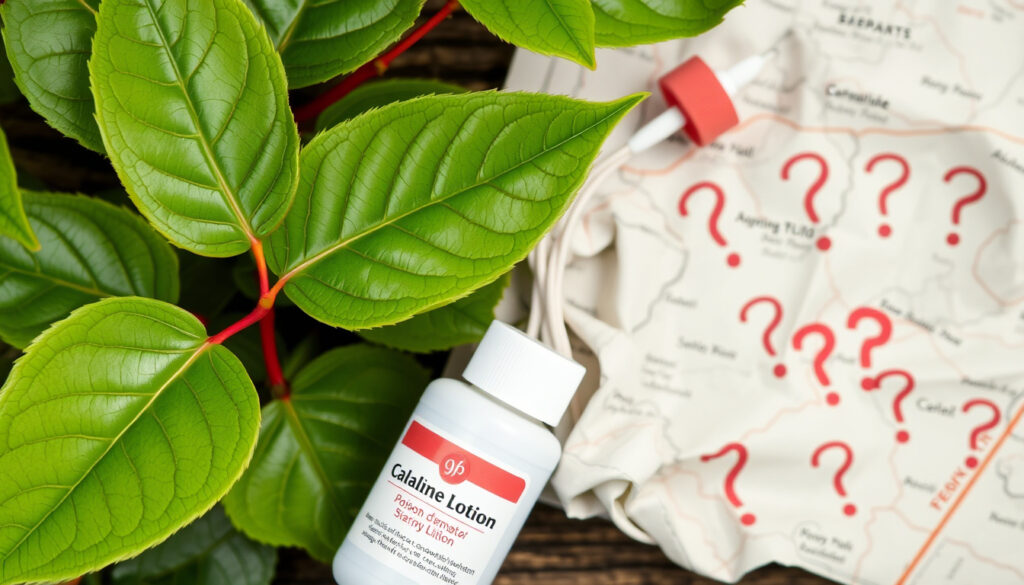
Poison Ivy: Symptoms, Treatment, and Geographic Myths
Few plants inspire as much dread — and as many folk remedies — as poison ivy, but the plant that causes fiery rashes across North America doesn’t actually grow in Europe, Ireland, or the UK. Understanding what poison ivy is, how its oil urushiol triggers a reaction, and what really works for treatment can save you weeks of misery.
Scientific name: Toxicodendron radicans ·
Allergen compound: Urushiol ·
Leaves per cluster: 3 ·
Time to rash onset: 12–72 hours ·
Rash duration: 1–3 weeks ·
Native range: North America and East Asia
Quick snapshot
- Urushiol oil causes allergic contact dermatitis (Mayo Clinic – poison ivy overview)
- Poison ivy is not native to Europe (FSUS – Flora of the Southeastern United States)
- Leaves grow in clusters of three (Children’s Hospital of Philadelphia – recognizing poison ivy)
- The potential for poison ivy to establish in new European habitats is not fully understood (RHS – Royal Horticultural Society guidance)
- Exact annual number of poison ivy cases is not tracked (American Academy of Dermatology – association with rash)
- Rash appears 12–72 hours after contact (Children’s Hospital of Philadelphia – treatment guide)
- Rash lasts 1–3 weeks (Children’s Hospital of Philadelphia – recognizing poison ivy)
- Urushiol can remain active on surfaces for years (Toxicodendron Contact Dermatitis: A Case Report and Brief Review)
- Wash with soap and water within 30 minutes to prevent rash (Riva Dermatology – poison ivy rash treatment)
- Over‑the‑counter hydrocortisone and calamine lotion relieve symptoms (Bon Secours – poison ivy rash treatment)
- Severe cases require prescription oral steroids for 14+ days (Poison Ivy Dermatitis Treatment Patterns and Utilization)
Five details capture the core of poison ivy science and treatment.
| Detail | Value |
|---|---|
| Scientific name | Toxicodendron radicans |
| Active compound | Urushiol |
| Native range | North America & East Asia |
| Rash duration | 1–3 weeks |
| Common home remedy myth | Toothpaste is ineffective and may worsen irritation |
| Plant family | Anacardiaceae (cashew family) – not a true ivy |
Does poison ivy grow in Europe?
- Poison ivy is native to North America and East Asia, not Europe (USDA Forest Service FEIS).
- It is not naturally found in Ireland, the UK, or mainland Europe (Radboud University study on non‑native occurrence).
- Introduced plants may occasionally appear but are rare.
Is poison ivy found in Ireland?
No. Poison ivy does not grow naturally in Ireland. The most poisonous plant in Ireland is hemlock (Conium maculatum) or foxglove (Digitalis purpurea), not poison ivy (The Irish Times – deadly plants in Ireland).
Is poison ivy in the UK?
Poison ivy is not native to the UK. Occasional garden introductions have been reported but the plant does not spread in the wild (RHS – Royal Horticultural Society guidance).
What about Dublin?
Poison ivy does not grow in Dublin. Travelers may confuse it with other plants like Rhus species that can cause mild irritation (Dublin City Council – environmental notes).
The implication: travelers to Europe need not fear poison ivy but should learn local toxic plants instead.
What does poison ivy do to humans?
- Urushiol oil triggers an allergic contact dermatitis.
- Symptoms include red, itchy bumps, swelling, and blisters within 12–72 hours.
- The rash is not contagious but can spread if urushiol remains on skin or clothing.
How does urushiol cause a rash?
Urushiol binds to skin proteins, prompting an immune response in sensitized individuals. It is not an irritant in the traditional sense – it is a true allergen.
What are the symptoms of poison ivy exposure?
Redness, intense itching, and fluid‑filled blisters that may ooze. The reaction typically resolves in 1–3 weeks.
Because the rash mimics other skin conditions, misdiagnosis is common. A clear exposure history is the most reliable clue.
The pattern: without a clear exposure history, the rash can be mistaken for other dermatitis, delaying proper treatment.
What is poison ivy famous for?
- Famous for causing severe itching and rash due to urushiol.
- Mnemonic “Leaves of three, let it be” aids identification.
- It is not a true ivy (Hedera) but belongs to the cashew family.
Why is it called poison ivy?
The name comes from its appearance – a climbing plant with ivy‑like leaves – but the “poison” refers to the allergic oil, not toxicity through ingestion (Merriam‑Webster – etymology).
How to identify poison ivy?
Three teardrop‑shaped leaflets, often shiny green when young, turning red in autumn. Grows as a vine or shrub. Look for the middle leaflet on a longer stalk.
Should I shower if I touched poison ivy?
Yes – immediately. Shower with soap and water within 30 minutes to remove urushiol.
How to wash off urushiol?
- Use soap and water; rubbing alcohol or specialized cleansers (e.g., Tecnu) are effective.
- Do not scrub – avoid breaking the skin.
- Wash clothing, tools, and pets that may have been contaminated.
What about toothpaste and other home remedies?
Toothpaste is not a proven remedy and may irritate skin. Stick to medical treatments: calamine lotion, hydrocortisone, cool compresses, and colloidal oatmeal baths.
Home remedies like toothpaste can delay proper treatment and worsen inflammation. The clinical evidence strongly favors soap‑and‑water washing followed by topical steroids.
The catch: relying on home remedies can extend suffering, while evidence-based care shortens recovery.
What is the most poisonous plant in Ireland?
- Poison ivy is not native to Ireland and does not grow there.
- Plants like hemlock (Conium maculatum), foxglove (Digitalis purpurea), and monkshood (Aconitum napellus) are far more toxic.
- Misconception often arises from confusion with similar‑sounding names or travel experiences.
Is poison ivy the most poisonous?
No. In Ireland, hemlock and foxglove cause more poisonings. Poison ivy’s rash is unpleasant but rarely life‑threatening.
What plants are toxic in Ireland?
Foxglove, hemlock, monkshood, and yew. Visitors should learn these instead of worrying about poison ivy.
What this means: for residents and visitors to Ireland and the UK, awareness of hemlock and foxglove is far more critical than worrying about poison ivy.
How to treat a poison ivy rash
Follow these five steps:
- Wash immediately – With soap and water or rubbing alcohol within 30 minutes.
- Apply cool compresses – 15–30 minutes several times a day.
- Use calamine lotion or 1% hydrocortisone – For mild symptoms.
- Take oral antihistamines – For itch relief (they don’t stop inflammation).
- See a doctor if the rash covers large areas or affects the face/genitals – Prescription oral steroids for 14+ days are often needed.
Many emergency department steroid prescriptions are too short – clinicians often under‑treat, leading to rebound rashes. Follow the 14‑day guideline if your case is severe.
The implication: a short steroid course may seem sufficient, but the evidence supports a full 14-day regimen to prevent recurrence.
Confirmed facts
- Urushiol causes allergic contact dermatitis (Toxicodendron Contact Dermatitis: A Case Report and Brief Review)
- Poison ivy is not native to Europe (Radboud University study)
- Leaves grow in clusters of three (American Academy of Dermatology)
- Washing within 30 minutes reduces risk (Children’s Hospital of Philadelphia)
Rumors & unclear
- Toothpaste is an effective remedy – not supported (CHOP – no mention of toothpaste)
- Poison ivy grows in the UK/Ireland – no natural populations (RHS)
- Poison ivy is the most poisonous plant in Ireland – false (The Irish Times)
- Long‑term effects of repeated exposure are unknown (PMC – not discussed)
“Poison ivy rash is caused by an oil called urushiol. It’s one of the most common causes of allergic contact dermatitis in the United States.”
“Immediate washing of the skin with soap and water can remove the urushiol and prevent the rash from developing.”
– Children’s Hospital of Philadelphia (pediatric & public health authority)
For anyone in North America who spends time outdoors, poison ivy is a real hazard – but the good news is that prevention and treatment are straightforward when you know the facts. For Europe, Ireland, and the UK, the risks are entirely different: local toxic plants like hemlock and foxglove demand attention, not poison ivy. The implication for travelers and residents is clear: learn your region’s plants, wash immediately after suspected contact, and skip the toothpaste.
For a detailed breakdown of how to spot the plant and manage the rash, see this guide on poison ivy identification and treatment.
Frequently asked questions
Can poison ivy spread from person to person?
No, the rash itself is not contagious. But urushiol can be transferred via contaminated clothing, tools, or pets.
Does poison ivy produce berries?
Yes, it produces small white or yellowish berries that birds eat.
How long does a poison ivy rash last?
1–3 weeks, depending on severity and treatment.
Can pets get poison ivy?
Dogs and cats rarely develop the rash because their fur protects skin. But they can carry urushiol to humans.
Is poison ivy contagious after the rash appears?
No. The fluid in blisters does not contain urushiol. Contagion comes only from unwashed urushiol on surfaces.
What kills poison ivy plants effectively?
Herbicides containing glyphosate or triclopyr are effective. Do not burn the plants – smoke can carry urushiol.
Can poison ivy grow indoors?
It can be grown as a potted plant, but it is not common and the same urushiol risk applies.
Related reading: Great White Shark: Facts, Size, Attacks, and Predators · Mount Fuji: Climbing, Facts, Height & Beginner Guide
More related posts
 Cicerone Surry Hills: Roman Menu, Booking & Reviews
 Doe Bobby Hill Have a Wife? King of the Hill Canon
 D’Arcy Carden: Biography, Career, Ethnicity, and Family
 MECCA Bourke Street: World’s Largest Beauty Flagship in Melbourne
 Ravindra Jadeja Biography: Net Worth, Royal Family & IPL Career
 No Doubt Band: History, Members, Songs & Tragedies
 Sean Combs Legal Case: 50-Month Sentence & Celebrity Ties
 Cast of Younger TV Series: Full List, Facts & Friendships