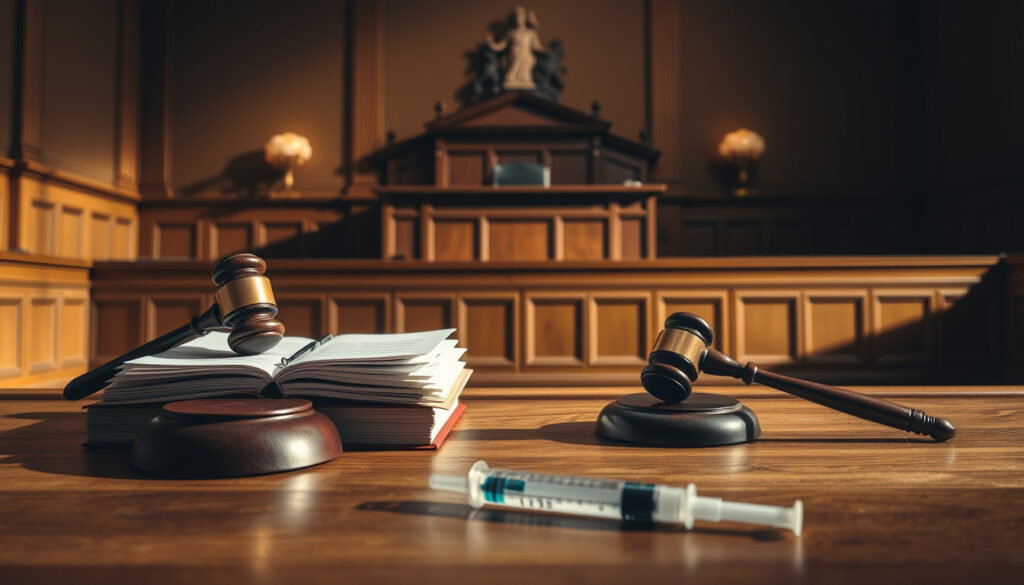
Hermann Göring: Power, Addiction, and the Nuremberg Trial
Few figures in the Third Reich packed more contradictions into a single life than Hermann Göring. He built the Gestapo, led the Luftwaffe, and was named Hitler’s designated successor, yet a Cureus medical review via PubMed Central concludes that he used morphine or morphine derivatives for significant periods of his adult life. By the time he walked into the Nuremberg courtroom, his power, his body, and his luck were all running out — and he knew exactly how to use the stage.
Born: 12 January 1893, Rosenheim, Bavaria · Died: 15 October 1946, Nuremberg (suicide) · Highest rank: Reichsmarschall of the German Reich · Nuremberg verdict: Guilty on all counts; death sentence
Quick snapshot
- Hitler’s chosen successor (Encyclopaedia Britannica)
- Reichsmarschall and Luftwaffe commander (Encyclopaedia Britannica)
- Second most powerful Nazi for most of the dictatorship; principal architect of the Nazi police state (Encyclopaedia Britannica, reference biography)
- Convicted at Nuremberg (Encyclopaedia Britannica)
- Sentenced to death (Encyclopaedia Britannica)
- Committed suicide with cyanide the night before execution (Encyclopaedia Britannica)
- Wife Emmy and daughter Edda survived him (Encyclopaedia Britannica)
- Edda died in 2018 (Encyclopaedia Britannica)
- Emmy died in 1973 (Encyclopaedia Britannica)
- Gave intelligent, aggressive testimony (Cureus medical review via PubMed Central)
- Tried to manipulate the court (Cureus medical review via PubMed Central)
- Showed visible physical change while in custody (Cureus medical review via PubMed Central)
Hermann Göring at a glance
Six facts, one pattern: the official biography and the physical collapse belong to the same man.
| Item | Detail |
|---|---|
| Full name | Hermann Wilhelm Göring |
| Born / Died | – |
| Nazi role | Hitler’s designated successor; Reichsmarschall |
| Holocaust role | Authorized Heydrich to prepare the Final Solution (Encyclopaedia Britannica, reference biography) |
| Wife / Child | Emmy Göring (1893–1973); Edda Göring (1938–2018) |
| Cause of death | Cyanide suicide on the night before execution |
What this means: the same file that records Göring’s titles also records the order that set the Holocaust in motion. The two belong to one biography.
Who was more powerful, Göring or Himmler?
For most of the dictatorship, the answer was Göring. Hitler named him designated successor, gave him the Luftwaffe, and put him in charge of the Four Year Plan, which made him the second most powerful man in the regime. But power in the Nazi state was never a single ladder; it was a set of rival empires, and Himmler built his more steadily.
What was Hermann Göring’s rank?
- Reichsmarschall of the German Reich
- Commander of the Luftwaffe
- Plenipotentiary of the Four Year Plan
The rank that mattered most was “designated successor.” Göring held a formal pre-eminence no other Nazi leader was able to claim, and he used it to accumulate control over the air force and the economy. His authority peaked while the Third Reich was winning; the moment Germany started losing, his position began to erode.
When did Göring’s power peak?
Göring’s peak came when the Luftwaffe was winning and the Four Year Plan was rearming Germany. Himmler’s came later, when the state needed surveillance and repression more than it needed air power.
The turning point is often dated to 1934, when the Gestapo’s leadership role passed from Göring to Himmler, who had already turned the SS into the central instrument of Nazi repression and racial persecution. Göring stayed publicly pre-eminent, but the machinery of terror moved out of his hands.
How did Himmler gain power?
- — took over the Gestapo’s leadership role from Göring (World History Encyclopedia, historical reference)
- — appointed head of all German police forces (World History Encyclopedia, historical reference)
- — the Reich Security Main Office united the Gestapo, criminal police, and SD under Reinhard Heydrich (World History Encyclopedia, historical reference)
Himmler’s background explains part of the story: he studied agriculture at Munich’s technical college from 1919 to 1922 (Wikipedia, biographical reference). More important was the institutional logic: once he controlled the SS, the Gestapo, and then the entire police system, Himmler held both information and enforcement. The Reich Security Main Office consolidated political repression, intelligence, and the persecution of groups the regime designated as racially inferior into a single structure that answered to no one but him.
The pattern: Göring accumulated titles; Himmler accumulated institutions. By the final years of the war, Himmler’s authority had largely overtaken Göring’s, even though Göring still outranked him in ceremony.
The consequence: the longer the war lasted, the more Göring’s ceremonial supremacy mattered less than Himmler’s control of the machinery of terror.
How intelligent was Hermann Göring?
Most accounts of the Nuremberg trial agree on one point: Göring was the most formidable mind in the defendants’ dock. Allied psychologists who examined him described him as highly intelligent, shrewd, and effective on the stand — the one defendant who went toe-to-toe with the prosecution and held his own.
What was Hermann Göring’s IQ?
- No single official IQ score is universally accepted
- Reported estimates vary, and none is authoritative
- No scientifically valid head-to-head comparison with Himmler exists
The famous IQ question has no reliable number. The sources do not establish a standardized IQ for Göring, and they do not permit a scientifically valid direct comparison of Göring’s and Himmler’s cognitive ability, as a medical-history review in Cureus notes (Cureus medical review via PubMed Central). What the examiners did agree on was the quality of his mind: quick, calculating, and hard to corner.
Was Göring a nice guy?
The warmth visitors described — genial, witty, generous — was real social skill placed in the service of a regime built on murder. Affability and ruthlessness operated in the same man without contradiction.
The “nice guy” impression he made on some visitors was a calculated social mask, not a sign of decency. Göring was often charming and affable in private, but he was ruthless and grandiose in his political and military actions; the same man who charmed visitors had built the Gestapo and the camps.
The implication: intelligence and decency are separate variables. Göring scored high on the first and failed the second completely.
How did Hermann Göring get caught?
Göring surrendered to US troops near Fischhorn Castle in Austria on 9 May 1945, one day after Germany’s surrender. He was held, then brought before the International Military Tribunal at Nuremberg, where the prosecution charged him on all four counts of the indictment.
The tribunal convicted him on all four counts and sentenced him to death.
What were Hermann Göring’s last words?
The sentence everyone quotes — “The executioner is late” — is commonly attributed to Göring on the night of 15 October 1946. The exact wording is not independently established.
What is documented is the act: Göring took cyanide the night before his scheduled execution and died by suicide. The commonly cited line has him telling an attendant that the executioner was late; whether those were his exact words is part of the trial’s legend, not its record.
Who was found innocent at Nuremberg?
- Hjalmar Schacht — acquitted
- Franz von Papen — acquitted
- Hans Fritzsche — acquitted
Three defendants walked free while Göring received a death sentence. The contrast matters: the tribunal was willing to acquit, which is exactly why its conviction of Göring carries weight.
What this means: the death sentence was not a foregone conclusion of victors’ justice. It was the judgment of a court that had just refused the prosecution’s case against three other men.
What was Göring addicted to?
The short answer is morphine, and later paracodeine, a codeine-based painkiller. The addiction began with a bullet wound and never fully loosened its grip.
How did Göring’s drug use begin?
- — wounded during the Beer Hall Putsch; morphine was prescribed for the pain (Encyclopaedia Britannica)
- 1925–1926 — treated twice at Långbro mental hospital in Sweden (Encyclopaedia Britannica)
- From roughly 1937 until 1945 — took paracodeine daily, according to a medical review (Cureus medical review via PubMed Central)
The wound came first. Göring was hit during the Beer Hall Putsch in November 1923, and the morphine prescribed for his injuries developed into a severe addiction; Encyclopaedia Britannica records that he was treated twice in 1925–26 at Långbro hospital in Sweden (Encyclopaedia Britannica, reference biography). The Cureus review puts the story in a wider frame: it concludes that Göring used morphine or morphine derivatives for significant periods of his adult life, reports that he was taking paracodeine daily from approximately 1937 until his capture in 1945, and argues that the severity of his addiction may have been exaggerated by political rivals, with paracodeine functioning partly as opioid maintenance (Cureus medical review via PubMed Central).
A separate commentary from the Churchill Project at Hillsdale College disputes the characterization of Göring’s dependence as a lifelong morphine addiction. It cites Leonard Mosley’s account that the morphine addiction had been cured by 1927, and it distinguishes that earlier morphine problem from the later paracodeine use (Churchill Project commentary, Hillsdale College). The same commentary reports that a Nuremberg psychiatrist considered the dose insufficient to affect Göring’s mental processes (Churchill Project commentary, Hillsdale College).
Why did Göring gain so much weight?
- Long-term opioid use contributed to drastic weight gain and mood swings
- Decision-making eroded as the war turned against Germany
- In custody at Nuremberg, his weight dropped and his health was monitored during withdrawal
The physical changes were impossible to miss. Newsreels from the 1930s show a substantial but vigorous Göring; trial footage shows a visibly diminished man. The drug history explains part of the transformation, and so does the sudden stop: in American custody he withdrew from paracodeine under medical supervision, and his body changed again.
The trade-off: the drugs that dulled his pain also dulled his judgment, but they did not, by the psychiatrist’s assessment, cloud his mind. The man who faced the tribunal was physically ruined and mentally intact — a combination that made him more dangerous in the courtroom, not less.
The consequence at Nuremberg: a physically ruined Göring was still mentally intact, which made his courtroom performance sharper and harder for the prosecution to pin down.
Did Göring’s daughter survive?
Yes. Edda Göring, the couple’s only child, survived the war and lived quietly in Germany for the rest of her life. She died in Munich in 2018 at the age of 80.
What happened to Göring’s wife after the war?
- Emmy Göring was arrested by US forces after the war
- She was held in custody for several years
- Released in 1948; died in 1973
Emmy Göring was arrested after the war and held for several years before her release in 1948. She died in 1973, having outlived her husband by nearly three decades.
What became of the Göring family after 1945?
- Edda Göring (1938–2018) survived the war
- Emmy Göring (1893–1973) was released from custody in 1948
- The couple had no other children
Edda’s death in 2018 closed a strange chapter: the daughter of Hitler’s designated successor lived into the twenty-first century, a living reminder that the regime’s leading family did not disappear with the regime.
Why this matters: the Göring family outlived the Third Reich by more than seven decades. Surviving was possible; escaping the family’s history was not.
Could Göring speak English?
Yes. Göring could speak English and used it at various points before and during the Nuremberg period. Because the court ran its own simultaneous interpretation in four languages, he mostly testified in German through interpreters, but the ability was there when he wanted it.
How do you pronounce Hermann Göring?
- Closest English approximation: “GUR-ing” or “GER-ing”
- Common mistake: “GORE-ing”
The German surname carries an umlaut, and English speakers often flatten it into a rhyme with “goring.” The closer sound is the vowel in “her” or “earn” followed by an -ing, not the long “o” of “goring.”
Did Göring need a translator at Nuremberg?
Göring’s English was good enough to use when he wanted it. Testifying in German was a choice of control — the tribunal’s translation system made sure every word reached the world.
The trial record is layered: the court provided simultaneous interpretation, so each defendant spoke his own language and was understood instantly. Göring used English at various points before and during the Nuremberg period, and the formal sessions ran through interpreters into four languages.
The detail matters because the voice most people remember from Nuremberg is the German one, even though the man behind it understood English perfectly well.
How much of the film Nuremberg is true?
The 2000 film Nuremberg is adapted from Joseph E. Persico’s nonfiction book Nuremberg: Infamy on Trial. It recreates the trial using historical transcripts and testimony, but it condenses time, merges minor characters, and adds dramatic scenes for television. The spine of the story — Göring’s dominance of the courtroom, the prosecution’s cross-examination, the verdicts — follows the record closely.
Who played Hermann Göring in the 2000 miniseries Nuremberg?
- Brian Cox played Hermann Göring
Cox’s performance leaned into the two sides the trial itself exposed: the genial host and the ruthless schemer. For most viewers, it remains the face they picture when they hear the name.
Which books about Hermann Göring are most useful?
- Nuremberg: Infamy on Trial — Joseph E. Persico
- The histories of Richard J. Evans
Persico’s book is the account the filmmakers drew on, which makes it the natural next step after the credits roll. Evans’s work supplies the wider context of the Nazi state, where Göring’s rise and fall make sense as more than a personal tragedy.
The consequence for viewers: once the credits roll, the trial transcripts still contain the sharper version of the story.
Göring vs. Himmler: side by side
Five dimensions, one pattern: Göring accumulated titles while Himmler accumulated institutions.
| Dimension | Hermann Göring | Heinrich Himmler |
|---|---|---|
| Peak role | Hitler’s designated successor; Reichsmarschall | Head of the SS; head of all German police from June 1936 |
| Power base | Luftwaffe; Four Year Plan; founding role in the Nazi police state | SS, Gestapo, criminal police, SD, and the Reich Security Main Office |
| The 1934 shift | The Gestapo’s leadership role passed to Himmler | Took over the Gestapo and made it the core of a broader empire |
| Trajectory by 1945 | Authority eroded as the war turned against Germany | Authority largely overtook Göring’s in the final years |
| Type of intelligence | Shrewd, commanding courtroom performer | Institutional: ran the SS, Gestapo, SD, and criminal police as one system |
The pattern holds in every row: Göring’s power was personal and visible; Himmler’s was bureaucratic and structural. That is why the more charming Nazi built less than the colder one.
Hermann Göring: a timeline
Eight moments, one pattern: every turning point in Göring’s life arrives with a physical or institutional cost.
| Date | Event |
|---|---|
| Born in Rosenheim, Bavaria | |
| Awarded the Pour le Mérite as a World War I fighter ace | |
| Wounded during the Beer Hall Putsch; morphine addiction began | |
| One of the most powerful officials in Nazi Germany | |
| Authorized Heydrich to plan the Final Solution | |
| Surrendered to US troops near Fischhorn Castle | |
| Sentenced to death at Nuremberg | |
| Committed suicide with cyanide |
Read backward, the timeline is close to symmetrical: a war hero becomes a drug patient, a state builder becomes a prisoner, and the man who authorized the Final Solution refuses to let the hangman finish the sentence.
Confirmed facts and open questions
Confirmed facts
- Göring surrendered to US troops on 9 May 1945 (Encyclopaedia Britannica).
- He was convicted on all counts at Nuremberg and sentenced to death (Encyclopaedia Britannica).
- He died by cyanide suicide on 15 October 1946 (Encyclopaedia Britannica).
- His wife Emmy and daughter Edda survived him (Encyclopaedia Britannica).
- A medical review concludes he was addicted to morphine and used paracodeine (Cureus medical review via PubMed Central).
What’s unclear
- The exact IQ score attributed to Göring is disputed.
- The exact wording of his last words is not independently established beyond the commonly cited phrase.
- Whether his dependence was a lifelong morphine addiction or mainly paracodeine use is debated by historians.
- The severity of his addiction — and its effect on his decisions — may be exaggerated by political rivals.
- The precise accuracy of every dramatized scene in the film Nuremberg depends on creative choices.
The pattern: the certainties about Göring end at the boundary of the courtroom and the medical record; beyond that, history keeps competing with legend.
Voices from the trial
“The executioner is late.”
— Final sentence commonly attributed to Hermann Göring, 15 October 1946
In the assessment of the Army psychiatrists who watched him day after day, Göring was highly intelligent, shrewd, and far more effective on the witness stand than any other defendant.
— Douglas M. Kelley, US Army psychiatrist
Göring gave aggressive, intelligent testimony and tried to turn the courtroom into a stage. The prosecution’s answer was the documentary record — testimony alone would not decide the verdict.
— The prosecution’s approach under Robert H. Jackson, chief US prosecutor
Persico’s Nuremberg: Infamy on Trial is the nonfiction account the filmmakers adapted — the trial’s drama had already been written into the record.
— Joseph E. Persico, author of Nuremberg: Infamy on Trial
The pattern across all four voices: the same man who charmed visitors dominated the courtroom, and his last performance was the most carefully staged of all.
Why Göring still matters
Göring’s life is usually told as a rise-and-fall story: war hero, state builder, drug-dependent prisoner. The sharper reading is that the same man was always both — the charming architect of the Gestapo and the morphine patient whose body betrayed him in public. For viewers of the 2000 miniseries Nuremberg, the test is simple: check Brian Cox’s performance against Persico’s transcripts, or let the real Göring win the argument a second time.
Frequently asked questions
Did Hermann Göring found the Gestapo?
Yes. Göring established the Gestapo and the concentration-camp system before responsibility for both shifted to Heinrich Himmler in 1934.
What was Hermann Göring’s relationship with Hitler?
Göring was Hitler’s chosen successor and, for most of the dictatorship, the second most powerful Nazi. By the final years of the war, Himmler’s authority had largely overtaken his.
Was Edda Göring the couple’s only child?
Yes. Edda Göring, born in 1938, was the only child of Hermann and Emmy Göring. She survived the war and died in Munich in 2018 at the age of 80.
What role did Göring play in the Final Solution?
On 31 July 1941, Göring authorized Reinhard Heydrich to prepare the Final Solution — the Nazi plan for the murder of Europe’s Jews. The date in the timeline marks the moment the regime’s genocide moved from ideology to bureaucratic planning.
How did Göring die?
Göring was sentenced to death at Nuremberg on 1 October 1946. On the night of 15 October 1946, the night before his scheduled execution, he took cyanide and died by suicide.
The common thread: every answer leads back to the same contradiction between Göring’s visible charm and the machinery he built.
More related posts
 Tatiana Schlossberg’s Acute Myeloid Leukemia Battle
 Alfred Molina: Biography, Ethnicity, and Doctor Octopus
 Jen Shah: What Happened, Prison, Husband, Net Worth 2025
 God Zeus: Facts, Powers, Children, and Biblical Connections
 Chad Morgan: Real Name, Biggest Hits, Cause of Death & Legacy
 What Happened to Josh Frydenberg? Post-Politics Career and Life
 Melanie Martinez: Biography, Controversy, and Music Facts
 Andrew Brayshaw: Partner, Nickname Snea, Brother, Career