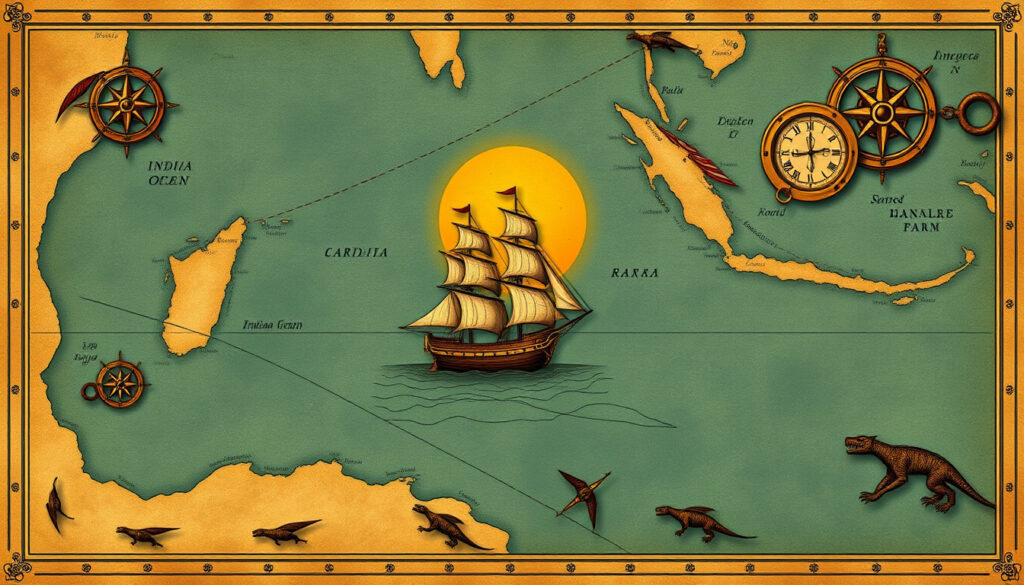
Vasco da Gama: Life, Voyages & Legacy of Portuguese Explorer
There’s a reason the name Vasco da Gama echoes through history books and even on the streets of Lisbon: he didn’t just sail, he redrew the map of global trade, and in 1498 he became the first European to reach India by sea, a voyage that bypassed centuries-old land routes and changed the world’s economy. By weaving together Portuguese ambition and Indian realities, his story is less about one man and more about the collision of two worlds.
Born: c. 1460, Sines, Portugal ·
Died: December 24, 1524, Cochin, India ·
First direct sea route Europe to India: 1497–1499 ·
Number of voyages to India: 3 ·
Known for: First European to reach India by sailing around Africa
Quick snapshot
- First European to reach India by sea (1498) (Britannica (encyclopedic authority))
- Died in Cochin, India on December 24, 1524 (Britannica (encyclopedic authority))
- Buried in the Monastery of the Hieronymites in Lisbon (BBC History (UK public broadcaster))
- Exact birth year — scholars estimate c. 1460 or 1469 (World History Encyclopedia (academic history resource))
- Role of the navigator Ibn Majid (some sources dispute his identity) (BBC History (UK public broadcaster))
- Cause of death remains uncertain (BBC History (UK public broadcaster))
- First voyage: 1497–1499 — established the Cape route (Britannica (encyclopedic authority))
- Second voyage: 1502–1503 — armed fleet to secure trading posts (World History Encyclopedia (academic history resource))
- Third voyage: 1524 — as Viceroy of India, died shortly after arrival (World History Encyclopedia (academic history resource))
- His legacy continues to be studied in the context of colonialism and globalization (Britannica (encyclopedic authority))
- Da Gama’s route laid the foundation for the Portuguese Empire in Asia (History.com (editorial history site))
A quick reference of Vasco da Gama’s essential details.
| Detail | Information |
|---|---|
| Full name | Vasco da Gama |
| Born | c. 1460, Sines, Portugal |
| Died | December 24, 1524, Cochin, India |
| Nationality | Portuguese |
| Occupation | Explorer, navigator, colonial administrator |
| Known for | First European to reach India by sea via the Atlantic and Indian Oceans |
What is Vasco da Gama famous for?
Vasco da Gama is best known as the Portuguese navigator who pioneered the first direct sea route from Europe to India, sailing around the Cape of Good Hope. This achievement, completed between 1497 and 1499, broke the monopoly of overland spice routes controlled by Ottoman and Venetian intermediaries, and it established Portugal as a maritime power (Britannica (encyclopedic authority)).
Voyages and discovery of the sea route to India
Da Gama’s first voyage departed Lisbon in July 1497. His fleet of four ships sailed south along the African coast, then swung far into the Atlantic to catch favorable winds, before rounding the Cape of Good Hope in November 1497 (BBC History (UK public broadcaster)). After stopping at Malindi in East Africa, da Gama crossed the Indian Ocean with the help of a Gujarati pilot, reaching Calicut (now Kozhikode) on the coast of Kerala in May 1498 (Britannica (encyclopedic authority)).
Role in the Portuguese Empire
Da Gama’s voyages were not merely exploratory — they were commercial and military expeditions. His second voyage (1502–1503) commanded a heavily armed fleet of 15 ships, establishing fortified trading posts and enforcing Portuguese dominance in the Indian Ocean (World History Encyclopedia (academic history resource)). His third and final voyage in 1524 was as Viceroy of India, a role intended to consolidate Portuguese colonial power. He died shortly after arriving in Cochin.
Da Gama didn’t just discover a route — he weaponized it. The Portuguese crown used his voyages to bypass centuries-old trade networks and impose military force on the Indian Ocean, a shift that cost local merchants their monopoly and sparked three centuries of colonial conflict.
Who came first, Columbus or Vasco da Gama?
Christopher Columbus reached the Americas in 1492, six years before da Gama arrived in India. But their objectives and outcomes were radically different. Columbus was seeking a western route to Asia but stumbled upon the Caribbean, while da Gama deliberately sailed east and successfully connected Europe to the Indian subcontinent (Britannica (encyclopedic authority)).
Timeline of their voyages
Columbus’s first transatlantic crossing was in 1492 under Spanish sponsorship. Da Gama’s first voyage began in 1497 under Portugal’s King Manuel I. The two men never met, but their discoveries dramatically reshaped global trade. While Columbus’s voyages led to the colonization of the Americas, da Gama’s opened direct European access to the wealth of the Indian Ocean (BBC History (UK public broadcaster)).
Differences in objectives and outcomes
Columbus sought a shorter route to Asia’s spices and silks; instead, he found a new continent, initiating the transatlantic slave trade and European colonization. Da Gama, by contrast, reached exactly what he aimed for: the established spice markets of India. The Portuguese then set up a network of fortified trading posts from East Africa to Goa, controlling the maritime spice trade for over a century (Britannica (encyclopedic authority)).
Who came first to India, Alexander or Vasco da Gama?
Alexander the Great’s armies reached the Indus River in 326 BCE, over 1,800 years before da Gama’s arrival in 1498. Alexander came first by a wide margin.
Four voyages, two objectives, one pattern: each explorer’s success defined the era’s geopolitical split — the Atlantic world and the Indian Ocean world. Columbus opened the Americas to Europe; da Gama integrated Europe directly into Asia’s existing trade.
For anyone comparing their legacies, the key difference isn’t chronology — it’s consequence. Columbus changed the map of the world; da Gama changed the economy of the world. The trade route he pioneered remained the primary artery of European-Asian commerce until the opening of the Suez Canal in 1869.
The implication: da Gama’s achievement was economically transformative, while Columbus’s was geographically revolutionary.
What happened to Vasco da Gama?
Da Gama died on December 24, 1524, in Cochin, India, just three months after arriving to assume his post as Viceroy of India. He was initially buried in Cochin but his remains were later transferred to Portugal and placed in the Monastery of the Hieronymites (Jerónimos Monastery) in Lisbon, where they rest today (Britannica (encyclopedic authority)).
His death in Cochin
The cause of da Gama’s death is not recorded with certainty, but it is believed to have been illness, possibly related to the tropical conditions he encountered upon his arrival. His body was buried in the St. Francis Church in Cochin before being exhumed and returned to Portugal (BBC History (UK public broadcaster)).
Burial and later transfer to Lisbon
In 1538, da Gama’s remains were exhumed and shipped to Lisbon for burial at the Jerónimos Monastery, a UNESCO World Heritage site constructed with the wealth generated by the spice trade he helped unleash. His tomb is a popular tourist attraction and a national symbol of Portugal’s Age of Discovery (History.com (editorial history site)).
The catch: his death in India symbolizes the personal toll behind imperial expansion.
Which Indian city did Vasco da Gama first visit?
Da Gama first set foot on Indian soil at Calicut (now Kozhikode) on the Malabar Coast of Kerala on May 20, 1498. The city was at that time a major trading hub for spices, particularly pepper, and was ruled by a Hindu king known as the Zamorin (Britannica (encyclopedic authority)).
First landing at Calicut
The arrival of da Gama’s fleet caused considerable excitement and apprehension. The Portuguese were received by the Zamorin, but the meeting was tense. Da Gama’s gifts — cloth, hats, and sugar — were considered meager by the Zamorin’s court, while the Portuguese demanded a monopoly on trade. This initial friction set the tone for future Portuguese-Indian relations (BBC History (UK public broadcaster)).
Initial contact with the Zamorin
The Zamorin of Calicut granted the Portuguese permission to trade, but the negotiations were fraught. Local Arab merchants, who had long controlled the spice trade, saw the Portuguese as a threat and encouraged resistance. Da Gama left Calicut with a cargo of spices but also with a strained relationship that would eventually lead to open conflict (World History Encyclopedia (academic history resource)).
The pattern: da Gama’s landing at Calicut was a success of navigation but a failure of diplomacy — a mix that would define European colonialism in Asia for centuries.
Who helped Vasco da Gama discover India?
While da Gama was an accomplished navigator, he relied on local knowledge to make the final crossing from East Africa to India. The most famous figure credited with guiding him across the Indian Ocean is a Gujarati pilot known as Ibn Majid (or, in some accounts, a Malindi sailor). This assistance was crucial because the monsoon winds and currents were unfamiliar to European sailors (BBC History (UK public broadcaster)).
Local pilot Ibn Majid
Ibn Majid, a legendary Arab navigator and cartographer, is widely believed to have guided the Portuguese fleet from Malindi to Calicut. However, some historians note that Ibn Majid’s role is disputed, as he wrote about the Portuguese arrival with some bitterness, possibly indicating he was not a willing collaborator. Nevertheless, the use of local pilots was standard practice for European explorers in uncharted waters (Britannica (encyclopedic authority)).
Support from Portuguese explorers and cartographers
Da Gama also built upon the work of earlier Portuguese explorers. Bartolomeu Dias had rounded the Cape of Good Hope in 1488, showing the way south. Portuguese cartographers and shipbuilders had developed the caravel, a ship capable of long ocean voyages. The crown’s support — including the sponsorship of King Manuel I — was critical (History.com (editorial history site)).
Timeline of Vasco da Gama’s voyages
A chronological view of da Gama’s life and expeditions shows the rapidity of Portugal’s rise in the Indian Ocean.
These events mark the key milestones of da Gama’s life and voyages.
| Date or period | Event |
|---|---|
| c. 1460 | Born in Sines, Portugal |
| 1497–1499 | First voyage to India; first European to reach India by sea |
| 1502–1503 | Second voyage; leads a heavily armed fleet to secure Portuguese interests |
| 1524 | Third voyage; appointed Viceroy of India |
| December 24, 1524 | Dies in Cochin, India |
| 1538 | Remains transferred to Portugal and buried in Lisbon |
Da Gama’s route was a triumph of human endurance — sailing thousands of miles of unknown ocean — yet it also launched a wave of colonialism that devastated local economies. The same ships that carried spices also carried cannons. For modern readers, this makes him both a hero of exploration and a symbol of early imperialism.
The implication: the same voyage that connected worlds also divided them.
Confirmed facts vs. unclear details
Historians have a clear picture of da Gama’s achievements, but some details remain murky.
Confirmed facts
- First European to reach India directly by sea (1498) (Britannica (encyclopedic authority))
- Died in Cochin, India (December 24, 1524) (BBC History (UK public broadcaster))
- Buried in the Monastery of the Hieronymites in Lisbon (History.com (editorial history site))
What’s unclear
- Exact birth year (circa 1460 or 1469) (World History Encyclopedia (academic history resource))
- Role of the navigator Ibn Majid (some sources dispute his involvement) (BBC History (UK public broadcaster))
- Cause of death not recorded with certainty (BBC History (UK public broadcaster))
The pattern: even the most documented histories leave room for debate.
Views from historians
Scholars have long debated the full impact of da Gama’s voyages. Two perspectives illustrate the range of interpretation:
“Da Gama’s voyage was the opening chapter in a new era of global trade. It marked the first time a European nation had established a direct maritime link with Asia, bypassing the traditional overland routes.”
— Historians at Britannica (Britannica (encyclopedic authority))
“The Portuguese were received with suspicion and hostility in Calicut. The Zamorin allowed them to trade, but the friction between local merchants and the newcomers set the stage for decades of conflict.”
— Portuguese chroniclers, as summarized by BBC History (BBC History (UK public broadcaster))
Summary: The price of a new world
Vasco da Gama’s sea route was the single most important maritime achievement of the 15th century, but it came at a cost. The Lisbon court that financed him, the Indian merchants who resisted him, and the African societies that saw his ships pass — all were transformed by his voyages. For the modern reader, the lesson is not simply about maps and navigation. It’s about the messy, often violent entanglement of trade, empire, and human ambition. For anyone studying the roots of globalization, the choice is clear: understand da Gama, or misunderstand how the world got connected.
en.wikipedia.org, thehistoryjunkie.com, timetoast.com, heritage-history.com, softschools.com, livescience.com, study.com
Frequently asked questions
What is Vasco da Gama famous for?
He is famous for being the first European to reach India by sea, sailing around the Cape of Good Hope in 1498, thereby opening the direct sea route from Europe to Asia.
Who came first, Columbus or Vasco da Gama?
Christopher Columbus reached the Americas in 1492, six years before da Gama reached India in 1498. Columbus was earlier, but da Gama’s voyage directly connected Europe to the Indian subcontinent.
What happened to Vasco da Gama?
He died on December 24, 1524, in Cochin, India, shortly after arriving to serve as Viceroy of India. His remains were later transferred to Lisbon and buried at the Jerónimos Monastery.
Is Vasco da Gama buried in India?
He was initially buried in Cochin, India, but his remains were later exhumed and transferred to Portugal. He is now buried in the Jerónimos Monastery in Lisbon.
Who came first to India, Alexander or Vasco da Gama?
Alexander the Great’s armies reached the Indus River in 326 BCE, over 1,800 years before da Gama’s arrival in 1498. Alexander came first by a wide margin.
Which European discovered India?
Vasco da Gama is credited with discovering the sea route to India. However, other Europeans, including the ancient Greeks and Romans, had knowledge of India via overland routes.
Was Vasco da Gama ever married?
Yes, he married Catarina de Ataíde, a member of the Portuguese nobility, and the couple had several children. His sons later served in Portuguese India.
What did Vasco da Gama actually find?
He found a direct sea route from Europe to India around the southern tip of Africa (the Cape of Good Hope), bypassing the overland Silk Road and enabling direct European access to the spice trade.
More related posts
 Gold Necklace Gold: Purity, Karats, and Buying in Ireland
 Dele Alli: From Premier League Star to Free Agent at 30
 Burt Reynolds Death: Cause, Sally Field Reaction, Net Worth
 Thomas Frank: Tottenham Exit, Salary & Future Plans
 Japan Visa 2026: Application, Requirements & New Entry Rules
 Ben Foster’s Career: What Happened to the Wrexham Goalkeeper
 What Happened to Josh Frydenberg? Post-Politics Career and Life
 James Tobin: Weekend Sunrise Weather Presenter Bio