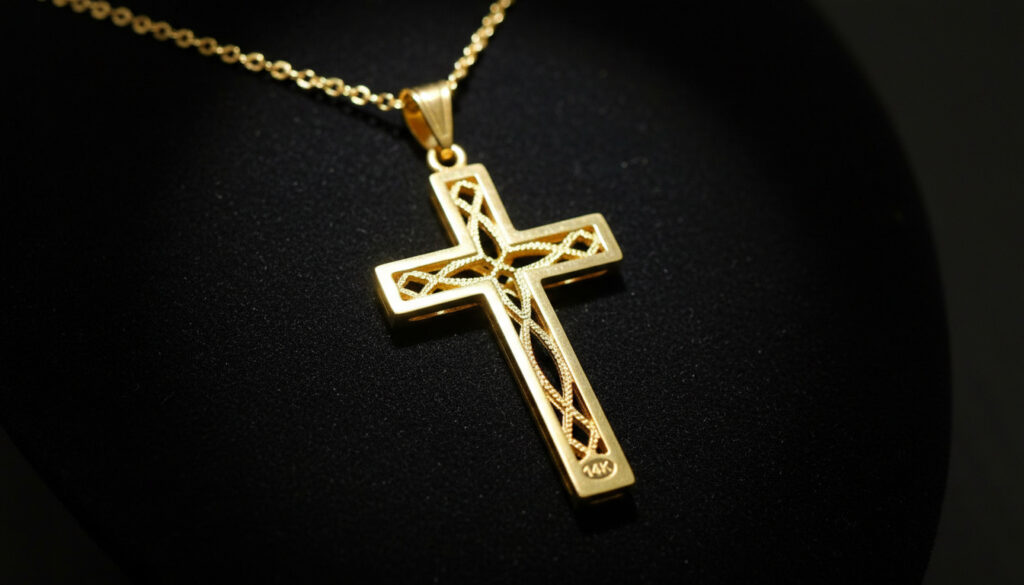
Gold Cross Necklace – Authentic 14k Buying Guide
The gold cross necklace occupies a unique position at the intersection of faith and fashion, serving simultaneously as a profound religious symbol and a versatile jewelry staple. For centuries, these pendants have signified devotion within Christian traditions while adapting to contemporary style preferences across gender and age groups.
Contemporary consumers face a complex marketplace when selecting these pieces. Understanding gold purity standards, authentication methods, and stylistic variations proves essential for making informed purchases. This guide examines the symbolism, verification techniques, and practical considerations necessary for acquiring authentic 14k solid gold cross necklaces that balance spiritual significance with enduring material value.
What Does a Gold Cross Necklace Symbolize?
Represents crucifixion and resurrection, embodying faith, sacrifice, and divine protection across Christian denominations.
Spans from 4th century Christianity to modern universal emblems of hope and personal devotion.
Ranges from medieval icons to minimalist contemporary forms suitable for daily wear.
14k gold provides 58.5% pure gold content, offering optimal durability for jewelry.
- Cross necklaces symbolize Christian faith, divine protection, and eternal life across denominations.
- 14k solid gold contains 58.5% pure gold, marked by “14K” or “585” hallmarks.
- Authentic pieces resist magnetic attraction, providing a simple home verification method.
- Men’s styles typically feature bold 1-2 inch crosses on 18-24 inch chains.
- Women’s designs often incorporate dainty forms, diamond accents, and white gold options.
- Quality pieces start under $100 for basic solid gold designs without gemstone additions.
- Proper maintenance requires mild soap cleaning and separate storage to prevent scratching.
| Characteristic | Specification | Significance |
|---|---|---|
| Gold Purity | 58.5% (14k) | Optimal balance of purity and durability for daily wear |
| Authentication Mark | 14K, 14kt, or 585 | Indicates compliance with international standards |
| Magnetic Property | Non-magnetic | Key indicator distinguishing solid gold from plated alternatives |
| Historical Origin | 4th century CE | Adopted following Roman Emperor Constantine’s conversion |
| Price Entry Point | $40-$100 | Accessible tier for solid gold without diamond additions |
| Alloy Comparison | 10k (41.7%) vs 14k (58.5%) | Higher karat offers richer color but increased softness |
| Care Complexity | Low maintenance | Requires only mild soap and water for cleaning |
| Style Categories | Men’s, Women’s, Unisex | Accommodates diverse aesthetic preferences and chain types |
Are Gold Cross Necklaces Real Gold? How to Tell
Determining the authenticity of gold cross necklaces requires understanding hallmark systems and applying physical tests. Genuine 14k pieces contain 58.5% pure gold alloyed with metals like copper or silver for durability, while counterfeits often use plated base metals or non-gold alloys.
Decoding Hallmarks and Stamps
Legitimate 14k gold cross necklaces bear specific markings on the clasp, bail, or reverse side of the cross itself. Look for stamps reading “14K,” “14kt,” “585” (the European designation indicating 58.5% gold content), or “14KP” indicating plumb gold. Be wary of markings such as “GP” (gold-plated), “GEP” (gold electroplated), or “GF” (gold-filled), which indicate surface coatings rather than solid gold construction. Jewelry authentication experts note that while hallmarks provide initial guidance, sophisticated counterfeits may replicate these stamps, necessitating additional verification methods.
Physical Authentication Methods
Several non-destructive tests can preliminary verify gold content. The magnet test relies on gold’s non-magnetic properties; genuine 14k gold will not adhere to magnets, though this method fails to detect non-magnetic copper alloys or low-purity 10k pieces containing magnetic strengthening metals. The density test observes whether the necklace sinks rapidly in water due to gold’s high specific gravity, unlike plated items which may float or descend slowly. For ceramic testing, dragging the metal across unglazed porcelain should produce a gold streak rather than black or gray marks left by base metals.
Hallmarks alone cannot guarantee authenticity, as counterfeit manufacturers increasingly replicate legitimate stamps. Professional jewelers recommend combining multiple home tests with certified assays, particularly when purchasing from unverified online marketplaces where descriptions may misrepresent plating as solid gold.
Professional Assessment Techniques
Jewelers utilize advanced authentication methods including nitric acid testing, where a scratch test on a touchstone reveals green reactions for base metals or dissolution for plated items, while genuine gold shows no reaction. X-ray fluorescence (XRF) spectrometry and electronic gold testers provide non-destructive precise purity measurements. The Gemological Institute of America offers certification services that verify karat specifications through standardized laboratory analysis, particularly valuable for investment-grade pieces or antique items with worn hallmarks.
What Is the Best Gold Cross Necklace to Buy?
Selecting an optimal gold cross necklace involves balancing budget constraints with quality indicators, style preferences, and purchase source reliability. The market offers viable options across price points, though significant variations exist in material integrity and craftsmanship.
Navigating Price Points Under $100
Solid 14k gold cross necklaces remain accessible below $100, particularly for simpler designs on shorter chains measuring 16-20 inches. Men’s styles typically range from $50-90 for bold crosses measuring 1-2 inches on box or figaro chains, while women’s delicate designs with rope or cable chains fall between $40-95. Jewelry purchasing guides emphasize verifying return policies and hallmark stamps when buying budget pieces, as prices significantly below market rates often indicate plated rather than solid construction.
Diamond and White Gold Considerations
Diamond-accented crosses in 14k settings typically command $70-99 for small carat weights between 0.01-0.05ct, requiring verification of GIA grading reports for authenticity. White gold options, created through rhodium plating over 14k yellow gold, provide enhanced shine and resistance to yellowing at $60-95 price points. These variations suit formal occasions or preference for cooler metal tones, though they require periodic replating maintenance unlike yellow gold’s permanent color.
Reliable Purchasing Channels
Established online retailers including ItsHot.com and Martin Busch Jewelers provide documented authenticity guarantees, while marketplace platforms require careful seller verification. Expert recommendations suggest prioritizing vendors offering GIA certification or in-person inspection options, particularly for pieces claiming diamond content or antique provenance. The risk of counterfeit hallmarks necessitates purchasing from established jewelers with transparent return policies.
Gold Cross Necklace Styles and Maintenance
Gender-specific styling conventions influence cross necklace proportions, chain types, and wearing methods, though contemporary trends increasingly embrace unisex minimalist designs that transcend traditional categories.
Masculine Aesthetics and Construction
Men’s gold cross necklaces typically feature larger pendants measuring 1-2 inches with substantial box or figaro chains between 18-24 inches in length. Matte finishes and thicker gauge metal provide durability for daily wear, often positioned visibly over shirt collars. These designs emphasize theological symbolism through bold presentation rather than decorative embellishment.
Feminine Designs and Adaptations
Women’s styles favor smaller crosses between 0.5-1 inch on delicate rope or cable chains, frequently incorporating halo diamond settings or intricate filigree work. White gold variations dominate this segment, offering subtler profiles suitable for layering with other necklaces. Style evolution has introduced teardrop-shaped cross variations and reversible designs that transition between casual and formal contexts.
Position the cross at center chest for traditional symbolism, or layer with varying chain lengths for contemporary fashion. Men typically wear pieces outside clothing, while women may choose subtle placement beneath necklines or as statement accessories depending on social context.
Cleaning and Preservation
Preserving 14k gold cross necklaces requires mild soap and water cleaning with soft-bristled brushes, avoiding harsh chemical cleaners that degrade alloys. Professional ultrasonic cleaning suffices for intricate designs, while separate storage prevents scratching from harder jewelry pieces. Annual jeweler inspections identify wear patterns or plating exposure before damage becomes irreversible.
Store gold cross necklaces in individual soft cloth pouches or compartmentalized jewelry boxes. Direct contact with harder gemstones or metal alloys causes abrasion on 14k gold’s relatively soft surface, diminishing luster over time.
How Has the Gold Cross Necklace Evolved?
- : Emperor Constantine’s Edict of Milan legitimizes Christianity, popularizing cross symbols among converts and establishing early precedents for Christian jewelry.
- : Elaborate gold cross pendants emerge as status symbols among clergy and nobility, featuring gemstones and intricate metalwork techniques.
- : Gold crosses transition to personal devotional objects for wealthy merchants, with goldsmiths developing techniques for lighter, wearable pieces.
- : Mass production techniques make gold cross necklaces accessible to middle-class consumers, establishing 14k as the standard compromise between purity and affordability.
- : Sustainable ethical gold sourcing and personalized engravings dominate market trends, alongside minimalist “dainty” crosses appealing to younger demographics.
Distinguishing Solid Gold from Plated Alternatives
| Established Facts | Areas Requiring Verification |
|---|---|
| 14k gold contains exactly 58.5% pure gold alloyed with copper, silver, or zinc | Specific mine origins of “ethical gold” claims without third-party documentation |
| Hallmarks “14K,” “585,” or “14KP” indicate manufacturer compliance standards | Resale value projections without current market assay data |
| Magnet tests reliably detect ferrous metal cores in plated fakes | Long-term durability of rhodium plating on white gold variations |
| Solid gold maintains consistent color throughout the metal depth | Exact alloy composition affecting skin sensitivity without metallurgical reports |
| Nitric acid tests reveal base metals through green coloration reactions | Authenticity of antique pieces with worn or obscured hallmarks |
Why Do Gold Cross Necklaces Remain Significant?
The enduring appeal of gold cross necklaces stems from their dual function as religious identifiers and aesthetic accessories. Beyond denominational adherence, these pieces serve as heirlooms transmitting faith across generations, with 14k gold’s resistance to tarnish ensuring longevity unavailable in plated alternatives. The cultural ubiquity of iconic symbols demonstrates how specific imagery transcends its original context to become universally recognized, much as cross necklaces now appear in secular fashion contexts while retaining sacred connotations for believers.
Materially, gold’s historical role as currency provides psychological security to purchasers, with 14k pieces offering fractional gold ownership practical for gifting and daily wear. Unlike trend-dependent jewelry, cross necklaces maintain consistent demand across economic cycles, suggesting their value derives from spiritual and emotional utility rather than mere ornamentation.
Expert Perspectives on Gold Authentication
Hallmarks provide initial guidance, but sophisticated counterfeits increasingly replicate legitimate stamps. Professional X-ray fluorescence testing remains the only definitive method for determining exact gold percentages without damaging the piece.
— Jewelry Authentication Specialist, Monisha Melwani
The magnet test offers a quick preliminary screening, though it cannot detect non-magnetic copper alloys or lower-karat gold mixed with magnetic strengthening metals. We recommend combining multiple verification methods before purchase.
— Martin Busch Jewelers Technical Guide
What Is the Future Market for Gold Cross Necklaces?
The gold cross necklace market continues evolving toward sustainable sourcing and personalized designs, with ethical mining certifications gaining importance among younger consumers. While tracking quality metrics becomes increasingly important in jewelry as in sports analytics, solid 14k pieces remain the standard for durability and value retention. Minimalist designs and mixed-metal combinations represent emerging trends, though traditional yellow gold maintains dominance for religious jewelry. Purchasers prioritizing GIA certification and established hallmarks will continue finding quality pieces across accessible price points, ensuring these symbols persist as both spiritual touchstones and viable material investments.
Frequently Asked Questions
Can you shower while wearing a 14k gold cross necklace?
While 14k gold resists tarnish, prolonged exposure to chlorine, salt water, and harsh soaps may degrade the alloy over time. Remove your necklace before swimming or showering to preserve luster.
Does 14k gold turn skin green?
Pure gold does not react with skin, but 14k alloys containing copper or nickel may cause discoloration in individuals with metal sensitivities. This reaction indicates alloy content rather than fake gold.
What chain length works best with cross pendants?
Men typically prefer 20-24 inch chains worn over clothing, while women often choose 16-18 inch lengths for collarbone placement. Adjust based on neck circumference and layering preferences.
Is white gold or yellow gold better for crosses?
Yellow gold offers permanent color without maintenance, while white gold requires periodic rhodium replating. Choose yellow for traditional religious contexts, white for modern fashion versatility.
Can fake gold crosses harm skin?
Plated items containing nickel or lead may cause allergic reactions or dermatitis. Solid 14k gold minimizes these risks, though copper alloys in 14k may still affect highly sensitive individuals.
More related posts
 Jung Hae-In: Height, Net Worth, and Relationship Facts
 Mackenzie Dern: Bio, Record, Baby Daddy & Arrest
 Swing Sets for Ireland: Brands, Safety & Buyer’s Guide
 Coles Upper Coomera – Opening Hours, Address and Store Info
 King Tut: Life, Death, and Legacy of the Boy Pharaoh
 Dezi Freeman: Police Shooter Killed After 216-Day Manhunt
 Poison Ivy: Symptoms, Treatment, and Geographic Myths