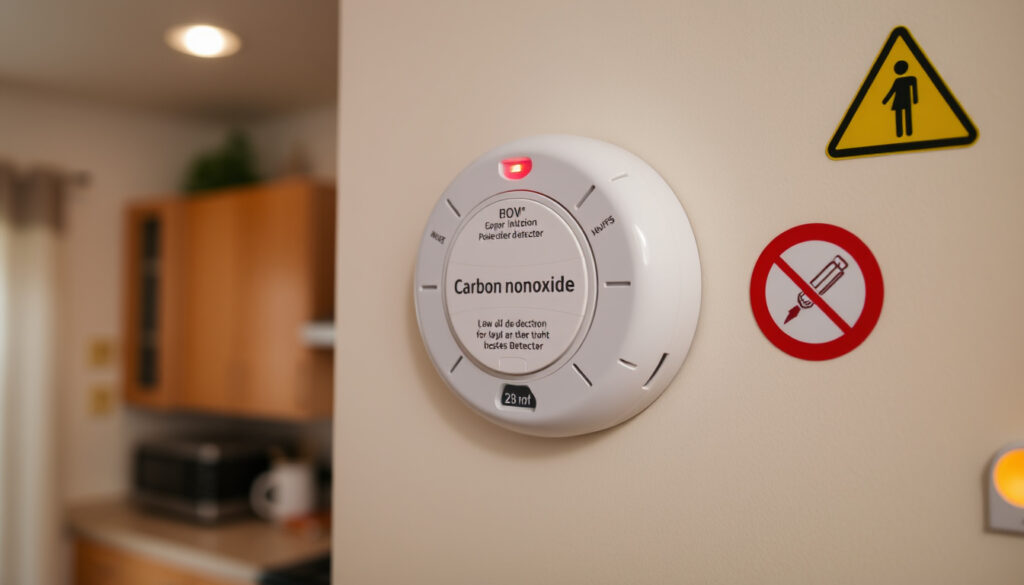
Carbon Monoxide Detector: Alarms, Signs & Safety Guide
Few things jolt a household into panic mode quite like a carbon monoxide detector going off in the middle of the night. That sharp, insistent beeping is not just an annoyance — it is one of the only ways to know something is wrong before it is too late. Carbon monoxide sends roughly 400 people to emergency rooms in the United States each year, according to the EPA, and many of those incidents start with a detector that nobody fully understood. This guide walks through what triggers these alarms, how to read the beeps, and exactly what to do when the sound means business.
Typical Lifespan: 5-10 years · Detected Gas Properties: Odourless, tasteless, colourless · Common Sources: Faulty gas appliances, fireplaces, vehicles · Alarm Purpose: Warn of unusual CO build-up · Recommended Feature: Audible alarm
Quick snapshot
- Faulty appliances, poor ventilation, and vehicle exhaust can trigger alarms (Kidde)
- 4 beeps followed by a pause indicate dangerous CO levels requiring evacuation (RB Heating)
- Most CO alarms remain effective for 5-10 years before needing replacement (Safelincs)
- Without professional testing, exact causes of false positives remain difficult to pinpoint
- Specific CO concentration thresholds triggering alarms vary by manufacturer
- Replace detectors every 5-10 years and test monthly
- Schedule annual appliance inspections to prevent real CO leaks
| Label | Value |
|---|---|
| Gas Detected | Carbon monoxide (CO) |
| Properties | Odourless, colourless, tasteless |
| Lifespan | 5-10 years |
| Tier 1 Source | EPA.gov |
What would set off a carbon monoxide detector?
A carbon monoxide detector responds to actual CO molecules in the air, but several real-world scenarios can trigger it — some genuinely dangerous, others less so.
Common triggers
Faulty or poorly ventilated gas appliances sit at the top of the list. According to the US EPA guidance on CO detector placement, improperly maintained furnaces, water heaters, or gas stoves can leak CO into living spaces. Fireplaces with blocked flues or vehicles left running in attached garages also generate enough CO to set off an alarm.
Placement matters here: manufacturers including Kidde and X-Sense recommend installing alarms 5-20 feet from fuel-burning appliances — close enough to detect a leak, but not so near that normal combustion cycles cause nuisance alarms (Kidde safety guidance, X-Sense placement guide). The US EPA specifically recommends placing a detector on each floor of the home and near sleeping areas, loud enough to wake occupants (US EPA indoor air quality guidance).
False alarms
Not every alarm means danger. According to Safelincs and other safety suppliers, expired detectors past their replace-by date often produce erratic beeping or false alarms. Excessive humidity from bathrooms or kitchens can interfere with sensor accuracy, as can hydrogen gas released from lead-acid battery chargers or volatile compounds off-gassing from freshly screeded floors (Safelincs safety blog).
Placement too close to heat sources, vents, or high-humidity areas can cause persistent false alarms — and the temptation to disable the detector entirely. ADT security resources warn: never assume an alarm is false without professional verification (ADT safety guidance).
The implication: understanding what sets off your detector helps you respond appropriately rather than pulling the batteries and hoping for the best.
What does it mean if your carbon monoxide alarm is beeping?
That steady chirp or urgent pattern is not random noise. CO alarms communicate their status through specific beep patterns, and learning to distinguish them can save you from either dismissing a real emergency or panicking over a low battery.
Low battery
One beep every minute signals a low battery — replace the batteries promptly with fresh ones. This is the most common cause of nighttime chirping and is usually harmless, but ignoring it leaves you unprotected until the battery dies completely (RB Heating HVAC expertise).
End of life
Most CO alarms have a functional lifespan of 5-10 years. When a detector reaches its end-of-life signal, it typically produces 5 beeps every minute or 2 quick beeps every 30 seconds — the unit is telling you it needs full replacement, not just new batteries. Check the replace-by date sticker on the back of the device (Safelincs safety guidance).
Actual detection
Four beeps followed by a pause indicate dangerous CO levels — this pattern demands immediate evacuation. Do not troubleshoot, open windows, or call a neighbour first. Get everyone outside and call emergency services (RB Heating safety guidance).
SimpliSafe notes that steam, dust, or even insects can trigger false alarms in photoelectric sensors — but so can genuine low-level CO that poses health risks over time. The pattern tells you what is happening; context tells you what to do about it.
The pattern: a beeping alarm is always worth investigating, but the response depends entirely on which pattern it is.
What are two warning signs of carbon monoxide?
Carbon monoxide binds to haemoglobin in the blood, replacing oxygen and causing symptoms that often mimic common illnesses like flu or food poisoning.
Early symptoms
Headache and dizziness typically appear first, often described as a dull, throbbing pain at the front of the head. Nausea, fatigue, and confusion can follow, especially if multiple people in the household experience the same symptoms simultaneously and they improve after leaving the building.
Severe signs
As CO exposure increases, victims may experience confusion, chest pain, shortness of breath, and loss of consciousness. According to safety guidance from Carrier and other manufacturers, the gas is invisible and odourless — the detector is often the only warning system before symptoms become serious (Carrier indoor air quality expertise).
Because symptoms overlap with common ailments, CO poisoning is frequently misdiagnosed in emergency rooms. Households without working detectors face the highest risk — by the time symptoms send someone to the doctor, hours of exposure may have already caused lasting damage.
The implication: if multiple occupants feel ill simultaneously indoors and feel better after leaving, that is itself a warning sign requiring immediate action — not a reason to wait and see.
Should I worry if my carbon monoxide alarm goes off?
Short answer: yes. Treat every alarm as a potential emergency until you have ruled out a real CO leak with certainty.
Immediate actions
Safelincs outlines a clear sequence: ventilate the space by opening windows, turn off suspected appliances, evacuate everyone immediately, and call Gas Emergency Services or your local emergency number. Do not re-enter the building until emergency responders have confirmed it is safe (Safelincs emergency protocol).
When to evacuate
Evacuate immediately if the alarm produces the 4-beep danger pattern — do not wait for symptoms to appear. Open windows before leaving if possible without delaying evacuation. Alert neighbours by knocking on doors if time permits. Call emergency services from outside, not from inside where residual CO may still be present.
ADT security resources put it plainly: never assume the alarm was a false alarm — verify it. The consequences of ignoring a real CO leak include brain damage, cardiac complications, or death, while the cost of a false alarm investigation is simply an afternoon waiting for a technician.
The implication: hesitation costs more than caution in this scenario.
Will a carbon monoxide detector tell me if there is a gas leak?
This is a critical distinction that many homeowners get wrong — CO detectors and natural gas detectors are not interchangeable.
CO vs natural gas
Carbon monoxide results from incomplete combustion of carbon-based fuels and is not added to natural gas supplies. Natural gas (primarily methane) is odorised with mercaptan to give it a sulphur smell, but CO itself has no odour, colour, or taste. A standard CO detector responds only to carbon monoxide molecules, not methane (Carrier product guidance).
Detector limits
If you smell gas or suspect a natural gas leak, your CO detector will not alert you. You need a separate natural gas detector designed specifically for methane detection. The EPA and CPSC recommend CO detectors as a complement to, not a replacement for, proper appliance maintenance and gas safety practices (US EPA safety guidance, Merrimack Fire Prevention standards). For more information on carbon monoxide detectors, check out this free VIN check guide. free VIN check guide
Upsides
- Early warning of CO build-up from faulty appliances
- Potentially life-saving alert before symptoms appear
- Simple installation with battery backup options
Downsides
- False alarms from humidity, dust, or expired sensors
- Does not detect natural gas leaks
- Requires regular battery checks and 5-10 year replacement cycle
What this means: a CO detector is essential for combustion safety, but it covers only half the threat picture in a home with gas appliances.
Where should you install carbon monoxide detectors?
Proper placement dramatically affects both detection reliability and false alarm frequency. Here is what authoritative sources recommend for getting the most from your detector investment.
- Install on every level of the home, including basements, near sleeping areas
- Place at knee level on walls, roughly 5 feet above the floor — CO rises with warm air
- Position 5-20 feet from fuel-burning appliances like furnaces or water heaters
- Avoid kitchens (smoke and steam), garages (vehicle exhaust), and dead air corners
- Keep away from windows, doors, vents, and direct sunlight
For boats and caravans in the UK, alarms should be certified to BS EN50291-2 standard, which specifies performance requirements for marine and caravan environments (Safelincs UK safety standards).
First Alert advises avoiding placement near humid areas, direct sunlight, combustion particles, and turbulent air — all conditions that can cause sensor drift or false triggering. A poorly placed detector either cries wolf too often or stays silent when it matters.
The implication: placement is a decision that directly determines whether your detector saves your life or becomes a source of dangerous habituation.
How to respond when a CO alarm goes off
Here is the step-by-step protocol emergency services and safety organisations recommend for anyone with a CO detector in the home.
- Get everyone outside immediately. Do not investigate the source first. Do not open windows before leaving — every second counts.
- Call emergency services from outside. Use a mobile phone from the yard or a neighbour’s house. Tell the dispatcher you have a possible CO emergency.
- Do not re-enter until cleared. Emergency responders will use calibrated monitors to check CO levels before declaring your home safe.
- Seek medical attention if anyone has symptoms. Headache, dizziness, or nausea after a CO alarm warrants a hospital visit, even if levels seem fine by the time help arrives.
- Investigate the source afterward. Have a qualified HVAC technician or gas engineer inspect all fuel-burning appliances before resetting and re-entering.
The implication: the evacuation steps are straightforward, but hesitation — the urge to verify first or open windows and wait — is what kills people in CO incidents.
“Never assume the alarm was a false alarm — verify it.”
— ADT Resources, Security Expert
“If your carbon monoxide alarm is going off, do not assume it is a false alarm.”
— Safelincs, Safety Blog
“Alarms can alert you to problems only after smoke or carbon monoxide reach their sensors.”
— Kidde, Manufacturer
For homeowners with gas appliances, fireplaces, or attached garages, the path forward is clear: install detectors on every floor at proper heights, replace them every 5-10 years, test them monthly, and schedule annual appliance inspections. Treat every alarm as a real emergency until a qualified professional says otherwise. The alternative — a CO exposure incident — carries costs no household should have to bear.
How do you know when you are starting to breathe carbon monoxide?
Early symptoms include headache, dizziness, nausea, and confusion — often mistaken for flu. Multiple occupants feeling sick simultaneously indoors and improving after leaving is a key warning sign. A working detector remains the only reliable way to know before symptoms appear.
Does opening a window help with carbon monoxide?
Ventilation can help after evacuation is complete, but opening windows before leaving wastes critical time. If you smell gas alongside CO symptoms, open windows only if you can do so without delaying your exit. Call emergency services from outside.
What could be causing the carbon monoxide alarm to go off?
Causes range from genuine CO build-up (faulty furnace, blocked flue, running car in garage) to false triggers (expired detector, humidity, hydrogen from battery chargers, dust, or steam). The beep pattern — 4 beeps for danger, 1 beep for low battery, 5 beeps for end-of-life — tells you which scenario you are likely dealing with.
What can falsely set off a carbon monoxide detector?
Humidity, steam from bathrooms or kitchens, dust, insects, hydrogen gas from lead-acid battery chargers, off-gassing from freshly finished floors, and expired sensors can all cause false alarms. Proper placement — avoiding humid areas, vents, and direct sunlight — reduces but does not eliminate these risks.
How many carbon monoxide detectors in a house?
The US EPA recommends a CO detector on each floor, near sleeping areas, loud enough to wake occupants. CPSC adds that if you can only install one detector, place it near sleeping areas. Additional detectors should be installed 5-20 feet from fuel-burning appliances.
What are two warning signs of a carbon monoxide leak in a house?
The two most recognisable early warning signs are headache (often dull and concentrated at the front of the head) and dizziness, frequently accompanied by nausea. If multiple household members experience these symptoms simultaneously and feel better after leaving the building, treat it as a potential CO incident.
What are two warning signs of carbon monoxide in a house besides detector alarms?
Besides detector alarms, watch for persistent symptoms among multiple occupants that match CO poisoning (headache, nausea, confusion, dizziness) and improve immediately upon leaving the building. Streaked or discoloured appliances, yellow or orange pilot light flames instead of blue, and excessive condensation on windows are also indirect indicators of possible combustion problems.
Related reading: Flint and Steel: Real-Life Fire Starting Guide & Tips · Camping Stores Near Me – Top Chains and Local Guide
support.simplisafe.com, support.covesmart.com, support.firstalert.com, forum.nachi.org
If your carbon monoxide detector chirps unexpectedly in the night, understanding CO alarm beeping causes like low batteries helps you respond calmly and effectively.
More related posts
 Sophia Hutchins Death: ATV Accident, Cause, and Dispute
 Theo Von: Childhood Emancipation, Sobriety, and Podcast Career
 Mount Fuji: Climbing, Facts, Height & Beginner Guide
 Alexa Bliss: What Happened? Husband, Real Name, Height & Return
 Best Coffee Near Me: Top Drogheda & Mullingar Cafés
 Tristan Xerri: Suspension, Helmet & Maltese Heritage
 Alfred Molina: Biography, Ethnicity, and Doctor Octopus
 Mike Tindall: Career, Net Worth, Family and Royal Life