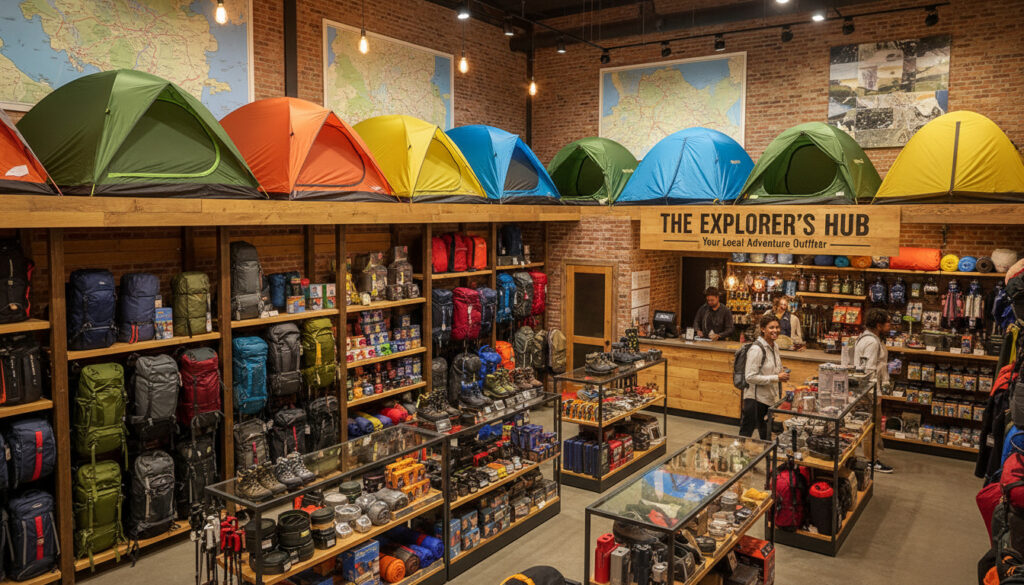
Camping Stores Near Me – Top Chains and Local Guide
Finding reliable camping equipment requires knowing where to shop. National chains and local outfitters offer different advantages for outdoor enthusiasts seeking tents, sleeping bags, and technical apparel. Recent market analysis reveals significant variations in store accessibility, inventory specialization, and revenue scale across major retailers.
The landscape of camping retail has shifted considerably, with some chains expanding their physical footprint while others concentrate on specific geographic regions. Understanding these distribution patterns helps consumers locate appropriate gear whether they live in urban centers or rural areas.
This guide examines the primary camping store chains operating across the United States, their specialization areas, and methods for identifying quality local options. The analysis draws from current retail data and industry performance metrics to provide location-specific guidance.
How to Find Camping Stores Near You
Locating appropriate camping gear sources requires understanding the distinction between national availability and local specialization. Digital mapping tools provide immediate proximity results, yet inventory quality varies significantly between standardized chain locations and independent outfitters.
Top National Chains
REI, Bass Pro Shops, Cabela’s, and Dick’s Sporting Goods dominate the landscape with extensive geographic coverage and specialized inventory categories.
Digital Locators
Google Maps and Yelp provide real-time proximity data, though current research lacks specific aggregate ratings for camping store locations.
Key Gear Categories
Tents, sleeping systems, apparel from brands like Merrell and Keen, plus specialized hunting or fishing equipment distinguish major retailers.
Pro Shopping Tips
Verify seasonal availability online before visiting, as inventory varies between urban flagship stores and smaller regional outlets.
Key Insights for Store Selection
- Bass Pro Shops and Cabela’s maintain broader geographic presence than REI in many rural regions
- Dick’s Sporting Goods operates the largest network with 724 stores across the US and Canada
- REI maintains 179 locations across 41 states, focusing on coastal and mountain West demographics
- Local outfitters often provide specialized backpacking expertise unavailable at general sporting goods chains
- Revenue data indicates Bass Pro/Cabela’s generates over $8 billion annually, substantially exceeding REI’s $2.7 billion
- Consumer spending concentration shows top 20% of customers drive 66% of revenue at Bass Pro locations
- Regional chains like Eastern Mountain Sports maintain limited East Coast presence with seven stores
Comparative Store Data
| Chain | Specialization | Store Count | Revenue Scale | Geographic Focus |
|---|---|---|---|---|
| REI | Hiking, backpacking, technical gear | 179 stores | $2.7 billion | 41 states, mountain/coastal |
| Bass Pro Shops | Fishing, hunting, conservation | Not specified | >$8 billion | Nationwide, rural emphasis |
| Cabela’s | Hunting, camping, outdoor apparel | Subsidiary | Included above | Nationwide |
| Dick’s Sporting Goods | General outdoor, athletic gear | 724 stores | Rivals Bass Pro | US and Canada |
| Field & Stream | Hunting, fishing, camping | Dick’s subsidiary | Part of Dick’s | Select markets |
| Eastern Mountain Sports | Northeast outdoor specialty | 7 stores | Regional | East Coast only |
Top National Camping Store Chains
REI’s Position in Specialty Outdoor Retail
REI operates 179 stores across 41 states, maintaining a reputation for premium backpacking and mountaineering equipment. The cooperative structure emphasizes outdoor recreation expertise, though recent data indicates market share declined from 17% to 13% in recent periods. ConsumerEdge research confirms the co-op maintains strong customer loyalty with 18% of transactions exceeding $200.
Bass Pro Shops and Cabela’s Market Dominance
Bass Pro Shops, operating Cabela’s as a subsidiary, generates revenue exceeding $8 billion annually, positioning it as the largest outdoor retailer by sales volume. The chain emphasizes fishing, hunting, and conservation gear, featuring private label brands like RedHead clothing. Analysis from PMags notes these retailers often provide the only substantial outdoor shopping options within rural areas. Their iconic log cabin store designs create experiential shopping environments distinct from standard retail formats.
Dick’s Sporting Goods and General Outdoor Access
With 724 locations across the United States and Canada, Dick’s Sporting Goods represents the most ubiquitous option for camping equipment. The retailer stocks kayaks, ski gear, and camping essentials alongside general athletic equipment. 24/7 Wall St reporting indicates Dick’s revenue rivals that of Bass Pro, though the merchandise mix emphasizes broader sporting categories over pure outdoor specialization.
Bass Pro Shops and Cabela’s combined revenue exceeds $8 billion, more than triple REI’s $2.7 billion, indicating substantially different inventory volumes and pricing strategies available to consumers.
Local Camping Gear Shops and Outfitter Recommendations
Regional Alternatives to National Chains
Eastern Mountain Sports operates seven locations along the East Coast, providing specialized backpacking expertise comparable to REI within a limited geographic range. Alternative retailer analysis suggests these smaller chains often compete effectively on specific gear categories despite limited store counts. Field & Stream locations, operating as Dick’s subsidiaries, focus specifically on hunting and fishing alongside camping departments.
Evaluating Brick-and-Mortar Experience
Physical camping stores offer tactile evaluation opportunities for tents, sleeping bags, and technical apparel from manufacturers like Merrell and Keen. Travel forum discussions highlight Bass Pro’s log cabin architecture as creating distinctive experiential retail environments. Consumers seeking immediate gear acquisition benefit from avoiding shipping delays during peak camping seasons.
Market Performance and Customer Spending Patterns
Recent industry analysis reveals distinct customer behavior patterns across camping retail chains. Bass Pro Shops demonstrated resilience during pandemic disruptions, maintaining stable market share between 4% and 6% while outperforming broader sporting goods industry trends. ConsumerEdge data indicates high customer concentration, with the top 20% of Bass Pro shoppers driving 66% of total spending.
Dick’s Sporting Goods shows similar concentration metrics, with 63% of revenue generated by the top quintile of customers. REI maintains comparable loyalty patterns at 63% concentration, though the co-op experiences higher transaction values with nearly one-fifth of purchases exceeding $200.
Aggregate star ratings from Google or Yelp for specific camping store locations are not available in current retail analyses. Consumers should consult local review platforms directly for location-specific feedback.
Major camping retailers exhibit high dependency on their most frequent shoppers, with top 20% customers generating between 63% and 66% of total revenue across Dick’s, REI, and Bass Pro locations.
Timeline of Camping Retail Evolution
- Pre-pandemic baseline: REI maintained approximately 17% market share within outdoor specialty retail
- Pandemic disruption: Bass Pro Shops outperformed competitors and broader sporting goods industry averages during economic volatility
- Market shift: REI experienced share decline to 13% as consumers diversified shopping patterns
- Current concentration: Top 20% customers now drive 66% of Bass Pro revenue, 63% at Dick’s and REI
- Transaction evolution: REI maintains highest premium transaction rate at 18% over $200, compared to 12% at Dick’s
Clarifying Certainty in Camping Store Data
Established Information
- REI operates exactly 179 stores across 41 states
- Dick’s Sporting Goods maintains 724 locations in the US and Canada
- Bass Pro/Cabela’s revenue exceeds $8 billion annually
- REI revenue stands at $2.7 billion
- Eastern Mountain Sports operates 7 East Coast stores
- Bass Pro outperformed industry during pandemic periods
Uncertain or Variable
- Exact aggregate customer ratings for specific locations
- Precise combined store count for Bass Pro and Cabela’s networks
- Specific 2024 promotional calendars and seasonal deal timing
- Real-time inventory levels at specific local outlets
- Current rental program availability by location
- Price matching policies across different regions
The Enduring Value of Physical Camping Retail
Physical camping stores provide immediate access to essential gear for urgent outdoor preparations. Unlike online alternatives, brick-and-mortar locations allow tactile evaluation of tent fabrics, sleeping bag temperature ratings, and apparel fit from brands like Keen and Merrell. Field reporting indicates rural consumers particularly benefit from Bass Pro and Dick’s locations, which often represent the only regional sources for technical outdoor equipment beyond basic sporting goods.
The experiential component distinguishes flagship locations, particularly Bass Pro’s log cabin architecture designed to immerse shoppers in outdoor environments. This physical presence addresses the limitations of digital shopping for specialized equipment where weight, packability, and material quality require hands-on assessment.
Outdoor adventures often require significant travel investments. Best Travel Credit Cards No Fees – Top Picks for 2025 can help mitigate expenses when driving to distant camping locations or flying to backcountry destinations.
Industry Sources and Expert Perspectives
Bass Pro Shops and Cabela’s often provide closer ‘real’ outdoor options in rural areas, with revenue exceeding REI’s $2.7 billion at over $8 billion.
— PMags Lightweight Backpacking Analysis
Dick’s Sporting Goods rivals Bass Pro revenue with 724 stores functioning as a major sporting goods retailer with significant outdoor sections.
— 24/7 Wall St Retail Analysis
Summary of Findings
Finding appropriate camping gear requires balancing proximity, specialization, and inventory depth. National chains offer distinct advantages: REI provides technical backpacking expertise across 179 locations, Bass Pro/Cabela’s delivers extensive hunting and fishing inventories with rural accessibility, and Dick’s Sporting Goods offers broad geographic coverage through 724 stores. North Kellyville Medical Centre – Address, Hours, Services & Booking provides regional medical support for outdoor enthusiasts. Consumers should verify specific location inventory online before visiting, as availability varies significantly between urban flagship stores and smaller regional outlets.
Frequently Asked Questions
Do camping stores offer price matching with online retailers?
Price matching policies vary by retailer. Research indicates Bass Pro/Cabela’s and Dick’s often compete aggressively on pricing, while REI maintains premium positioning. No specific price matching guarantees are documented in current retail analysis.
What types of gear should I prioritize buying at physical stores?
Physical stores excel for tents and sleeping bags requiring tactile evaluation. Travel forums recommend inspecting hard goods and apparel from Merrell and Keen in-person for fit and quality assessment.
Are local outfitters more expensive than national chains?
Pricing comparisons remain unclear in available data. While Bass Pro/Cabela’s generates higher revenue volumes suggesting competitive pricing, REI maintains higher transaction values with 18% of purchases exceeding $200, indicating premium positioning.
Do these stores rent camping equipment?
Rental programs vary by location and chain. Research does not specify current rental availability at REI, Bass Pro, or Dick’s locations. Consumers should contact specific stores directly regarding equipment rental options.
Can I return online purchases to physical store locations?
Return policies differ across chains. REI operates as a cooperative with member-focused policies, while Dick’s and Bass Pro maintain standard retail return protocols. Specific cross-channel return capabilities require verification at individual locations.
What are the busiest seasons for camping store shopping?
Seasonal patterns suggest spring and early summer drive peak camping preparation. Research indicates promotional calendars vary annually, and specific 2024 seasonal deal data remains unavailable in current reporting.
More related posts
 Post Malone: Wife, Kids, Teeth, Health & Why He’s So Popular
 Tony Hawk Net Worth, Biography, and 2025 Facts
 David Gilmour: Net Worth, Son’s Accident, Feud with Waters
 Mekia Cox: The Rookie, Michael Jackson Dance & Family
 Jonas Brothers: Members, Ages, Net Worth & FAQs
 King Tut: Life, Death, and Legacy of the Boy Pharaoh
 Avi Yemini: Biography, Nationality, Net Worth & Heart Attack
 Lenovo Warranty Check: Verify Your Device Coverage