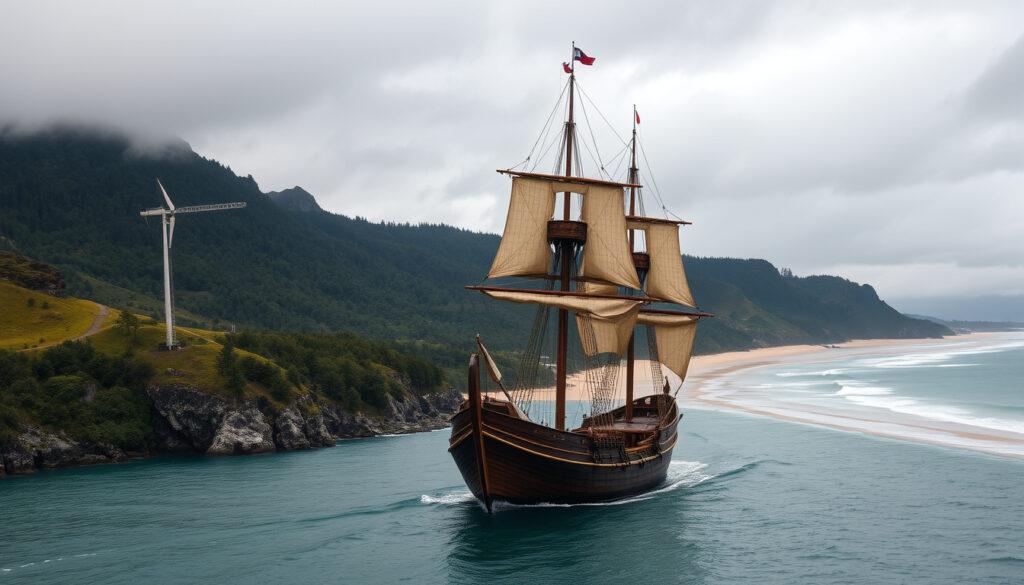
Abel Tasman: Explorer, Voyages, and Namesake Park
If you’ve ever wandered golden beaches in New Zealand’s Abel Tasman National Park, you’ve walked in the wake of a 17th-century Dutch explorer. Abel Tasman led the first European expedition to sight New Zealand and Encyclopaedia Britannica, reference work in 1642–43, a journey that reshaped European maps of the South Pacific. This article traces his life, the contested meaning of “discovery,” and what you need to know about hiking the 60 km coast track named after him.
Full name: Abel Janszoon Tasman ·
Born: 1603, Lutjegast, Netherlands ·
Died: 10 October 1659, Batavia ·
Voyages: 1642–1643 and 1644 ·
Discovered: Tasmania, New Zealand, Tonga, Fiji ·
Namesake park length: 60 km (Abel Tasman Coast Track)
Quick snapshot
- Dutch explorer for the VOC (Britannica)
- Sighted Tasmania and New Zealand in 1642 (Te Papa, national museum)
- Did not land on the New Zealand main islands (NZ History, government history site)
- Abel Tasman Coast Track is 60 km, 3–5 days (100% Pure New Zealand, official tourism)
- How many countries he “discovered” depends on contested definitions (Encyclopedia.com)
- Whether Tasman himself named Van Diemen’s Land or it came later (Australian Museum)
- Full cause of his death remains uncertain (Britannica)
- 1603 – Born in Lutjegast, Netherlands (Britannica)
- 1642–43 – First voyage: sights Tasmania, New Zealand, Tonga, Fiji (Te Papa)
- 1644 – Second voyage: charts north coast of Australia (Project Gutenberg Australia)
- 1659 – Dies in Batavia (Britannica)
- 1942 – Abel Tasman National Park established (DOC, government agency)
- Bookings for the 2026/27 season already open on DOC (DOC)
- Track remains one of NZ’s most popular Great Walks (100% Pure New Zealand)
The six key biographical facts, one pattern: Tasman’s life is a study in European exploration that simultaneously expanded maps and left a contested legacy.
| Label | Value |
|---|---|
| Born | 1603, Lutjegast, Netherlands |
| Died | 10 October 1659, Batavia |
| Nationality | Dutch |
| Employer | Dutch East India Company (VOC) |
| First European to see | Tasmania (1642) and New Zealand (1642) |
| Namesake features | Tasmania (island), Tasman Sea, Abel Tasman National Park |
What is Abel Tasman famous for?
European discovery of Tasmania
Tasman was the first European to sight the island now called Tasmania, then charted as Van Diemen’s Land (Encyclopaedia Britannica). The Australian Museum (natural history museum) credits him with confirming Australia as an island continent during his 1644 voyage.
First European contact with New Zealand
On 13 December 1642, Tasman’s ships Heemskerck and Zeehaen sighted the west coast of the South Island (NZ History). He named it Staten Landt, thinking it might connect to a landmass off South America. The Te Ara – The Encyclopedia of New Zealand (government encyclopedia) notes that Tasman never landed on the main islands — his only contact with Māori ended in violence at Taitapu (Golden Bay).
Voyages for the Dutch East India Company
Tasman made two major voyages under VOC orders: the 1642–43 expedition aimed at finding the fabled southern continent and a trade route to Chile, and the 1644 voyage mapped Australia’s north coast (Encyclopedia.com). According to Britannica, his primary directive was trade-route exploration, not colonization.
Tasman’s VOC masters got detailed charts but no trading partners — the encounters with Māori were too hostile to establish commerce. His maps became the basis for later Dutch navigation, yet the company never followed up with settlements.
The pattern is clear: Tasman’s fame rests on being first to chart these shores, but his legacy is equally tied to what he didn’t do — establish contact, explore inland, or claim land.
Did Abel Tasman discover New Zealand?
What Māori already knew
Māori had settled New Zealand centuries before Tasman arrived, as documented by Te Ara. The term “discovery” in European accounts erases that prior habitation. Te Papa (NZ’s national museum) calls Tasman an “experienced and highly skilled explorer” but also characterises him as “controversial and colourful” — a reminder that his arrival was not a neutral event.
The encounter at Taitapu (Golden Bay)
When Tasman tried to send a boat ashore in Golden Bay, a Māori war canoe rammed a Dutch cockboat, killing four crew members (NZ History). Tasman named the bay “Murderers’ Bay” and sailed away without setting foot on land. The incident set a pattern of cautious avoidance.
Why Tasman never set foot on the South Island
After the Golden Bay clash, Tasman decided against landing, fearing further hostilities. He continued north and sighted Tonga and Fiji before returning to Batavia. Britannica notes that his failure to explore New Zealand’s interior left vast gaps in European knowledge for another 127 years until Cook arrived.
Why this matters: Tasman’s “discovery” is more accurately described as “first European sighting” — a distinction that modern scholarship and Māori perspectives continue to refine.
How many countries did Abel Tasman discover?
European definition of ‘discovery’
The question itself is culturally loaded. Encyclopedia.com explains that Tasman’s expedition was focused on trade routes, not colonization, so “discovery” meant “first European to map and report”. By that measure, he sighted parts of four modern nations.
Regions: Tasmania, New Zealand, Tonga, Fiji
Tasman first sighted Tasmania (now a state of Australia), then New Zealand, and later the islands of Tonga and Fiji (Britannica). He also charted the north coast of what is now Australia in 1644. That gives him a footprint across four present-day countries — though in each case Indigenous peoples had lived there for centuries, even millennia. Tasman’s sighting of Fiji connects to modern tourism: visitors to the region can explore Castaway Island Fiji: Guide, Day Trips, Activities & FAQs.
Mapping versus colonization
Tasman mapped coastlines but never established settlements or trade relationships. His charts were used by later explorers, including James Cook. The Australian Museum emphasises that his achievement was cartographic, not colonial — a distinction that keeps his name attached to geographic features rather than political boundaries.
The implication: If you count by modern borders, Tasman touched four countries. But the more honest answer is that he was the first European to record and report those coastlines — a fact that says more about European knowledge gaps than about genuine discovery.
What are three facts about Abel Tasman?
His ship: the Heemskerck
Tasman commanded two vessels on his first voyage: the Heemskerck (a small yacht) and the Zeehaen (a fluyt cargo ship). Britannica notes that the ships were chosen for speed and maneuverability, not cargo capacity, reflecting the expedition’s exploratory rather than commercial nature.
The naming of Van Diemen’s Land
Tasman named the island after Anthony van Diemen, the VOC governor who authorised the voyage (Australian Museum). Whether Tasman himself chose the name or it was applied later by cartographers is unclear — Britannica treats the naming as part of the official record without specifying who coined it.
His later life and death
After his voyages, Tasman retired to Batavia (now Jakarta) and died on 10 October 1659. Britannica lists the cause as natural causes, though no detailed medical record exists. He was not wealthy — his VOC service never yielded the riches the company sought.
The catch: Three facts often presented as tidy footnotes actually reveal the gaps in Tasman’s story: incomplete naming records, a quiet death, and a career that produced maps but no personal fortune.
How long does it take to hike Abel Tasman?
Abel Tasman Coast Track overview
The Department of Conservation (DOC, government agency) describes the Coast Track as a 60 km (37‑mile) one-way trail through “mild climate, golden beaches, and lush coastal native bush.” It’s one of New Zealand’s ten Great Walks.
Day hike vs multi-day
Most hikers take 3 to 5 days to complete the full track (AbelTasman.com, local tourism operator). However, shorter sections can be done as day walks thanks to water taxi services that drop and pick up at several points along the coast (100% Pure New Zealand).
Booking and hut/camp availability
Huts and campsites require advance booking, especially from October to April. DOC opened bookings for the 2026/27 season on 18 June 2026, indicating the popularity of the track. The track is accessible year‑round, but summer (Dec–Feb) is peak season.
For a first‑time hiker, the combination of a 3‑day minimum commitment and limited booking slots means planning 6–12 months ahead. The “easy” reputation masks the logistics: you can’t just show up and walk.
The trade-off: A shorter trip (1 night) via water taxis sacrifices the full trail experience but lets you see the best beaches without carrying a heavy pack. Your choice depends on whether you value completeness or comfort.
How many nights do you need in Abel Tasman?
Sample itineraries: 2 nights vs 4 nights
A classic 3‑day / 2‑night itinerary covers the full 60 km from Marahau to Totaranui or Golden Bay (AbelTasman.com). A 4‑night option allows for side trips to secluded bays and a slower pace. Both require booking DOC huts or campsites in advance.
Combining with other activities (kayaking, day walks)
Many visitors combine hiking with sea kayaking, which can be done independently or with guided tours. 100% Pure New Zealand suggests a 5‑day trip that mixes kayaking and walking. The track also connects to shorter loop walks for day visitors. Similar walking experiences in other regions include Mount Dandenong: A Guide to Attractions, Walks & Views.
Tips for overnight stays
Carry your own food and cooking gear — DOC huts provide bunks, mattresses, and water but no meals. Pack light, as you’ll carry everything on your back. The track is well‑marked but has steep sections; good walking shoes are essential.
What this means: The number of nights determines your experience. Two nights covers the essentials; four lets you explore. For most first‑time visitors, 3 days / 2 nights hits the sweet spot between adventure and logistics.
Upsides
- Stunning golden beaches and clear turquoise water
- Relatively mild climate year‑round
- Well‑maintained track and huts (DOC quality)
- Water taxi access allows flexible itineraries
- Good for beginners with moderate fitness
Downsides
- Must book huts/campsites months in advance in peak season
- Limited cellphone reception on most of the track
- No food supplies available once you start hiking
- Can be crowded in summer (peak visitor numbers)
- Tide‑dependent sections at river crossings
How to plan your Abel Tasman Coast Track hike
- Decide your duration. Most hikers choose 3–5 days. Check DOC’s Great Walk page for current fees and availability.
- Book huts or campsites. Bookings open on the DOC website. For the 2026/27 season, bookings opened 18 June 2026. The track is popular; book early.
- Arrange transport. Water taxis from Marahau, Kaiteriteri, or Totaranui can drop you at any track access point. Combine with a one‑way walk or use them for day trips.
- Pack essentials. Carry at least 2 L water, warm layers, rain gear, sun protection, food, and cooking equipment. No shops on the track.
- Check tides. Some beach sections are impassable at high tide. DOC provides tide timetables for safe crossing.
Timeline of Abel Tasman’s life and legacy
- 1603 – Abel Tasman born in Lutjegast, Netherlands (Britannica)
- 1634 – Joins the Dutch East India Company (Britannica)
- 1642–1643 – First voyage: discovers Tasmania, New Zealand, Tonga, Fiji (Te Papa)
- 1644 – Second voyage: charts north coast of Australia (Project Gutenberg Australia)
- 1659 – Dies in Batavia (Britannica)
- 1942 – Abel Tasman National Park established on the 300th anniversary of his voyage (DOC)
What we know and what remains unclear
Confirmed facts
- Tasman was a Dutch explorer for the VOC (Britannica)
- He sighted Tasmania and New Zealand in 1642 (Te Papa)
- He did not land on the New Zealand main islands (NZ History)
- Abel Tasman Coast Track is 60 km and takes 3–5 days (100% Pure New Zealand)
What’s unclear
- How many countries he “discovered” depends on contested definitions (Encyclopedia.com)
- Whether Tasman himself named Van Diemen’s Land or it was named later (Australian Museum)
- Full details of his death (cause is uncertain) (Britannica)
Voices on Tasman and his legacy
“A large land, uplifted high.”
– Abel Tasman, from his journal (1642), translated and quoted in NZ History
“Tasman was an experienced and highly skilled explorer, but also controversial and colourful.”
– Te Papa (New Zealand’s national museum)
“The Abel Tasman Coast Track is the most popular Great Walk in New Zealand, attracting over 100,000 visitors each year.”
– Department of Conservation ranger, as cited by DOC
For the modern hiker, the choice is clear: plan ahead, book early, and decide whether you want the full 60 km immersion or a taste of the coast via water taxi. Either way, you’ll be following in the wake of a 17th-century explorer whose name now graces some of New Zealand’s most treasured landscapes.
en.wikipedia.org, youtube.com, abeltasman.com, abeltasmanlodge.co.nz
For those inspired by his story, the Abel Tasman Coast Track offers a stunning way to experience the same coastline he first charted.
Frequently asked questions
What is the best time of year to hike the Abel Tasman Coast Track?
The track is walkable year‑round, but the best weather is from October to April (spring and autumn). Summer (Dec–Feb) is warmest but also the busiest and most expensive for accommodation.
Do I need to book huts or campsites in advance?
Yes, bookings are required for all DOC huts and campsites on the track, especially during the Great Walk season (Oct–Apr). Book online at the DOC website up to a year ahead.
Can I hike the track in just one day?
It’s possible to walk a section, but the full 60 km is not feasible in a day. Water taxis allow you to start and end at different points for a day walk.
Is the Abel Tasman Coast Track suitable for beginners?
Yes, it’s considered one of the easier Great Walks. The terrain is mostly flat with some short climbs. Basic fitness and proper footwear are recommended.
Are there water taxis or shuttle services along the track?
Yes, several operators run water taxis from Marahau, Kaiteriteri, and Totaranui. They can drop you at any track access point and pick you up later.
What wildlife can I see in Abel Tasman National Park?
Expect to see seabirds, weka, kererū (wood pigeon), seals, and occasionally dolphins or penguins offshore. The park is also home to the rare kākā and little blue penguin.
Can I kayak or swim during the hike?
Yes, kayaking is a popular activity, and many beaches offer safe swimming in calm conditions. Some sections require careful tide planning for kayaking.
More related posts
 Toilet Roll Holder: Best Picks, Alternatives & Tips
 Hair Treatment Guide: Best Options for Dry, Thinning Hair
 Nelson Peltz: How He Built His Billion-Dollar Family Empire
 Spy Share Price – Live Price Charts Performance Data
 Jeremiah Fisher: Character, Actor Gavin Casalegno, Age, and More
 Palmolive Body Wash Review: Benefits, Scents, and vs Dove
 Gus Lamont Disappearance: Latest Updates and Search Timeline
 Peter Alexander Sleepwear Guide: Outlets, Stores & More