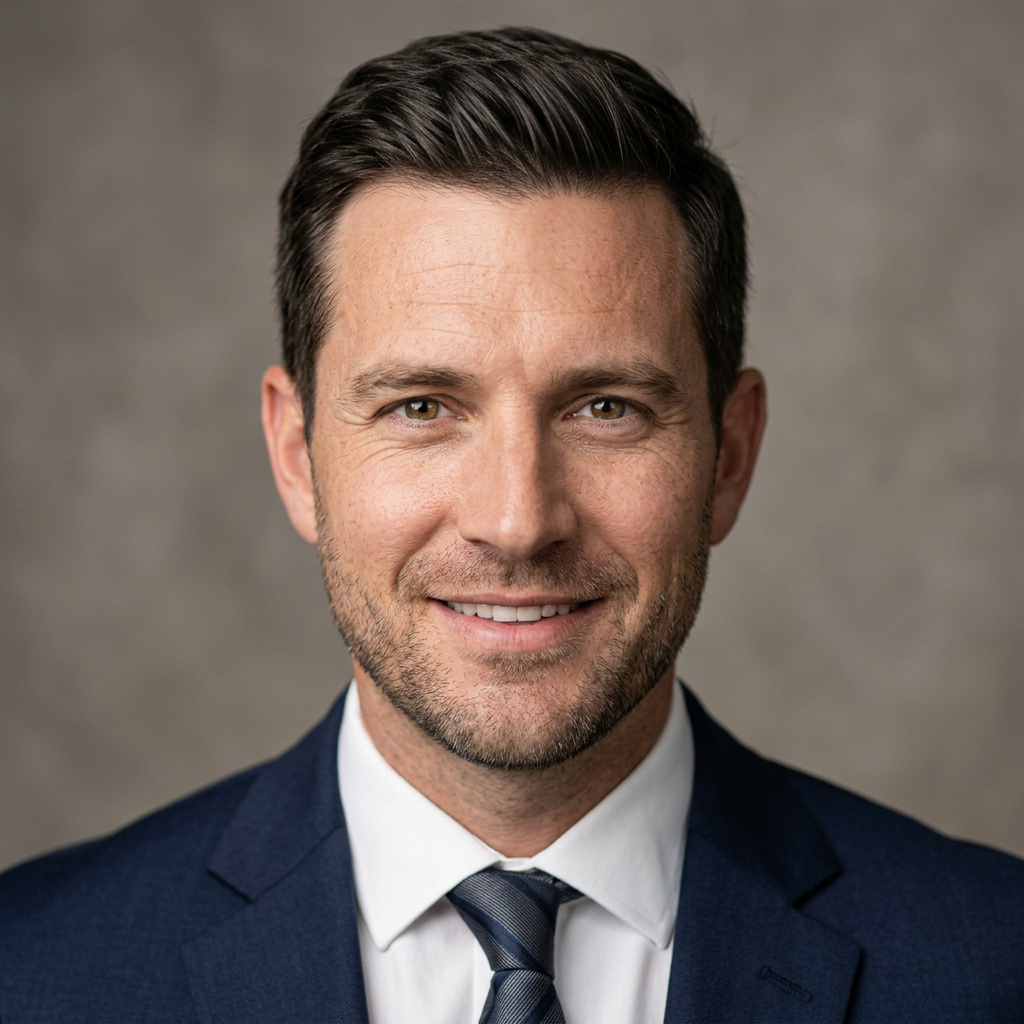
Simon Sinek: Start with Why, Golden Circle, and criticism
Ask a room of executives why their company exists and you’ll usually hear talk about profits — Simon Sinek has built a career on questioning that reflex. Over the past fifteen years, his “Start with Why” philosophy and Golden Circle model moved from a TED stage into corporate boardroom vocabulary, with his best-known talk passing 60 million views, according to entrepreneurship publication Foundr. The gap between the inspiration and the evidence is where this profile lives — along with a few personal details Sinek rarely puts on stage.
Born: 9 October 1973 (age 51) · Occupation: Author, motivational speaker, leadership consultant · Most famous book: Start with Why (2009) · TED talk views: Over 60 million
Quick snapshot
- Sinek founded The Optimism Company and wrote Start with Why, Leaders Eat Last, and The Infinite Game, according to The Optimism Company.
- Marital status is not publicly confirmed; Sinek keeps his private life out of the press.
- Net worth estimates vary widely, and no verified figure exists.
- An ADHD self-description has been mentioned in interviews but not clinically documented.
- New books and projects continue through Optimism Press, Sinek’s imprint with Penguin Random House, per The Optimism Company.
- The bigger watchpoint: whether the framework gains empirical support or remains a motivational tool, as branding consultancy Spellbrand argues.
Six facts, one pattern: the public biography is well documented, while anything touching Sinek’s private life stays hazy.
| Label | Value |
|---|---|
| Full name | Simon Oliver Sinek (Wikipedia) |
| Born | 9 October 1973, London, England (Wikipedia) |
| Occupation | Author, motivational speaker, leadership consultant |
| Known for | Start with Why, Golden Circle, Infinite Game |
| Notable works | Start with Why, Leaders Eat Last, The Infinite Game |
| Website | simonsinek.com |
What is Simon Sinek’s theory?
Sinek’s core argument, built from the book Start with Why, is brutally simple: most organizations lead with what they do and how they do it, while the most inspiring leaders lead with why they exist. That distinction is the whole edifice — and the reason his name became shorthand for purposeful leadership, according to speaker bureau JLA.
He calls the framework the Golden Circle, and the model’s core claim is that belief precedes product: customers commit to a purpose first and rationalize the purchase afterward.
What are the three components of Sinek’s golden circle?
- Why: the purpose, cause, or belief — why the organization exists beyond profit.
- How: the process and values — how the organization delivers on its belief.
- What: the product or service — the tangible result people see and buy.
Sinek places “Why” at the center and argues most organizations communicate from the outside in, naming what they do before explaining why it matters, according to management platform Toolshero. The three circles work as a communication template: start with purpose, then show how, then offer the thing.
Start with Why frames the stakes in stark terms: “There are only two ways to influence human behavior: you can manipulate it or you can inspire it.” For Sinek, manipulation is the default of modern marketing, and inspiration is the alternative only a clear “why” can deliver.
What is Simon Sinek’s 2-Year Rule?
- The rule: give a new role or company two years before deciding it is the wrong fit.
- The reasoning: the first months show how a job looks, not how it works; the judgments that form later are the ones worth keeping.
Sinek’s 2-Year Rule appears in leadership summaries of his advice as a guard against impulsive exits — a practical extension of the patience theme that runs through his work, per Toolshero.
What are Simon Sinek’s 5 rules?
- The Gift of Last Place — Sinek’s most-shared rule: the true test of a leader is how they treat the people at the back of the line, not the stars at the front.
- The full set of five varies from talk to talk, which is consistent with his view of leadership as a practice rather than a checklist.
The rules circulate mostly as video clips, which is both their strength and their weakness: they are memorable, but they rarely survive contact with a specific organizational problem.
Sinek’s framework is a communication model, not a management science. Teams can use it to sharpen their story; it will not tell them how to run operations.
The pattern: the theory is easy to apply and hard to test — a combination that explains both its popularity and its vulnerability to criticism.
The implication: Sinek’s framework is more a communication tool than a predictive science, which is both its strength and its limitation.
Why is Simon Sinek so famous?
The trigger was a single talk. Sinek delivered “How great leaders inspire action” for TED in 2009, and the platform version became the most efficient marketing campaign he ever had.
He followed the talk with a chain of books — Start with Why, Leaders Eat Last, and The Infinite Game — turning one idea into a curriculum that keynote audiences could carry home, per JLA.
- Books and keynotes carried the message into corporate training budgets.
- Short video clips carried it into everyday social feeds.
- The podcast and YouTube channel kept the cadence going.
The clip economy is the real multiplier: a single minute of Sinek saying “why” out loud outranks most corporate messaging, and the algorithms keep serving it.
What is Simon Sinek’s most famous quote?
- “People don’t buy what you do, they buy why you do it” — the line from the TED talk that became his calling card, per Foundr.
The quote works because it flatters the listener: it turns buying decisions into identity statements. That single sentence is why Sinek’s name survives in contexts where the Golden Circle model itself is never mentioned.
Sinek’s fame is a media loop: talk feeds book, book feeds keynote, keynote feeds clip, clip feeds talk. The view count is less a metric of truth than of repetition.
What this means: Sinek’s influence rests on delivery more than discovery. He repackaged familiar observations about purpose and belonging into a polished, shareable message at the exact moment social media rewarded that packaging.
What are the criticisms of Simon Sinek?
For a public intellectual whose career rests on a single idea, the critique has become predictable: the examples are few, the logic is circular, and the evidence is anecdotal.
- Survivorship bias: Sinek builds the argument on famous successes, so the failures that followed the same playbook never appear in the story, as branding consultancy Spellbrand puts it.
- Over-reliance on Apple: a 2025 review notes the book leans heavily on Apple examples and never tests the framework against a well-run brand that failed, per career site The Career Project.
- “Bland and extremely repetitive”: a 2023 critique of Start with Why reaches for adjectives rather than evidence, per independent reviewer Dan Nagle.
- The thesis itself: a strategy consultancy argues the brand-purpose argument is not just thin but fundamentally wrong, according to Monkhouse & Company.
Notice what none of these critiques deny: that the ideas feel useful, that the talks are engaging, and that many teams report a clearer sense of direction after a Sinek session. The charge is narrower — that the framework is unfalsifiable, selected from success stories, and repeated until it looks like proof.
Then there is the personal version of the critique. A man who urges transparency while keeping his own private life sealed is not necessarily a hypocrite, but the gap invites the question — and Sinek has never answered it directly.
Every major claim in Sinek’s books rests on a handful of success stories chosen for the outcome. That is survivorship bias — and it only matters if you expect the model to predict results rather than to motivate people.
The trade-off: a framework that inspires millions may not survive academic scrutiny, and Sinek’s defenders would say that was never the point.
The pattern: the critiques focus on methodology, not on Sinek’s ability to motivate — a distinction that explains why his popularity outlasts the academic objections.
What age is Simon Sinek?
Sinek is 51 as of this writing. The date behind that number, 9 October 1973, sits in the key facts above and is consistent across the main biographies.
The more revealing number is how compressed his public career has been: from first TED talk to a shelf of books in roughly a decade, with no long academic or corporate apprenticeship visible before it.
A short public arc raises the stakes of every new release. Sinek’s next idea will compete with his own back catalog, not just with other leadership writers.
Why this matters: at 51, the question is no longer whether Sinek can grow an audience, but whether he can keep the message fresh enough to hold one.
Age also matters for the legacy question. Leadership theories usually look strongest in the decade they are born and weakest in the decade after; Sinek’s ideas are now entering that second decade.
Did Simon Sinek get married?
No reliable public record confirms that Sinek is married. That sentence is itself the story: for a man who lectures companies about purpose and vulnerability, the personal life is the least documented part of his file.
What is public is a handful of self-revealed details — an ADHD self-description, a father who died when Sinek was young, and a disciplined work routine he has described in interviews. Everything else is inference.
Is Simon Sinek ADHD?
- Sinek has described himself in interviews as having ADHD; there is no public clinical record, and he has not presented the term as a formal diagnosis.
- The self-description matches his public brand — energy, focus, and a mind that jumps between ideas — rather than any documented medical history.
The distinction matters. ADHD is a medical label, and Sinek approaches it the same way he approaches every personal topic: as a story that serves his message about focus, discipline, and finding work you love. That is insightful — and it is also exactly the anecdotal style his critics point to.
What is Simon Sinek like in real life?
- Public accounts consistently describe an optimistic, energetic speaker with an unusual tolerance for repetition.
- The private man behind the stage persona remains, by design, mostly out of view.
The friendliest reading is that Sinek practices what he preaches: he found a “why” early and built a career around it. The less friendly reading is that a public figure who speaks about purpose while shielding his own life creates an information vacuum — and the vacuum fills with speculation.
The implication: the less Sinek reveals about his private life, the more the public fills the gap with guesses, and none of those guesses are anchored in verifiable fact.
The pattern: Sinek’s personal privacy is consistent with his message of purpose-driven focus, yet it creates a tension that his critics are happy to exploit.
What is Simon Sinek’s occupation?
The short answer: author, motivational speaker, and leadership consultant. The longer answer starts in advertising — Sinek studied cultural anthropology at Brandeis University, moved to London for law at City University, then worked at agencies including Euro RSCG and Ogilvy & Mather before founding Sinek Partners, per Toolshero.
Sinek’s authority is communicative, not credentialed: he studied anthropology, not business, and spent his formative years in advertising, not management.
Today his operation goes by The Optimism Company, the media and publishing business behind his books, talks, and podcast — he founded it, according to his own bio, after years of speaking and consulting.
- The client list reads like a corporate index: Microsoft, MARS, SAP, Intel, 3M, the United States Military, and members of the United States Congress, per JLA.
The actual work is less mystical than the stagecraft suggests: write a book, deliver keynotes, run a media company, and sell the ideas back to the same corporate audiences that keep the cycle funded.
The catch: the same career that makes him a compelling speaker — communicator, not operator — is also why critics keep asking what qualifies him to advise the military and Congress.
What we know — and what we don’t
Five questions into this profile, the record splits cleanly in two.
Confirmed facts
- Born 9 October 1973 in London, England (Wikipedia)
- Author of Start with Why, Leaders Eat Last, and The Infinite Game (The Optimism Company)
- TED talk viewed more than 60 million times (Foundr)
- Founder of The Optimism Company (The Optimism Company)
What’s unclear
- Marital status — not publicly confirmed
- Net worth — estimates vary widely; no verified figure
- ADHD — self-described, not clinically documented
- Father’s death — mentioned publicly; details remain sparse
- Personal anecdotes — originate almost entirely from Sinek’s own accounts
For a public intellectual, the asymmetry is unusual: the message is everywhere, while the man behind it is barely visible. The implication: Sinek’s biography is as selective as his evidence — and that parallel is the most consistent theme of his career.
Simon Sinek in his own words
Sinek’s public career runs on a small set of quotable convictions. His own words explain the loyalty; the last quote here explains the backlash.
“Leadership is not about being in charge. It’s about taking care of those in your charge.”
— Simon Sinek, leadership speeches and interviews (The Optimism Company)
“Sinek’s brand-purpose thesis is fundamentally wrong.”
— Monkhouse & Company, strategy consultancy (Monkhouse & Company)
The pattern: Sinek’s quotes feel true, which is exactly his critics’ point — a well-timed aphorism is not the same as a testable claim.
What Sinek’s career actually proves
The most honest way to read Simon Sinek is as a communicator, not a scientist. His ideas have changed how teams and companies talk about purpose, but the evidence behind the Golden Circle remains anecdotal, and the critique hardens with every new release. For Sinek, the choice is clear: keep evolving the theory in ways that answer the skeptics, or watch a legacy built on inspiration slowly be reframed as a pile of motivational clips.
Frequently asked questions
How many books has Simon Sinek written?
The public record confirms at least three core titles — Start with Why, Leaders Eat Last, and The Infinite Game — plus later books and projects through Optimism Press, his imprint with Penguin Random House.
What is Simon Sinek’s net worth?
No verified figure exists. Estimates vary widely across ranking sites, and Sinek has never published financial statements.
What is Simon Sinek’s education background?
He studied cultural anthropology at Brandeis University, then briefly started law at City University in London before moving into advertising, according to Toolshero.
Does Simon Sinek have children?
No reliable public information confirms whether Sinek has children; he keeps his family life private.
What is the Infinite Game about?
It applies the “why” idea to strategy: instead of playing to beat competitors in a finite game, leaders should play to keep going in an infinite game — a framework Sinek developed in the book of that name.
What is Simon Sinek’s leadership philosophy?
Lead with why, put people first, and create environments where teams feel safe — the recurring themes across Start with Why and Leaders Eat Last.
More related posts
 Alicia Keys: Biography, Songs & Net Worth
 Melissa McCarthy: Facts, Net Worth, and Weight Loss
 How to Clean a Cutting Board: Best Methods for Wood & Plastic
 Big Little Lies Season 3: Status, Cast, and Streaming Guide
 Marc Anthony: Biography, Family, and Key Facts
 King Tut: Life, Death, and Legacy of the Boy Pharaoh
 Morgan Freeman: Health, Net Worth, and Family Facts