George Washington: Biography, Facts, and Common Questions
Ask someone to name a Founding Father and George Washington is almost always the first answer. Yet many details we think we know about him—cherry trees, wooden teeth, a stern face—are legend rather than fact.
First President of the United States | 1789–1797 | Commander-in-Chief of the Continental Army | Born: Feb 22, 1732 | Died: Dec 14, 1799
Quick snapshot
Early Life
- Born February 22, 1732 in Westmoreland County, Virginia. Mount Vernon
- Inherited Mount Vernon in 1752 after the death of his half-brother. Mount Vernon
Military Career
- Appointed commander-in-chief of the Continental Army in 1775. National Park Service
- Posthumously promoted to General of the Armies of the United States in 1976. National Park Service
Presidency
- Unanimously elected first president of the United States in 1789. National Park Service
- Established the two-term tradition, serving from 1789 to 1797. National Park Service
Death & Legacy
- Died December 14, 1799 at Mount Vernon. Mount Vernon
- His will freed the enslaved people he owned, a rare public act among the founding generation. Mount Vernon
The pattern: Washington’s public career was built on precedent, from the two-term presidency to the peaceful transfer of power.
What was George Washington best known for?
Washington is best known as the first President of the United States and the commander-in-chief of the Continental Army during the American Revolution. His leadership during the revolution and his role in chairing the Constitutional Convention made him the natural first officeholder under the new Constitution.
His decision to step down after two terms, rather than holding power for life, set a critical precedent for democratic governance. Washington himself called the two-term limit an example he hoped would become an established standard.
What this means today
The Washington precedent still shapes the presidency, from term limits to the expectation that a former president will respect the peaceful transfer of power. His decision to step aside peacefully after two terms became a core norm of American democracy.
britannica.com, nps.gov, whitehousehistory.org, mountvernon.org, mountvernon.org, georgewbush-whitehouse.archives.gov, mountvernon.org, britannica.com, mountvernon.org, britannica.com, thenmusa.org, cleveland.com
Frequently asked questions
How tall was George Washington?
Washington stood about 6 feet 2 inches tall, unusually tall for his era. He was recorded as “six feet two inches” on a 1799 inventory taken after his death. Mount Vernon
What religion did George Washington practice?
Washington was baptized as an Anglican and attended services throughout his life. He also supported broad religious tolerance, frequently attending services of other denominations and ensuring that his troops could practice their own faith. Mount Vernon
Did George Washington have wooden teeth?
No. Washington’s dentures were made from a combination of human teeth, animal teeth, and materials such as hippopotamus ivory, not wood. The wooden-teeth myth likely began because ivory and bone become stained after use. Mount Vernon
What is the cherry tree myth?
The “cherry tree” story comes from a 1800 biography by Mason Locke Weems, who invented the tale of Washington cutting down his father’s cherry tree. There is no evidence Washington ever chopped down a cherry tree. Mount Vernon
Was George Washington a Freemason?
Yes. Washington was initiated as a Freemason in 1752 and eventually became a Master Mason. He often wore his Masonic regalia during public events, and his Masonic membership is well documented. Mount Vernon
What was George Washington’s political party?
Washington was not a member of any political party. He famously warned against “the spirit of party” in his farewell address, and he remains the only president to have been elected without a party affiliation. National Park Service
What was George Washington’s rank in the US military?
Washington was appointed commander-in-chief of the Continental Army in 1775, a rank equivalent to General. In 1976, Congress posthumously promoted him to General of the Armies of the United States, a rank created specifically for him. National Park Service
More related posts
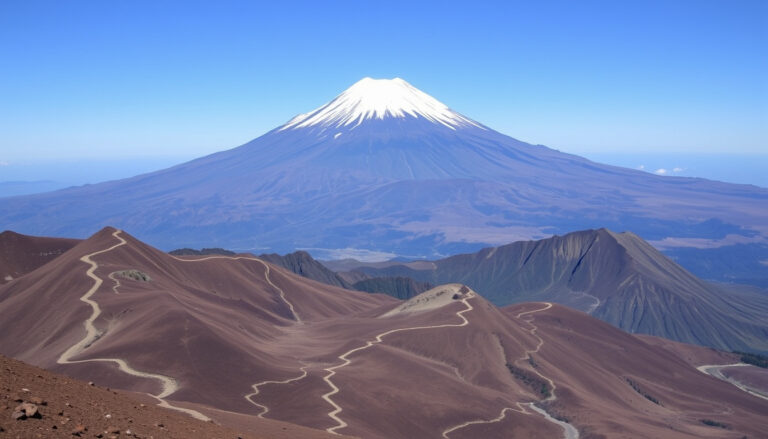 Mt Fuji Climbing Guide: Volcanic History, Routes, Safety
 Anant Ambani Net Worth, Health Journey & Family Facts
 Taylor Momsen: Gossip Girl Exit, Illness, and Music
 Cicerone Surry Hills: Roman Menu, Booking & Reviews
 Dezi Freeman: Police Shooter Killed After 216-Day Manhunt
 Felix Mallard Movies and TV Shows: Complete Filmography & Bio
 Tom Blyth: Age, Height, Relationship, and Movies
 Corey Feldman: Career, Net Worth, Movies, and What He Does Now