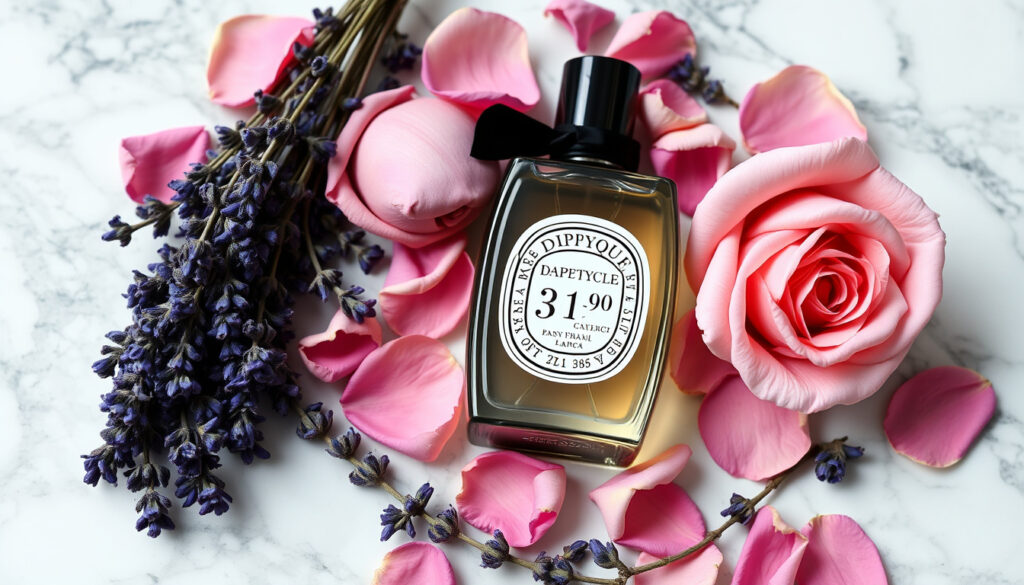
Diptyque Perfume Guide: Pricing, Scents, and Controversy
There’s a quiet ritual to Diptyque: you catch a whiff of Philosykos on someone’s collar and suddenly you’re sniffing your own sleeve to find it again. This Parisian house has turned 75 ml of perfume into a $260 conversation piece — which is why the “is it worth it” question follows those little oval bottles around, and we’ve traced the official price lists, the best-selling scents, the Jo Malone comparisons, and the 2024 olive-candle backlash so you can decide with receipts in hand.
Founded: 1961 · Headquarters: Paris, France · 75 ml EDP (EU): €180 (Diptyque official EU site) · 75 ml EDP (US): $260 (Diptyque official US store) · Owned by: Manzanita Capital · Celebrity fan: Meghan Markle (reported)
Quick snapshot
- Founded in Paris in 1961 by three friends (Diptyque official site)
- 75 ml Eau de Parfum: €180 in Europe, $260 in the US (Diptyque official US store)
- Meghan Markle has been reported to burn Diptyque’s Feu de Bois candle (Diptyque official US store)
- The 2024 “Palestine” candle drew criticism, and Diptyque responded with an apology (Diptyque official site)
- Whether the Palestine controversy changed sales — no impact figures have been published
- Whether Meghan Markle personally chose Feu de Bois or received it as a PR gift
- Whether the brand’s apology settled the criticism — no sentiment data was released
- Which market price is “the real price” — EU, US, and Polish listings differ for the same 75 ml EDP
- 1961: the house is founded (Diptyque official site)
- 2024: the Palestine candle backlash erupts (Diptyque official site)
- Now: 75 ml EDP sits at €180 EU / $260 US (Diptyque official US store)
- Test before you spend: five-piece EDP discovery set at $208, EDT set at $145 (Diptyque official US store)
- Watch regional exclusives such as the Belgian-only 100 ml line at €285 (Diptyque official Belgian site)
Twelve facts, one throughline: every row — the name, the founders, the price tiers, the controversy — reinforces the same luxury-house positioning.
| Fact | Detail |
|---|---|
| Year founded | 1961 (Diptyque official site) |
| Founders | Christiane Gautrot, Desmond Knox-Leet, and Yves Coueslant (Diptyque official site) |
| Name meaning | “Diptych” — a two-panel artwork symbolizing duality and artisanal craftsmanship (Diptyque official site) |
| Parent company | Manzanita Capital |
| Signature scent | Philosykos EDP, centered on the fig tree (Diptyque official site) |
| 75 ml EDP, Europe | €180 (Diptyque official EU pricing) |
| 75 ml EDP, US | $260 (Diptyque official US pricing) |
| 75 ml EDP Intense, US | $300 for Eau Rihla (Diptyque official US pricing) |
| 200 ml EDP, Europe | €350 for Do Son, Fleur de Peau, Orphéon (Diptyque official EU pricing) |
| 200 ml EDP, US | $495 for Orphéon (Diptyque official US pricing) |
| Celebrity association | Meghan Markle and the Feu de Bois candle (reported) |
| 2024 controversy | “Palestine” candle backlash and official apology (Diptyque official site) |
Why is Diptyque so expensive?
Short answer: Diptyque perfume charges a luxury premium because it behaves like a luxury house — concentrated formulas, single-natural-motif compositions, small-batch production, and a premium price point the brand defends in every market.
Ingredients and sourcing
- Philosykos is built around the fig tree (Diptyque official EU catalog)
- Tam Dao draws on sandalwood with sacred-forest imagery (Diptyque official EU catalog)
- Do Son is a tuberose scent connected to Vietnam (Diptyque official EU catalog)
- Fleur de Peau is a musk-focused composition (Diptyque official EU catalog)
These aren’t vague floral-woody marketing blurbs. Each composition centers on one natural motif — fig, tuberose, sandalwood, musk — and that specificity is part of what you’re paying for.
The brand’s own positioning leans on high-quality natural ingredients, including rare flowers and resins, to justify the price point (Diptyque official EU catalog).
Artisanal production methods
- Hand-poured candles and small-batch production keep runs limited (Diptyque official site)
- EDP and EDT are treated as distinct compositions: the official guidance describes Eau de Toilette as “lightness and vivacity” and Eau de Parfum as “a more intense and longer-lasting trail” (Diptyque official US guidance)
- Premium packaging and controlled distribution reinforce the handcrafted image
The Polish price list shows how carefully the brand protects that positioning: standard 75 ml EDPs run 829 zł, Eau Rihla EDP Intense runs 1,195 zł, and the 200 ml Fleur de Peau runs 1,610 zł (Diptyque official Polish site).
Brand positioning and exclusivity
- The name “diptyque” refers to a diptych — a two-panel artwork — chosen to symbolize duality and artisanal craftsmanship
- The house was founded in 1961 by Christiane Gautrot, Desmond Knox-Leet, and Yves Coueslant (Diptyque official site)
- Diptyque has been owned by Manzanita Capital since 2005
- Regional exclusives — like the Belgian-only 100 ml collection at €285 — make certain products deliberately hard to find (Diptyque official Belgian site)
The pricing structure does the rest. Standard 75 ml EDPs cost €180 in Europe and $260 in the US; Eau Rihla EDP Intense costs €255 or $300; the 200 ml Orphéon hits $495 (Diptyque official EU pricing) (Diptyque official US pricing).
The pattern: Diptyque perfume is expensive because it refuses the mass-market playbook — concentrated compositions, controlled distribution, and a brand name that promises art. And if you compare per-milliliter, the 200 ml bottle is the quiet value hole: $495 for 200 ml vs $260 for 75 ml comes to about $2.48/ml, not $3.47/ml (Diptyque official US pricing).
The strategy: Diptyque prices for the connoisseur, not the casual shopper, and the discovery set is the only hedge against a costly mismatch.
What is the best smelling Diptyque perfume?
There is no single winner — the catalog is organized around scent families, and community reviews keep returning to the same three names: Philosykos, Tam Dao, and Fleur de Peau.
Top-rated Diptyque perfumes
- Philosykos (EDP) — green fig, centered on the fig tree; the usual answer to “signature Diptyque” (Diptyque official EU catalog)
- Tam Dao (EDP) — sandalwood with sacred-forest imagery; the woody reference point (Diptyque official EU catalog)
- Fleur de Peau (EDP) — a modern musk-centered skin scent (Diptyque official EU catalog)
- Orphéon (EDP) — jasmine and vanilla, a popular modern choice available up to 200 ml at $495 in the US (Diptyque official US store)
Community reviews on Fragrantica and retailer ratings consistently place Philosykos, Tam Dao, and Fleur de Peau at the top of the house’s rankings — the same three the official catalog leads with.
How to choose based on scent family
- Green and fresh: Philosykos (fig tree)
- Woody: Tam Dao (sandalwood)
- Floral: Do Son (tuberose, with a Vietnamese connection)
- Skin-close and musky: Fleur de Peau
- Warm and evening: Orphéon (jasmine, vanilla)
Match the family first, then pick a concentration. EDP creates the intense, longer-lasting trail; EDT keeps the same fragrance lighter and more vivacious (Diptyque official US guidance).
Diptyque’s five-piece discovery sets are the lowest-risk test: $208 for EDP, $145 for EDT (Diptyque official US store).
The best Diptyque only exists inside your scent family, and the $208 discovery set is the only hedge against a $260 bottle that never becomes your signature.
The catch: Diptyque builds strong signatures instead of safe crowd-pleasers, so the smarter question isn’t “which is best” — it’s “which family are you?”
The implication: Diptyque’s specificity demands sampling before commitment.
Is Jo Malone or Diptyque better?
Clear up the name first: Jo Malone London and Jo Loves are separate businesses — the perfumer Jo Malone’s later label is Jo Loves, not the brand sold in fragrance halls. Industry coverage of both houses regularly notes that this split is where half the comparison confusion begins.
Five differences, one pattern: Diptyque bets on intensity, Jo Malone leans into lightness.
| Factor | Diptyque | Jo Malone London |
|---|---|---|
| Core concentration | EDP and EDT lines; EDP is built for a more intense, longer-lasting trail (Diptyque official US guidance) | Known for lighter cologne-style scents, designed for layering |
| 75 ml EDP price (US) | $260 (Diptyque official US store) | No direct 75 ml EDP equivalent in the standard range |
| 75 ml EDP price (EU) | €180 (Diptyque official EU site) | Typically priced below Diptyque’s EDP tier |
| Scent architecture | Strong single motifs — fig, tuberose, sandalwood (Diptyque official EU catalog) | Built for combining and low-sillage wear |
| Best for | One-scent impact and all-day presence | Office-friendly layering and light reapplication |
The decision rule is blunt: if you want a scent that announces itself and stays on the trail, Diptyque’s EDP line is the stronger pick — the official product guidance says so in so many words (Diptyque official US guidance). If you want something low-key you can layer all day, Jo Malone’s cologne-style logic may serve you better.
The catch: this comparison only makes sense after you choose your sillage preference. Diptyque perfume is the louder, longer, more expensive option; Jo Malone is the lighter, reapply-sooner option. Deciding “which is better” before deciding “how loud do I like my perfume” is how expensive bottles end up untouched on a shelf.
The distinction: your sillage preference decides the winner, not the brand name.
What controversy has Diptyque been facing?
In 2024, Diptyque collided with a cultural flashpoint: a candle named “Palestine” drew criticism from people who read it as cultural appropriation or insensitivity, even though the brand said the intent was to honor the region’s olive oil heritage.
The Palestine olive controversy (2024)
- Diptyque released a candle named “Palestine” as part of an olive-oil-heritage theme, according to the brand’s statements
- Critics accused the French house of cultural appropriation or insensitivity; the backlash spread through social platforms and luxury media
- The episode became a reference point for debates about how luxury brands name products tied to specific regions and cultures
No independent engagement or sales figures were published, so the scale of the backlash is reported rather than measured.
Brand response and impact
- Diptyque issued a statement apologizing and explaining that the candle was intended to celebrate the region’s olive oil heritage (Diptyque official site)
- The apology did not end the broader debate about cultural representation in luxury products
- The brand has not published any before-and-after sales figures tied to the controversy
What’s notable for buyers: the episode sits awkwardly against Diptyque’s carefully built image of artistic craft, and it shows how quickly heritage language can be read as cultural entitlement when a product name touches a contested region.
Shoppers who weigh brand ethics now face a credibility calculation: the 2024 apology clarified Diptyque’s intent, but it didn’t resolve the criticism — and no public data shows whether the controversy changed demand.
Why this matters: a house with a retail footprint across 60+ countries can absorb a controversy, but the 2024 episode is now part of the brand’s public record — and for a company that sells heritage, that record is part of the product (Diptyque official site).
The takeaway: a luxury brand’s heritage narrative can be undermined by a single product name, and Diptyque’s response has not fully closed the debate.
Diptyque pros and cons
For the buyer weighing a first bottle against a pass, the ledger is split: the product logic is strong, but the entry price is unforgiving.
Upsides
- Distinctive single-motif compositions — fig, tuberose, sandalwood, musk — each with a clear identity (Diptyque official EU catalog)
- Real EDP concentration: a more intense and longer-lasting trail than the EDT (Diptyque official US guidance)
- Discovery sets lower the risk: $208 for five EDPs, $145 for five EDTs (Diptyque official US store)
- The 200 ml format is the value play at about $2.48/ml versus $3.47/ml for 75 ml
- Limited editions tend to hold strong resale value among collectors
Downsides
- $260 for 75 ml EDP is a heavy price for a blind buy
- Regional price gaps: €180 in Europe versus $260 in the US for the same 75 ml EDP (Diptyque official US pricing)
- Some exclusives stay locked to one market — the Belgian-only 100 ml line at €285 is the clearest example (Diptyque official Belgian site)
- The 2024 Palestine candle backlash adds an ethical consideration to the purchase
The trade-off: concentration, composition, and scarcity are each defensible in isolation, but together they make Diptyque a deliberate purchase — not an impulse — and regional pricing means some markets pay more for the same juice.
The verdict: deliberate purchase, so deliberate sampling is the smart first step.
Confirmed facts and what’s still unclear
Sorting official listings and brand statements from speculation, the confirmed record is solid on product and price — while the open questions are exactly the ones marketing can’t answer.
Confirmed facts
- Diptyque was founded in 1961 by Christiane Gautrot, Desmond Knox-Leet, and Yves Coueslant (Diptyque official site)
- Standard 75 ml EDPs cost €180 in Europe, $260 in the US, and 829 zł in Poland (Diptyque official Polish site)
- Philosykos, Tam Dao, Do Son, and Fleur de Peau are each described as distinct, single-motif compositions in the official catalog (Diptyque official EU catalog)
- The 2024 “Palestine” candle drew criticism, and Diptyque responded with an apology (Diptyque official site)
What’s unclear
- Whether the Palestine controversy changed sales — no figures have been published
- Whether Meghan Markle personally chose Feu de Bois or received it as a PR gift
- Whether the Feu de Bois association is current or tied to an earlier moment in press coverage
- Whether the apology satisfied critics — no sentiment or follow-up data was released
The pattern: Diptyque’s factual record is unusually clean on the things it controls — formulas, prices, product descriptions — and unusually silent on the things it doesn’t, which is precisely where the brand’s reputation risk lives.
The insight: what Diptyque doesn’t say is as telling as what it does.
Notable quotes on Diptyque
Eau de Toilette expresses a composition with lightness and vivacity, while Eau de Parfum provides a more intense and longer-lasting trail.
Diptyque official US site (product guidance)
Philosykos is centered on the fig tree.
Diptyque official EU catalog (Eaux de Parfum collection)
The candle was meant to celebrate the region’s olive oil heritage.
Diptyque’s 2024 statement on the “Palestine” candle (official site)
Community and retailer reviews consistently rank Philosykos, Tam Dao, and Fleur de Peau among the house’s top scents.
Fragrantica community reviews and retailer ratings
The thread through all four: Diptyque speaks in precise, sensory language about its products — but the 2024 episode proved the brand can’t fully control how its product names land in the world.
Final take: is Diptyque worth it?
The verdict after this comparison: Diptyque is a genuine luxury house with real EDP concentration, distinctive single-motif compositions, and a heritage story that holds up — and it prices like one, with a $260 entry point for 75 ml in the US (Diptyque official US store).
The real risk isn’t the perfume; it’s the blind buy. The 2024 Palestine candle episode and the regional price gaps in Europe, the US, and Poland complicate the purchase, but the product logic survives scrutiny — especially when the discovery sets let you test before committing.
A $260 bottle of Diptyque is an easy purchase to rationalize and an easy purchase to regret — the only reliable test is wearing it, which is exactly what the $208 discovery set is for.
For first-time buyers in the US, the choice is clear: start with the $208 five-piece EDP discovery set, or you’ll spend $260 on a signature you haven’t actually lived with. For collectors, the 200 ml format is the rational upgrade — and the Belgian exclusives are worth their €285 only if the scent, not the scarcity, does the talking.
The decision: test first, invest later, and let the scent family guide your choice.
diptyqueparis.com, us.diptyqueparis.com, emea.diptyqueparis.com, uk.diptyqueparis.com
Frequently asked questions
Is Diptyque a luxury brand?
Yes, by positioning, price architecture, and distribution. Standard 75 ml EDPs run €180 in Europe and $260 in the US, the Eau Rihla EDP Intense reaches $300, and the 200 ml Orphéon hits $495 (Diptyque official US store). The house was founded in Paris in 1961 and is owned by Manzanita Capital.
How long does Diptyque perfume last?
The official guidance separates the two lines: Eau de Toilette is composed for lightness and vivacity, while Eau de Parfum delivers a more intense and longer-lasting trail (Diptyque official US guidance). For longevity, choose the EDP.
What is the most popular Diptyque scent for beginners?
Philosykos (green fig) is the house signature and the usual first pick; Tam Dao (sandalwood) suits woody lovers; Fleur de Peau (musk) is the modern skin-scent favorite (Diptyque official EU catalog). A discovery set is the lowest-risk way to test them.
Does Diptyque offer sample sets?
Yes. The US store sells a five-piece Eau de Parfum set for $208 and a five-piece Eau de Toilette set for $145 (Diptyque official US store). Either set is the smartest entry for anyone unsure which scent family fits.
Are Diptyque candles worth the price?
The candles follow the same logic as the perfumes: hand-poured, scent-led compositions with a celebrity halo — the Feu de Bois candle (birch, juniper, patchouli) is the famous Meghan Markle association (Diptyque official US store). Whether that’s worth the premium depends on how much you value a crafted scent over a cheaper mass-market candle.
Where can I buy Diptyque in Australia?
Diptyque’s retail footprint spans 60+ countries, and Australian shoppers can find the brand through local prestige stockists such as Mecca. Because official EU and US prices differ, checking the local shelf price before ordering is the safest move.
Does Diptyque test on animals?
The official pages reviewed for this guide do not display a cruelty-free certification such as Leaping Bunny. Buyers who require a cruelty-free guarantee should confirm directly with the brand before purchasing.
What is a good dupe for Diptyque’s Orphéon perfume?
No official dupe list exists. Community fragrance forums regularly suggest budget-friendly jasmine-and-vanilla compositions as Orphéon-inspired alternatives, but Diptyque doesn’t endorse any of them — so treat forum suggestions as starting points, not matches.
More related posts
 Shailene Woodley: Bio, Relationships, and Career
 Greg Lynn Case: What Happened, Sentence, Appeal & Updates
 Red Kangaroo Facts: Size, Behavior, and Safety Guide
 Mitchell Marsh: Wife, Kids, 52-Beers Story & Family
 Booster Seats Ireland: Age, Law & Safety Guide
 Jonas Brothers: Members, Ages, Net Worth & FAQs
 Land Cruiser Ireland: Price, Problems & Hilux Comparison
 Hair Treatment Guide: Best Options for Dry, Thinning Hair